I have a positive outlook this morning: I’m thinking about what’s going to happen to all that rain we’re going to get this winter in California.
Let’s say we left land in its natural state: much of the stormwater would be held by plants, soak into the soil, or seep slowly downhill. Pollutants washed from the atmosphere would be absorbed through contact with the plants and soil.
But we don’t leave land alone. We build things through which water can’t flow. Roofs and pavement prevent rain from reaching the soil. Water runs off impervious surfaces, and pipes transport it rapidly to creeks and to the Bay.
That creates problems. The water enters the system too fast, causing erosion and increasing the possibility of flooding. Pollutants running off roads and parking lots are discharged into local creeks and eventually into the Bay. Rainwater has fewer opportunities to recharge the groundwater table.
The goal of Stormwater Best Management Practices (BMPs) is to make site drainage mimic, as closely as possible, the way a natural landscape drains.
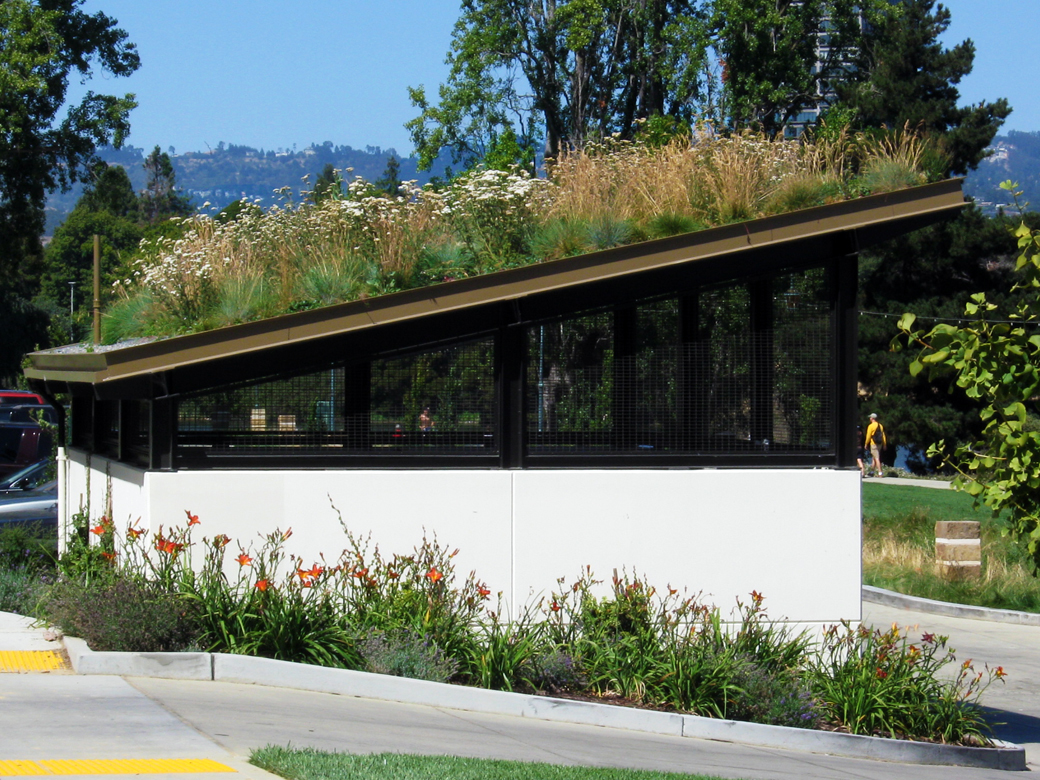
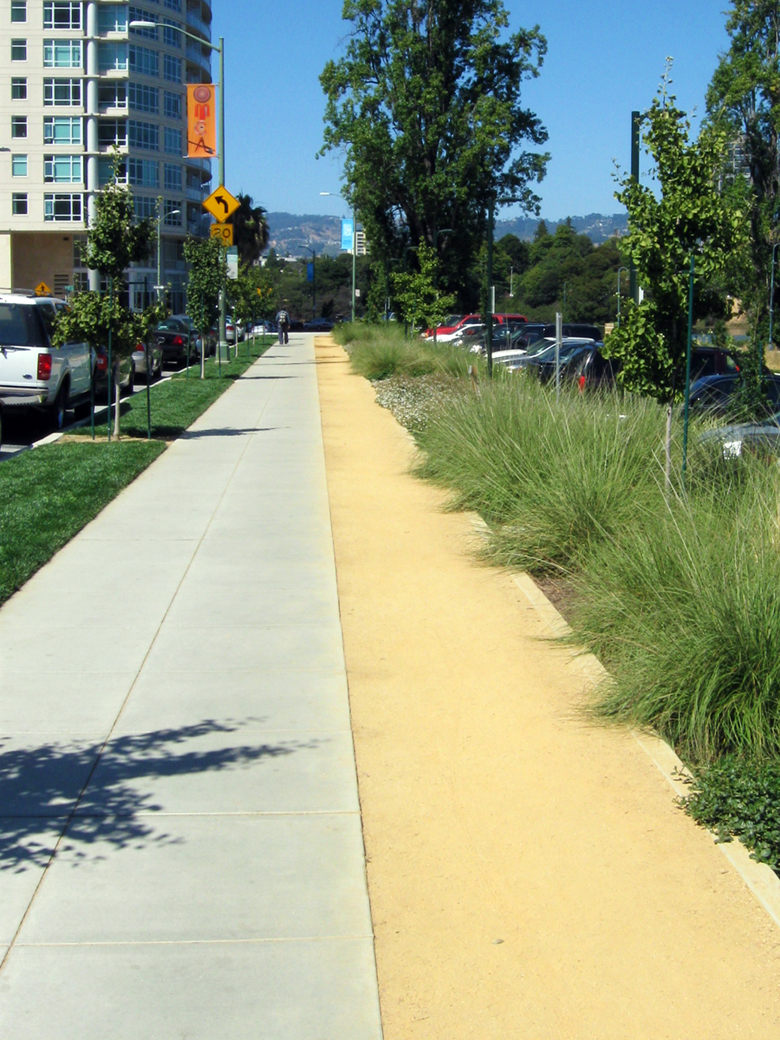
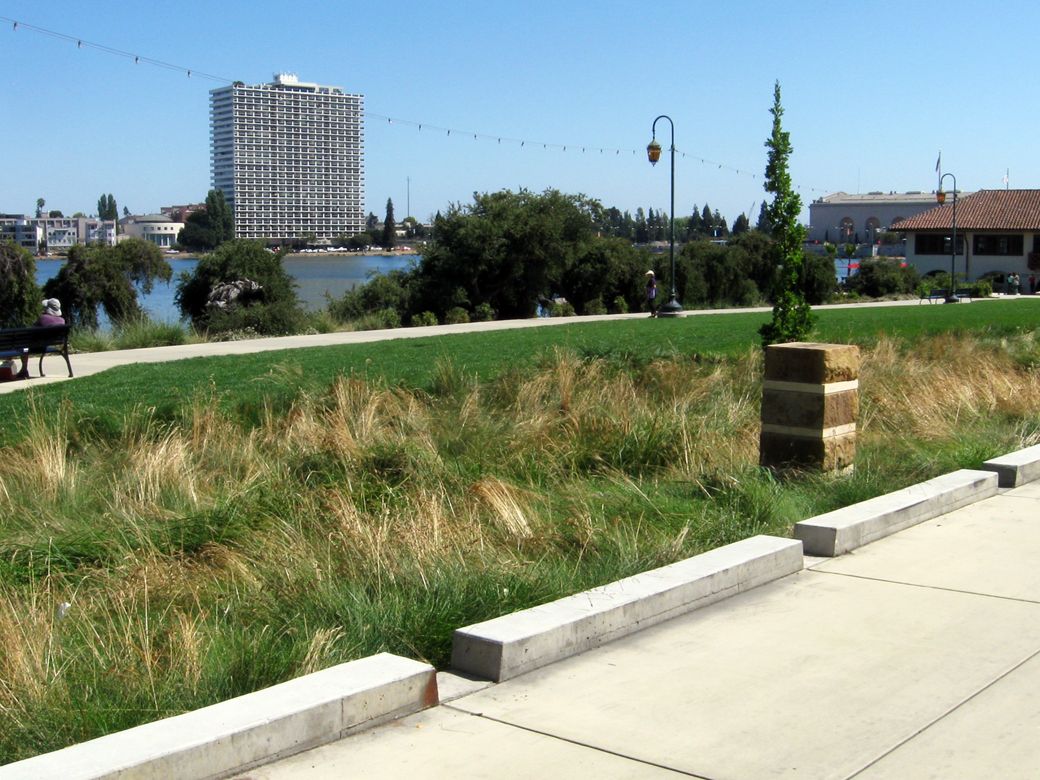
These images show three BMPs used in the Lake Merritt Municipal Boathouse project. The landscape architects for the project were Wallace Roberts & Todd of San Francisco and Adrienne Wong Associates of Oakland.
Green Roof
The green roof over the recycling and trash structure filters pollutants from stormwater, minimizes roof runoff, and reduces heat island effect.
Permeable Paving
The decomposed granite running surface is permeable. Permeable paving allows stormwater to soak into the ground, filtering and storing it.
Vegetated Swale
Openings in the curb allow stormwater to run off the paved surface and into the vegetated swale. The swale slows stormwater while the grasses and soil filter out pollutants before entering the storm drain system.
These stormwater solutions fit beautifully into the landscape. I think that’s because they were part of the designers’ plan from inception. Now, bring on the rain.
What is something you do to save water?

