Starry False Solomon’s Seal

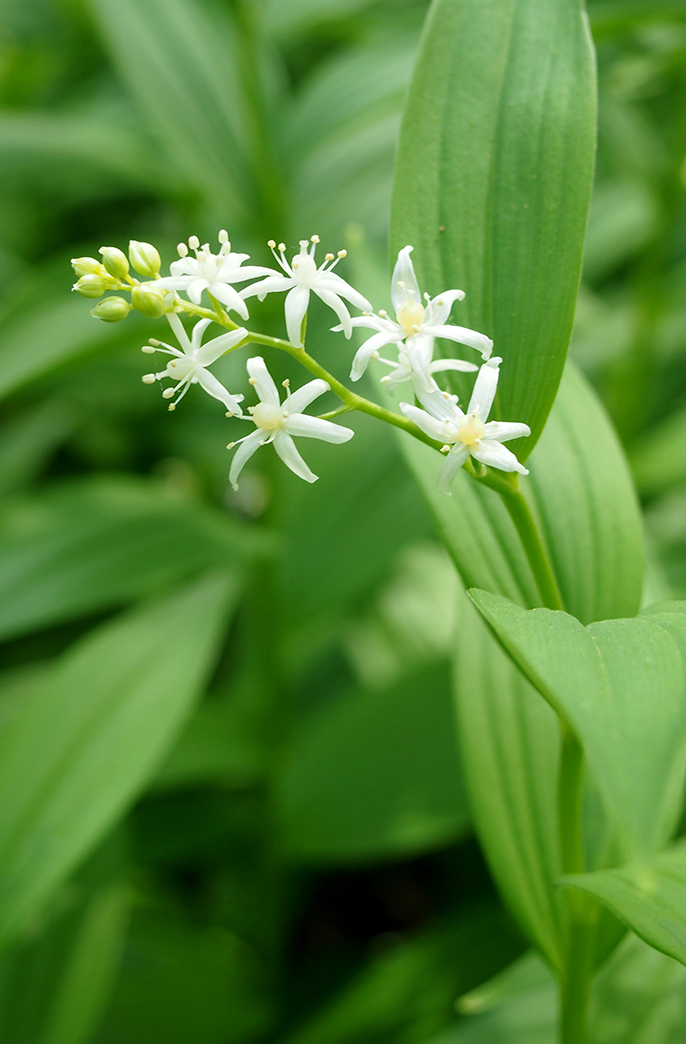
One of the best things about a woodland garden is the way shadows, green tones, and soft duff evoke the presence of enchanted creatures just beyond our vision. No plant in our garden supports this dreamlike quality more than Starry False Solomon’s Seal.

Each spring we’re charmed by the emergence of hundreds of tiny green sprouts. The unbranched stems quickly rise to about 12-18 inches tall and start to sparkle with white, star-shaped flowers. As the season progresses the dainty flowers are replaced with green, watermelon striped berries turning to brilliant red and eventually to black. Whether at home or hiking in our local regional parks, we’re always captivated to see its gently arching form spilling down a hillside or brightening a shady hollow.

We were lucky to learn about this California native perennial, Smilacina stellata, at a Tilden Regional Park Botanic Garden plant sale. It’s been spreading by underground roots through the shady parts of our yard for years and continues delight us from early spring until the end of summer when it dies back to the ground.  Irrigated about once a week in the dry season, Starry False Solomon Seal enjoys growing with Yerba Buena, Tellima, Leopard Lilies, and native ferns.

Starry False Solomon Seal would make a good addition to any shady woodland garden in the five-one-oh. Once they take hold, you may even catch a sidelong glimpse of a fairy hiding in their midst.

Sources:
Keator, Glenn; Complete Garden Guide to the Native Perennials of California
Las Pilitas Nursery: Smilacina stellata, False Solomon Seal

Why Build a Parklet?

40th St Parklet, Oakland-from streetThey’re called parklets but they’re often more like outdoor café dining areas. These sidewalk extensions are parklets because of their roots. In 2005, the clever folks at ReBar had a plan to take back some of the space reserved for vehicles and turn parking spaces into little parks, or parklets. They can be used for any public use: galleries, bike parking, space to relax, but they are frequently used as café seating.

To take over a couple of parking spaces, most cities require a permit, an annual fee, neighbors’ buy-in, and a decent design. Parklets are privately funded and maintained but they’re public open space and accessible to everyone. You don’t have to buy a cup of coffee to hang out. Parklets are temporary – they exist as long as the host maintains the permit and the city thinks it’s a benefit to the community. As such, parklets are a form of tactical urbanism or urban prototyping. I’ll discuss that movement in a future post.

The remarkable thing about parklets is they are a cost-effective form of placemaking. Everyone wins:

  • The host usually enjoys economic rewards.
  • The city is able to activate streets at little cost.
  • The public benefits from vibrant outdoor spaces.

What more could you ask for? Are parklets popping up in your city? The ones shown here are in my home town: Oakland, California.

Oakland City Center Walk

There-Oakland City CenterCity Center Walk MapThe California Chapter of the American Planning Association (APA) is hosting a conference in Oakland this weekend and I’ll be there. Well, I’ll be here because I live and work in Oakland. I’ve traveled to conferences before and they’re often located in areas that aren’t very walkable. I need my walk. As a result, I wait at crossing signals for ridiculous lengths of time, hike past acres of surface parking lots, and look longingly into dark coffee houses that are closed on weekends.

The good news: The conference is located right in the heart of our vibrant downtown and I know my way around. For all Oakland Convention Center visitors this or any weekend, here is an easy 1.25 mile walk designed for you. This route is best enjoyed 8-5, Monday-Friday because it takes you through the lobbies of two impressive public buildings. If you need your walk on the weekend, you can find your way around the blocks. At least the coffee shops will be open.

You needn’t worry about safety when walking in downtown Oakland during daylight hours. I do it every day. Just remember to pay more attention to your surroundings than to your phone and don’t leave your rental car parked on the street at night.

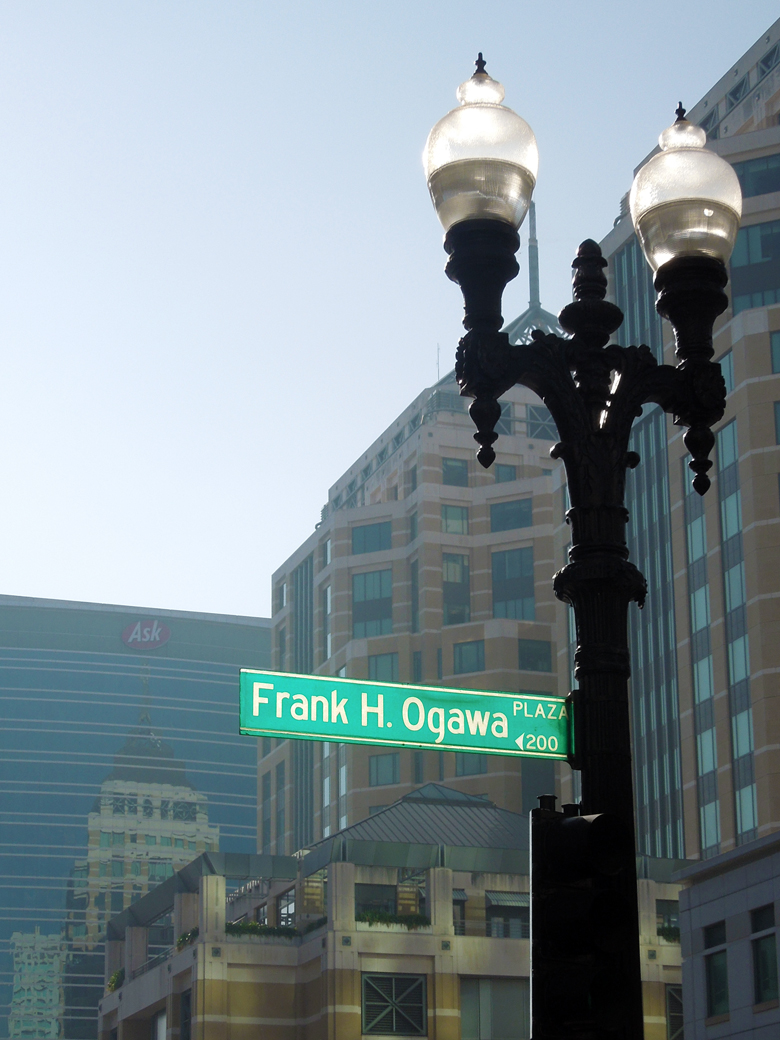
Frank H. Ogawa WayFrank Ogawa Plaza
Start walking north up Broadway from the Oakland Convention Center. After crossing 14th Street, make a slight left so you’re walking on the left side of the Lionel Wilson Building (originally the First National Bank Building). Now you’re in Frank Ogawa Plaza, center of all the “Occupy Oakland” hubub a few years ago. As you can see, the lawn has been replaced and the plaza is acting as a true town square. The large coast live oak in the center of the lawn is the Jack London Oak, planted in 1917. Representations of this particular oak can be found all over town, from the city logo to Oaklandish goods. This would be a good time to visit the Oaklandish Store Old Victorian and New State Bldgat 1444 Broadway. The sculpture near San Pablo Street is titled Vitality and was created by Oakland sculptor, Bruce Beasley.

Elihu M. Harris State Office Building
Make a slight left past the raised lawn, and take the walkway on the north side of the City Hall. From here, you catch your first glimpse of the Elihu M. Harris State Office Building. After crossing Clay Street, enter the glass atrium and head out the other side. The colored glass circles in the upper walkway guardrails always make me smile. Continue along 15th Street to Martin Luther King Way where you’ll turn left after crossing the street.

Old Main Oakland LibraryOriginal Oakland Main Library and First Unitarian Church of Oakland
Enjoy views of the tops of downtown high-rises as you walk to 14th Street where you’ll cross the street and turn right. I have a soft spot for Carnegie Libraries. The African American Museum and Library on the corner of 14th and MLK Way was opened in 1902 as the Oakland Main Library. Designed in the Italian Renaissance style by architects Bliss and Faville, it received the second California Carnegie grant of $50,000. As you continue down 14th Street, you’ll find the First Unitarian Church of Oakland, completed in 1891.

Preservation ParkPreservation Park
Turn left at the corner of 14th and Castro Streets and again at 12th Street. Pass through the portal into Preservation Park.This beautiful Victorian neighborhood was saved from demolition by public/private partnerships. The five Victorian homes north of 13th Street are in their original locations and the eleven remaining houses were moved here to save them from demolition when the freeway was constructed. The Parisian fountain in the center of the roundabout was salvaged from another home site in Oakland. Preservation Park is home to non-profit organizations and is available for public and private events. I recommend a stop at 150929 Federal Bldg bridge from 13th-smlthe interpretive exhibit at the MLK entrance to the park.

Ronald V. Dellums Federal Building
When you arrive at the fountain, you’re at the end of 13th Street which will take you all the way back to Broadway. After crossing MLK Way, the walkway leads you to Three Figures by Stephen De Staebler. The sculptures sit and stand watch over the amphitheater built against the wall of a parking structure. From here, you can see the sky bridge of the Ronald V. Dellums Federal Building. If you’re fortunate to be here on a nice day, the enormous main doors will be open and you can see through them to City Center. If not, City Center with Tribune Bldgmake use of the doors on either side of the rotunda. The lobby is open M-F from 6am until 11pm.

Oakland City Center
After crossing Clay Street, you’ve arrived in Oakland City Center, a privately owned outdoor retail space with connections to BART, Frank Ogawa Plaza, and the high rise office buildings surrounding it. The sculpture at the center of the space by Roselyn Mazzilli, is titled There, in reference to the often misinterpreted line about Oakland by Gertrude Stein, “There is no there there”. This is one of my regular walks because of the pedestrian focus, the outdoor activity, the art, and the architecture. Much of the area is a product of a redevelopment plan started in the 1960s. It is a vibrant part of the City but I wonder what it would be today if the original street grid, historic apartment buildings, and ground-floor retail were still in place. If you think Downtown Oakland is exciting, read about Uptown Oakland!

Sources:
Frank Ogawa Plaza
Elihu M. Harris State Office Building
African American Museum Library at Oakland
First Unitarian Church of Oakland
Preservation Park
Ronald V. Dellums Federal Building
Oakland City Center

Please click on a photo to start the slideshow.

Longfellow Neighborhood, Oakland

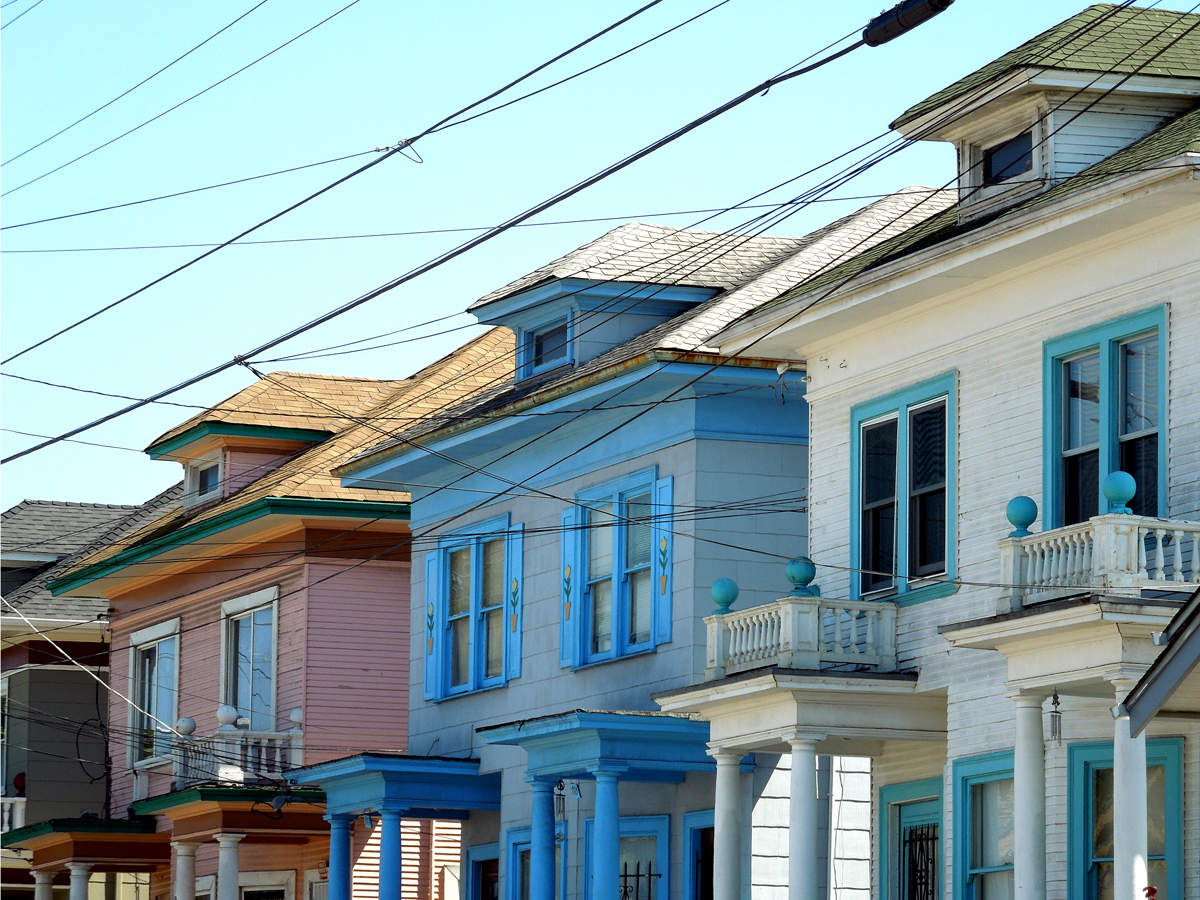
Victorian sisters viewed through transmission lines

This week, my office is moving from the Longfellow neighborhood in Oakland. Each day I take a walk through the area and, in the three years I’ve been here, Longfellow has become a good friend. In March, I wrote a post about the vibrance and cultural diversity of Longfellow.

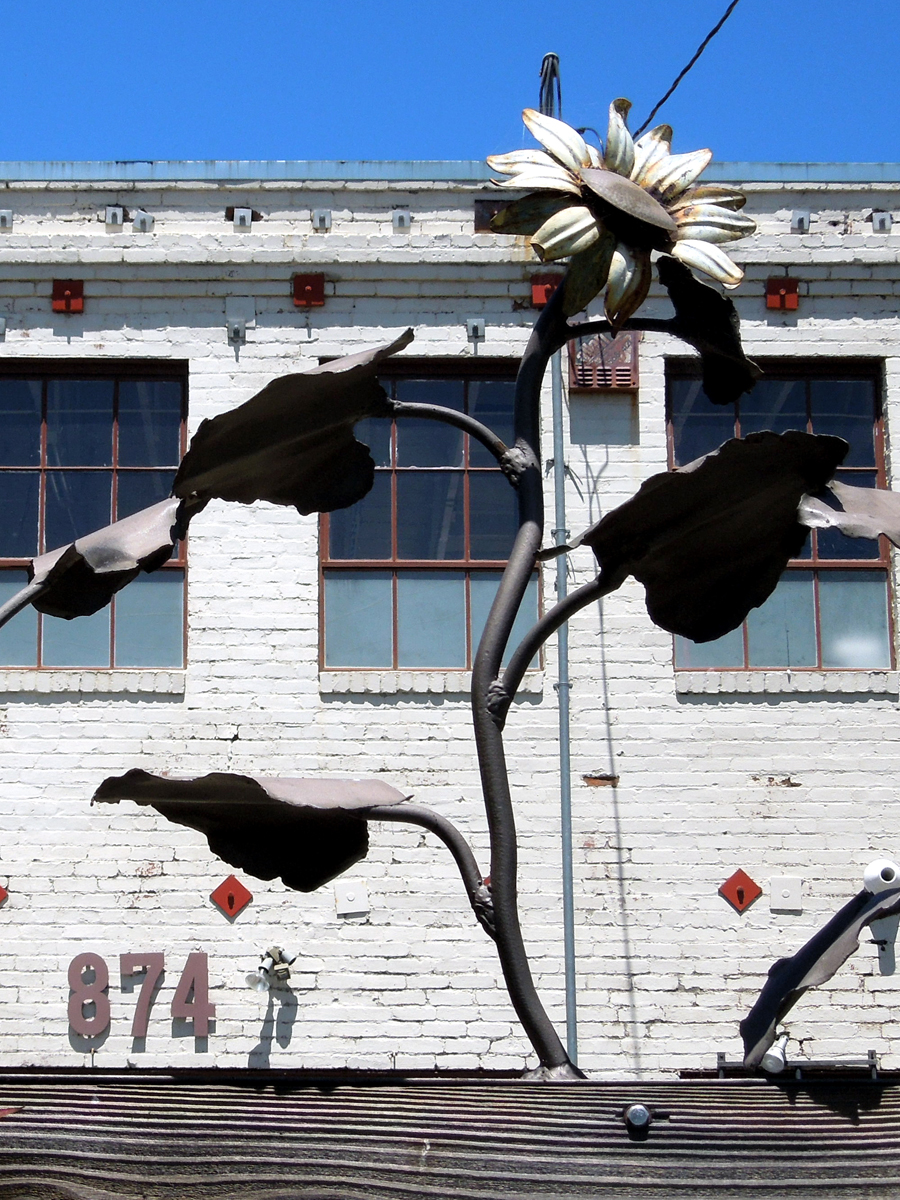
Sunflower FenceToday, I want to show you the Longfellow I’ve known. Longfellow is a predominantly African-american neighborhood, tucked into a corner created by two freeways. Its economic demographic ranges from poor to working class.

This is mainly a photo essay but there are moments and people I never captured on film. I witnessed more than one memorial to a neighbor who died too young and for no good reason. There are always people outdoors, walking, riding bikes, or hanging out in front of garages. The air often smells of pot. People in Longfellow are kind to me, asking how I’m doing and calling me “Honey.”

Vacant Lot

There are a few things that show up in the photos that I’d like you to notice:

  • Poor neighborhoods tend to have excessive overhead transmission lines.
  • People in disadvantaged neighborhoods live with a lot of billboards.
  • The large quantity of liquor stores is exceeded by the number of churches.
  • There are pockets of creativity, pride, and beauty throughout the neighborhood.

These photos were taken over the last three years. Many of the things photographed are gone now. Monday morning, I’ll be gone, too. I’ll come back to visit but I’ll miss being part of the Longfellow neighborhood. Please click on a photo below to start a slideshow.

How to Reform your Killer Cat

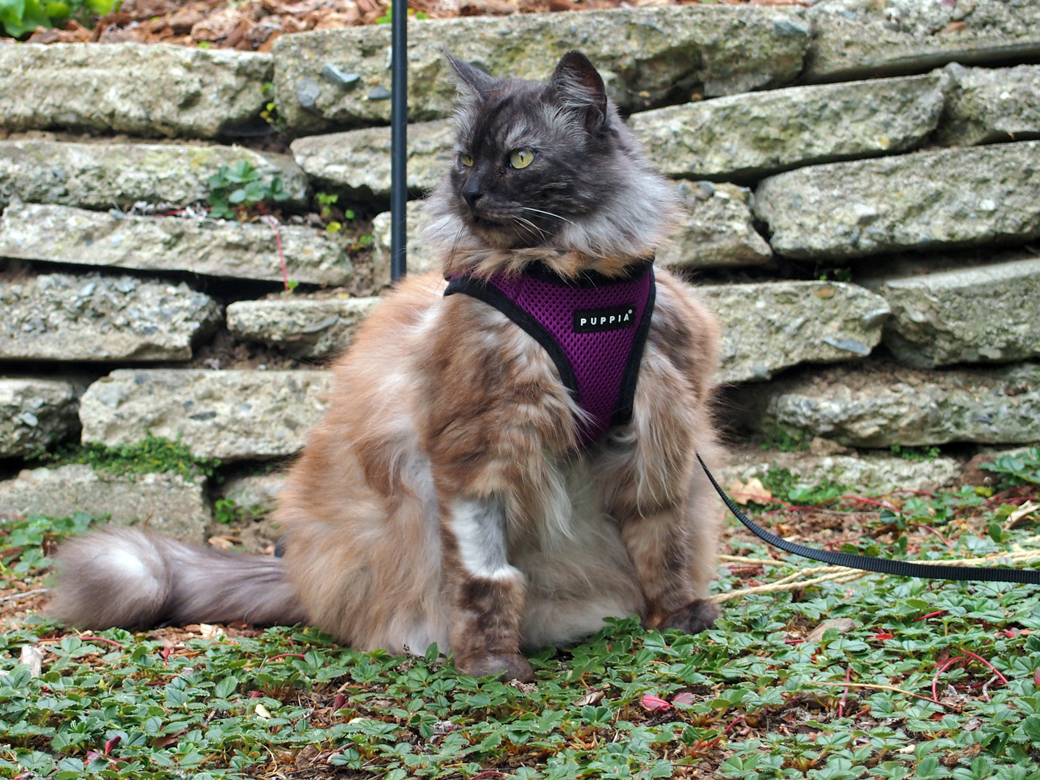
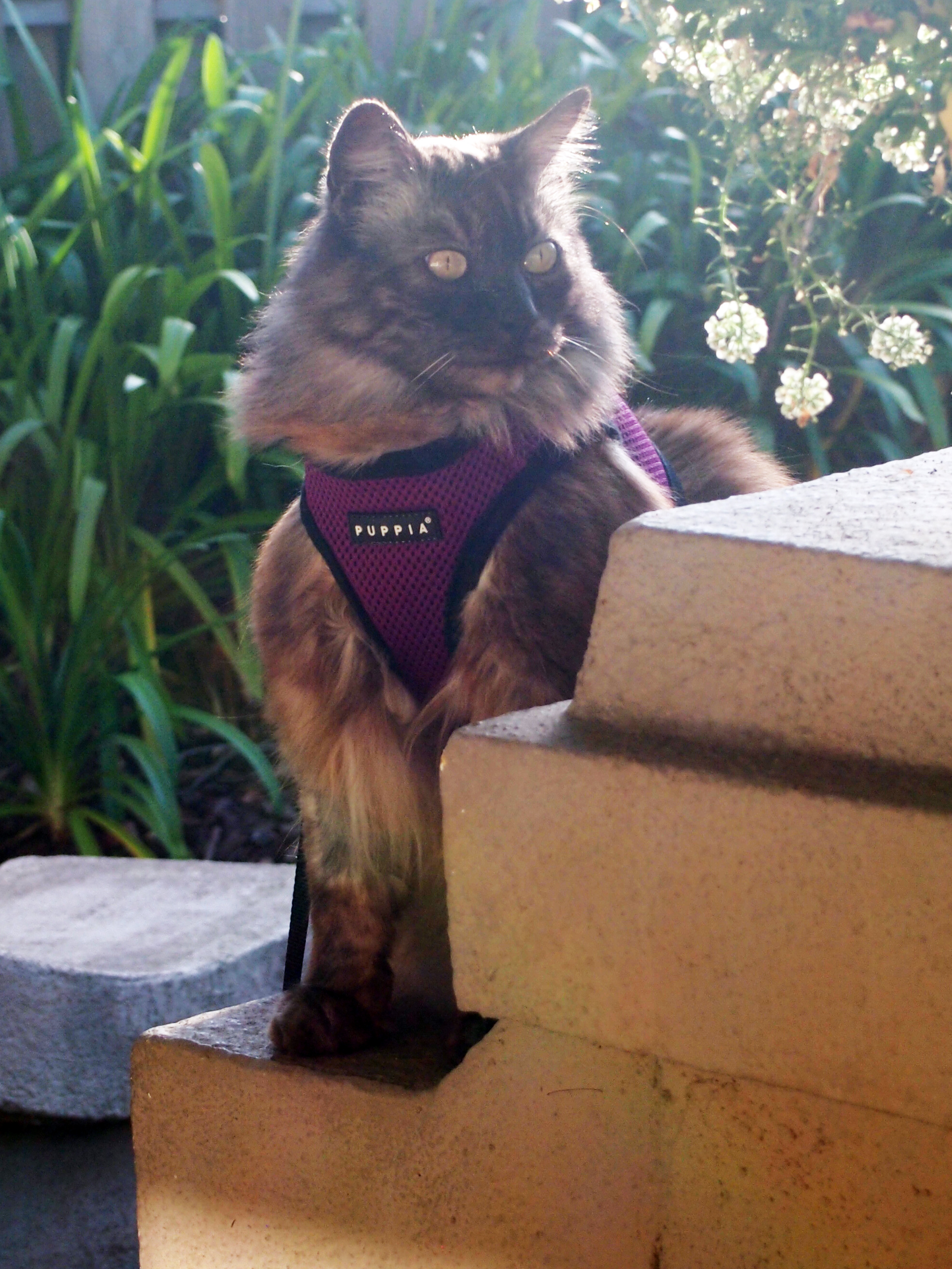
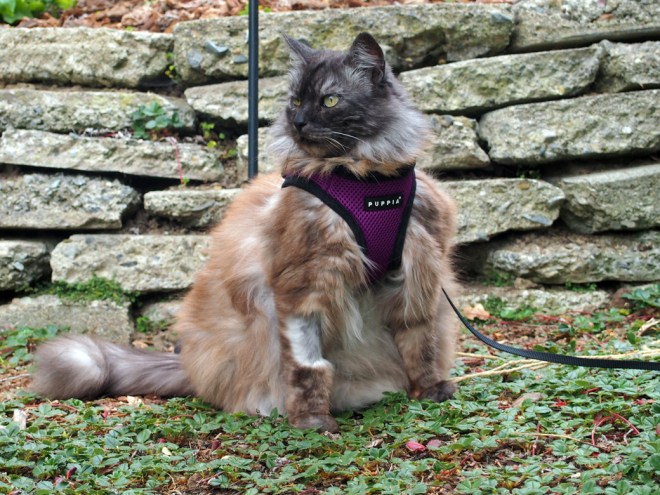
Leashed TheoOur cat wears a harness and a leash when he’s outside. Why? He’s a killer.

I love gardening and Jan loves birds. As soon as we had our own yard, we started to create a habitat garden to attract birds and insects. A couple of years later, an abandoned cat adopted us. At first we tried to run him off the property, but we eventually gave in to his charms, took him in, and named him Theo.
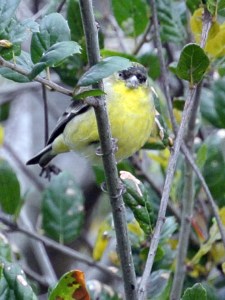
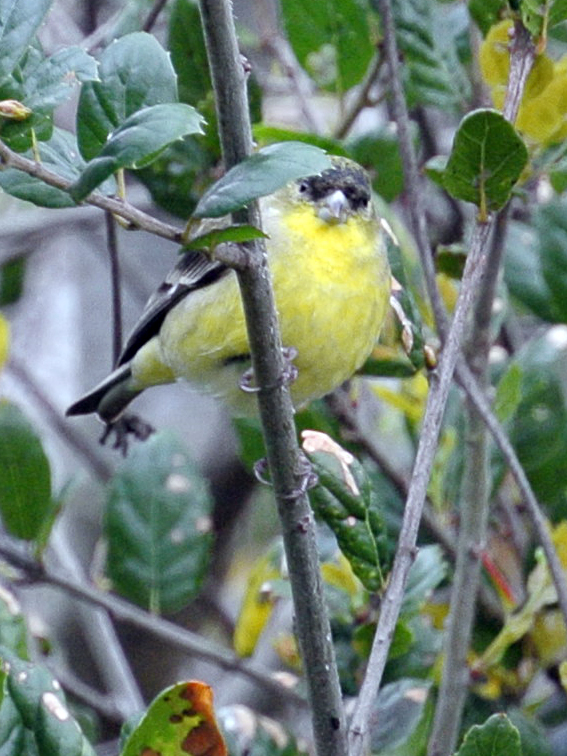
Lesser Gold FinchTheo was used to spending his days outdoors frolicking, so we left him outside while we went to work. We knew we had a conflict of interest in the cat vs. bird department, but thought it was probably okay since he’s a male, and females are generally the hunters of the feline world. Wrong! After the second time he came into the house, bird in mouth, saying “oh, look at the present I have brought for you!” we attached a bell to his collar. This turned out to be about as effective as trying to stop a flood with a box of cotton balls.

We decided the only thing left to do was to keep him in the house all the time, essentially converting our house into a prison … not only for the cat, but for us, too. No longer could we open our doors and windows to the warm air and sweet smells of our own yard. To make things worse, Theo was so distraught at being cooped up that he started tearing the house up, scratching the doors and rugs, and yowling his head off 24/7. The only saving grace was the knowledge that the birds were safe.

Bottom line, no matter how convenient it might be to let your cat out, and no matter how much joy your kitty might get from wandering unfettered through the neighborhood, it’s irresponsible for cat owners to allow their pets to kill birds. And don’t kid yourself – that’s what cats do – for fun! Most of the birds in our yard are native to this region. They belong here. Obviously, the cat does not. Songbirds are disappearing from North America (and the rest of the planet) at an alarming rate. According to an article in National Geographic, “some widespread [bird] species generally thought to be secure have decreased in number as much as 80 percent since 1967, and the 19 others in the report have lost half their populations.” The article lists the causes for this shocking loss of birds as global warming, habitat loss, wind turbines, and cats.

Theo at the porch columnIn her book, the California Wildlife Habitat Garden, Nancy Bauer describes how a homeowner designed a cat run made of redwood planks and wire that connects cat doors in the house to an aerial system of caged walkways through the treetops. Nice-but I’m a designer and this garden is also our habitat. We prefer to keep the beautiful setting we have created. We considered a catio: an enclosed outdoor space where we could trap the cat while we opened the doors and windows. Again, aesthetics trumped comfort. Finally, we came up with the idea of outfitting Theo with a harness and leash.

We bought an inexpensive adjustable cat harness and leash at the pet store and added about 6 additional feet to the leash, using twine. The salesperson cautioned us to stay with the cat when he’s tied up so he doesn’t choke himself. The first time we tried the harness Theo hated it, went a little crazy, and twisted out of it-but it didn’t take long before he caught on. We upgraded to a nicer harness from the dog department because the cheap model tangled his fur. Now, Theo is excited to get into his harness, knowing he’s going outside. We sometimes tie him near the doors so we can see him and have the house open.

Now everybody is able to enjoy the bit of nature outside our doors and the birds are safe from our little killing machine.

TELL US ABOUT IT! Sometimes trying to uphold “the greater good” in your day-to-day life can be impractical at best, or just a flat-out pain in the butt, and it is tempting to fall into the “tragedy of the commons” trap – i.e., I am just one person, so the effect I have overall doesn’t really make a difference. We’d like to hear from you about how you have dealt with these kinds of challenges.

Click on an image below to start a slideshow.

Uptown Oakland keeps getting better.

Uptown Oakland-Latham SquareNamed a Great Neighborhood by the American Planning Association, Oakland’s Uptown continues to soar. Last Saturday, I took a walk with the California Planning Foundation to find out why. The conversation started with a description of Jerry Brown’s 10K plan, developed when he was mayor of Oakland (1999-2007). His vision was to bring 10,000 new residents to downtown and Jack London Square and renew the historic Arts and Entertainment district in Uptown. As we walked through the neighborhood, we learned about how Oakland made it happen, and saw for ourselves how successfully the plan is playing out.

Uptown Oakland-Fox TheaterYou’ve probably heard about Art Murmur, a giant street party that takes place in Uptown on the First Friday of every month. You’ve likely been to the excellent music venues, restaurants, and night clubs that have been proliferating for the past several years. You’ve noticed the new transit-oriented housing developments, the new Art Park, and even some successful retail businesses like Oaklandish. Here are a few things you may not have known:

OSA
One of our Governor’s ideas was to create two charter schools and bring one of them to Uptown. Before a space was ready, Oakland School for the Arts operated out of a tent, in a parking lot between 18th and 19th Streets adjacent to San Pablo Avenue. Today, it shares a home with the historic Fox Theater. The school is a success story in its own right but it has also enlivened the Uptown neighborhood by bringing youth to the streets, venues, and parks during weekdays.

Oakland Floral Depot Building  & Flora Restaurant
The Oakland Floral Depot building houses the restaurant, Flora.


Historic Preservation

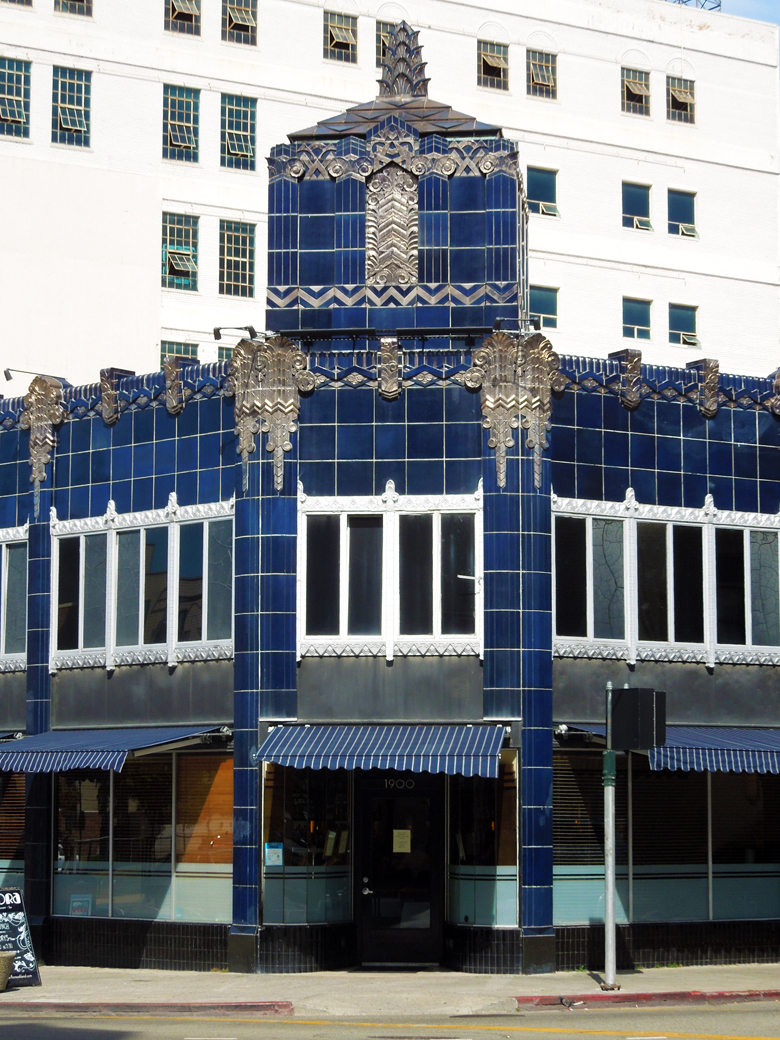
When the Loma Prieta earthquake hit Oakland in 1989, there was little financial incentive to demolish damaged buildings and start over. This turned out to be a boon for the beautiful, historic buildings that have been restored. Lack of interest in Uptown properties gave the Oakland Heritage Alliance and the City a chance to figure out ways to save the original buildings or facades. Many of the buildings are designed in the Art Deco style, and faced with glazed terra-cotta.

The City also provides matching grants to businesses in designated areas to renovate their exteriors. Free architectural assistance and 50 percent matching grants of between $10,000 and $30,000 are available to property and business owners for eligible projects.

The Capwell Building
This is a story of anticipated success. After the earthquake damaged the Beaux-Arts style department store, the retrofit included covering the original windows and terra-cotta cladding with concrete. The building that housed Sears since 1996, was purchased by Lane Partners who began renovation last November. The new design promises to bring back the windows and reopen the interior BART entrance. The ground floor will feature restaurants and foodie retail while the 2nd, 3rd and 4th floors are reserved for tech tenants.

Uptown Bike StationBike Station
A Bike Station has opened up near the 19th Street BART entrance. It has free, attended parking for 130 bikes from 7 am to 9 pm on weekdays. They offer bike repair and tune-ups as well as basic bike accessories. If you have too much fun Uptown to ride your bike home, you can leave it overnight for a $5 fee.

17th Street Gateway
The 17th Street entrance to the 19th Street BART station features new artwork inspired by the Oakland Hills, San Francisco Bay, flashy auto paint, and the blue tile of the station. The sculpture, Shifting Topographies, by Dan Corson, is painted with color-shifting paint that changes hue depending on the angle of the sun. At one end of the station, emergency ventilation shafts are disguised with topographic patterns on blue mirrored glass. Shapes of light are projected on the sculpture at night assuring that this a work of art that never stands still.

Never standing still is a good description of the whole Uptown neighborhood: It just keeps getting better.

Click on a photo to start the slideshow.

Shipping Container Village at The Yard

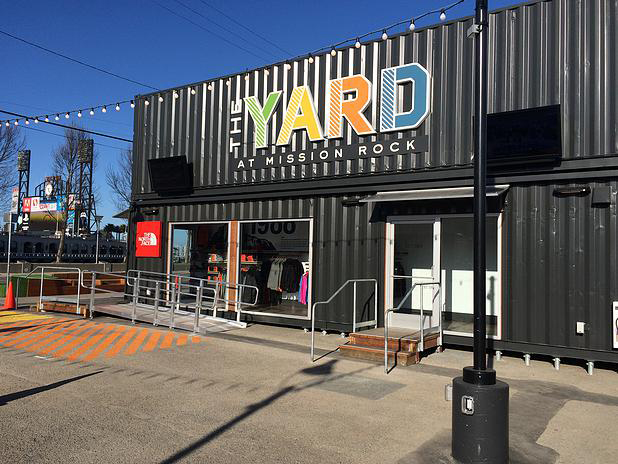
The YardThe Giants are opening a new party pop-up today, across McCovey Cove from AT&T Park. It’s called The Yard. I asked my friend, the designer and manufacturer of the destination’s shipping container buildings, why he wasn’t mentioned in John King’s article in the SF Chronicle. In his South African accent, Jerry commented, “White collars versus blue.”

SF MadeI met Jerry Jameson three years ago when I started working in the building he shares with my employer. He was an architect with a dream of becoming a manufacturer. Jerry doesn’t necessarily take the path of least resistance.

While working on a project for a Silicon Valley firm, I had the pleasure of working directly with Jerry and his business partner, Martha Trela, CEO of their company, UrbanBloc. Jerry designed two shipping container buildings for the outdoor space, a cafe and a restroom. The client decided not to go forward with the project but I was able to get a better idea about what goes into making a building from a shipping container: how to anchor it, make it universally accessible, connect it to the sanitary sewer, and a thousand other issues I wouldn’t normally have considered.

Bike ShopUrbanBloc opened a manufacturing plant here, in the East Bay, and I didn’t see Jerry for a couple of months while he and his team built the modular units for The Yard. I’d have loved seeing the trucks carrying the buildings across the Bay Bridge. The schedule was so tight, they built a sleeping room in the plant where they could grab 3-4 hours of sleep while working around the clock. They lived like this for nine weeks. Jerry said it was the hardest thing he’s ever done.

It’s a remarkable thing. There’s no good reason for UrbanBloc to slide under San Francisco’s design radar but now there’s another good reason to go to a Giants game.

Photo Sources:
http://www.urbanbloc.net
http://insidescoopsf.sfgate.com/blog/2015/03/18/what-to-eat-and-drink-at-the-yard-at-mission-rock-opening-this-week
http://www.sfchronicle.com/bayarea/place/article/Urban-chic-shipping-pods-catch-on-in-Giants-6140692.php

I’d love to hear what you think.

Eighteen Gates

I have a fascination with gates. They’re doors but when you pass through them, you’re not indoors. What could be better? This week, I give you Gates of the East Bay. All of these photos were taken in Oakland, Berkeley or Emeryville. They’re intended to inspire your own design or cause you to pause and appreciate how much thought some people put into the way they welcome us into their outdoors. Click on an image to start a slideshow. Which is your favorite? I’d love to hear from you.