Happy Haunting

Halloween Welcome

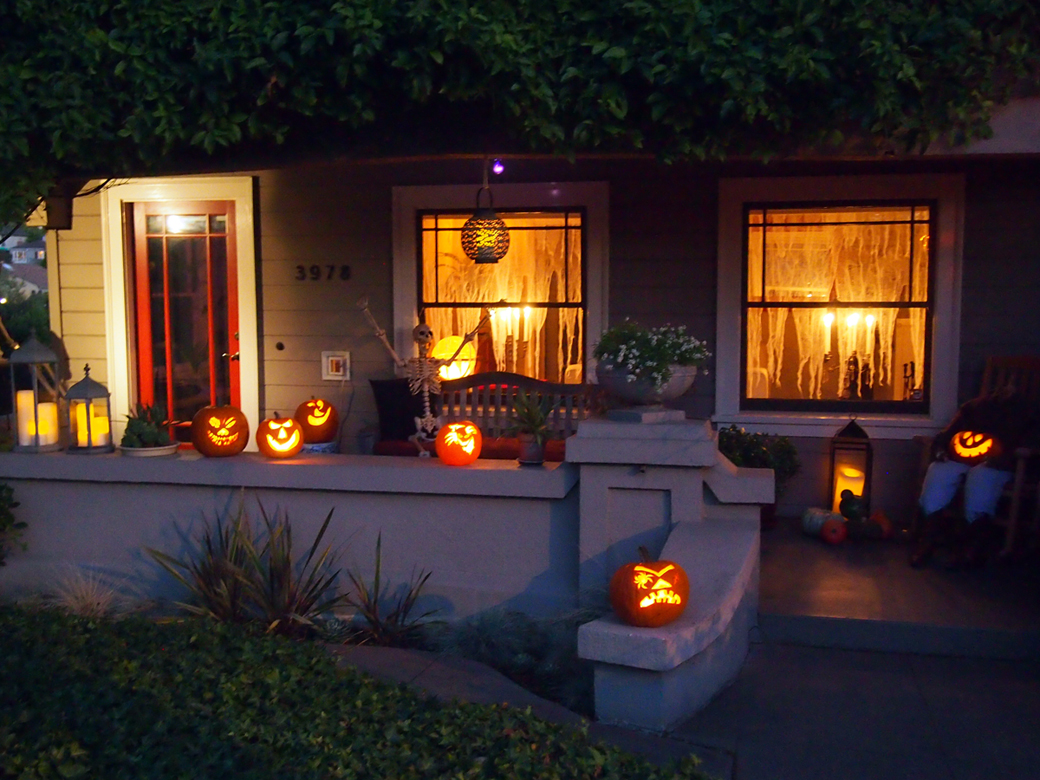
On Halloween, we like to set a spoooooky scene for our neighbors without making the wee little trick-or-treaters run off screaming in terror. Jack-o-lanterns are always a big hit, and the more the better. It takes some work ripping out their guts and carving them, but it’s totally worth it once they are all lit up and putting on a glow-fest. We use real candles that last all night, which also makes for that fabulous only-on-Halloween warm pumpkin-breath scent in the air.
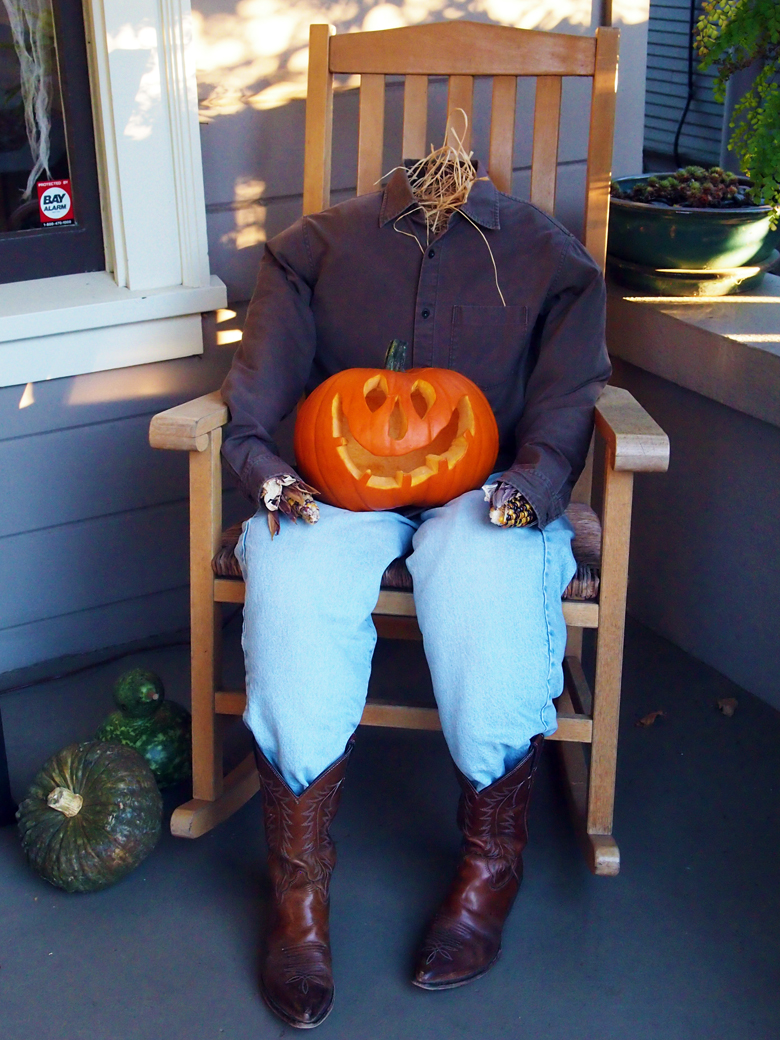
ScarecrowWe add some extra mystery to the scene by hanging scary curtains we make out of cheesecloth (from the housewares section of our local hardware store). We tack it to the top of the window frames and cut it into vertical strips. Finally we snip, tear and make holes in each strip, rubbing the cheesecloth to fray the edges. Fun, and theraputic, too!  A candelabra at each window sets the scene.

The final touches include music: Bach’s Toccata and Fugue in D minor and, for Frankenstein’s sake, let’s not forget the cocktails. It is a holiday, after all. Our Halloween favorite, we modify from Absinthe Brasserie and Bar in San Francisco.

Jack-o-LanternsDaedalus

2 ounces Irish whiskey
Juice of half an orange
1/2 ounce ginger syrup
Dash of orange bitters
Orange Twist

Shake the liquid ingredients vigorously with ice. Strain into a chilled cocktail glass. Run the orange peel around the rim, twist it over the drink, and drop it in. Slurp discriminately. There is candy to pass out, but you don’t want to be passed out with it.
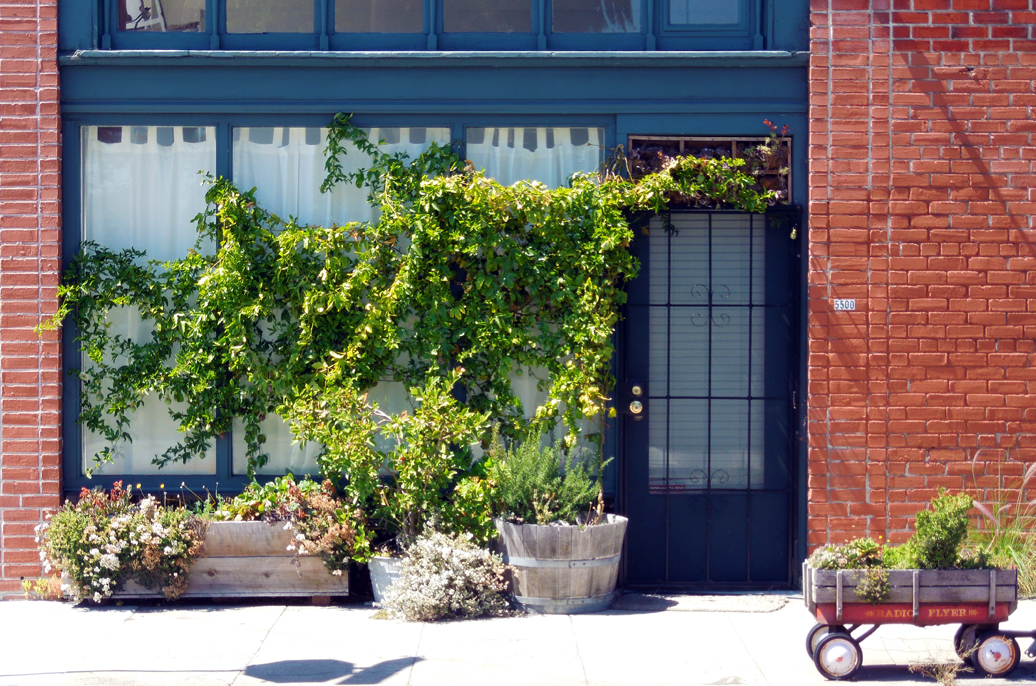
Creativity Shines in Oakland’s Golden Gate Neighborhood

Golden Gate-Radio Flyer-web

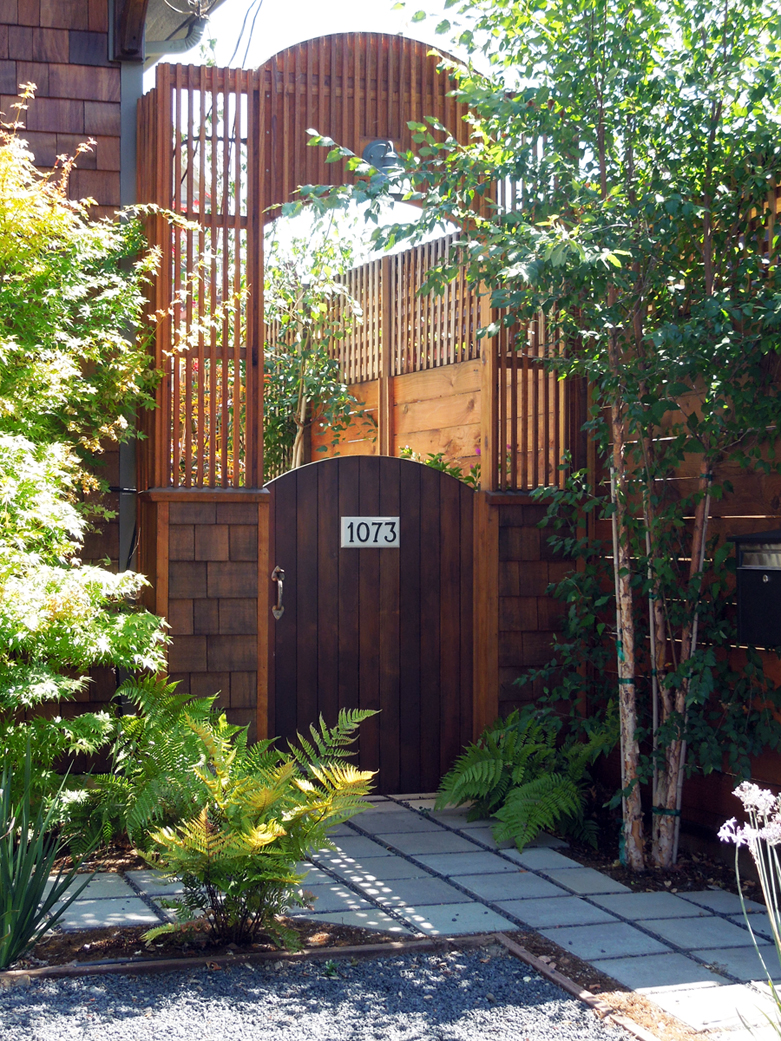
140701 Golden Gate-1073-web

When the first homes were built, the Golden Gate neighborhood was a town named Klinknerville. The name was changed to Golden Gate before it was annexed by the City of Oakland in 1897. It’s in the northwest corner of the City, east of Emeryville and south of Berkeley. Real Estate agents like to call that general area NOBE, but you and I know better. If not, I recommend this post; Please Don’t Call it NOBE, by Sarah Han.

What I love about Golden Gate and several other Oakland neighborhoods is their creative flair. I think it’s because they have diverse populations: diverse ages, standards of living and ethnicities. Residents are willing to make unconventional design choices, which spark creativity up and down the streets.

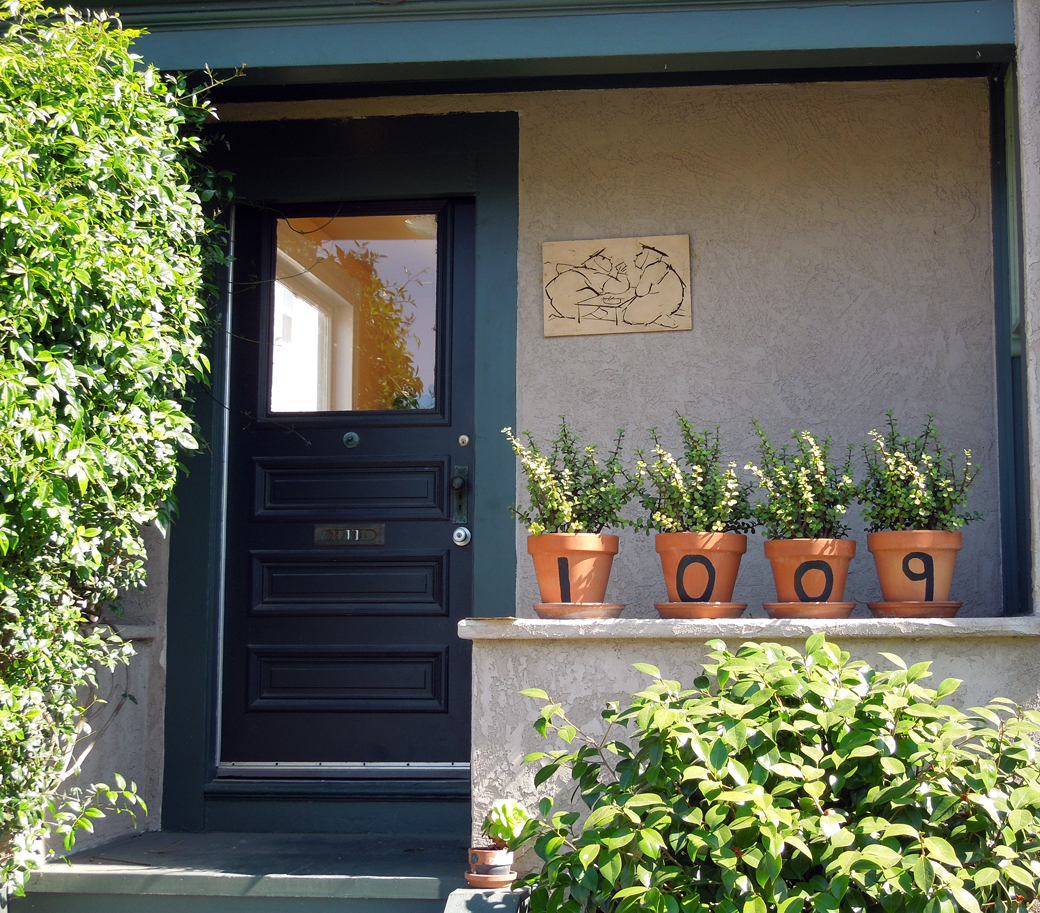
Of the many inspiring entrance treatments I’ve seen in Golden Gate, I’ve selected three to feature here. It’s likely the entrance in the top photo was originally designed as a storefront. The building is on the main commercial street, San Pablo Avenue, but this entry is on the side street. I love slate blue with brick, the vine that softens the flat entrance and, of course, the radio flyer planter.

140701 Golden Gate-1009-webI’m going to make up a story for the gateway in the photo on the left. The shingled fence with gate was built first. Then the designer decided they wanted a very tall fence at the property line (let’s not make judgments about their relationship with the next-door neighbors) and designed an attractive slatted fence extension. Finally, the designer wanted the two parts to be better integrated and created this arched and slatted overhead structure. However it happened, I like it. Take note of the elegant paving and the stunning River Birch near the gateway.

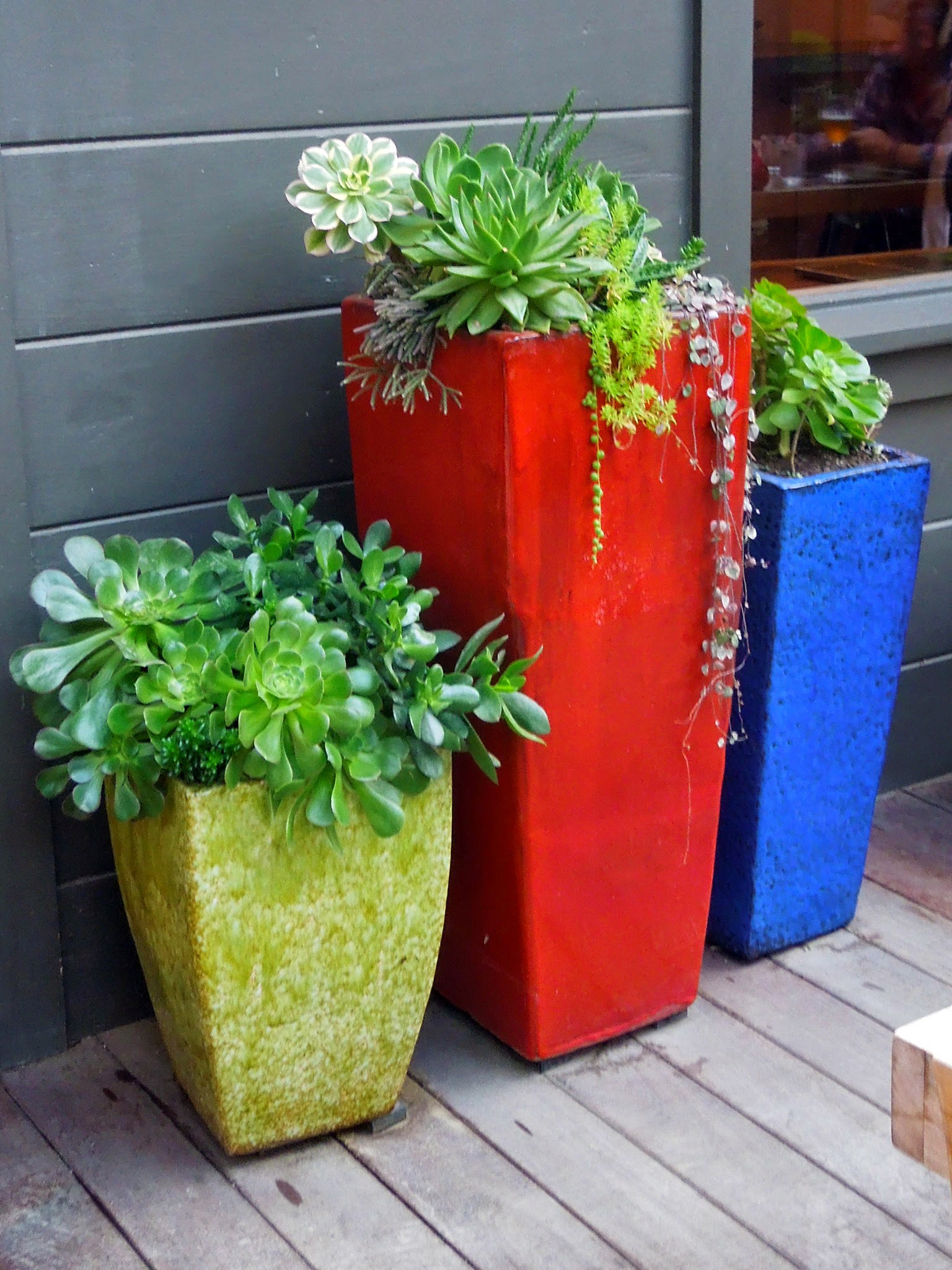
It would be easier to imitate the simple treatment of number 1009. The address is hand-painted on terracotta pots filled with leafy succulents. The idea is clever but wouldn’t work nearly as well without the smart color choices and the striking Zen tile on the wall near the door (from which they probably removed the original address). When planting in small pots like these, use very drought tolerant plants or you’ll need to water every day. These are filled with Portulacaria afra, Elephant food.

Historic Information Source: Wikipedia, Golden Gate, Oakland, California

Note added November 12, 2014: Since writing this post, I’ve learned there are (at least) two different ideas about the extents of the Golden Gate neighborhood. According to Oakland Wiki, the area I considered to be Golden Gate, is actually three neighborhoods: Golden Gate, Gaskill, and Paradise Park. By that map, the entrances I’ve featured in this post are in the Gaskill neighborhood. Either way, they are still shining.

What if it really does rain?

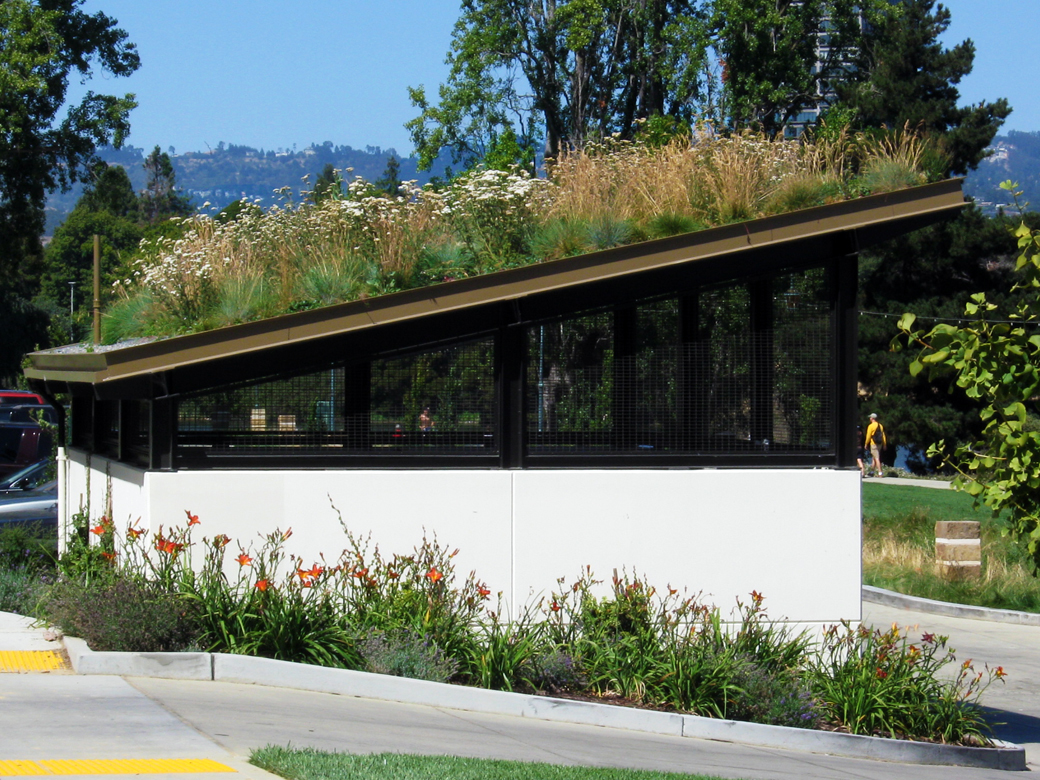
Lake Merritt Green Roof

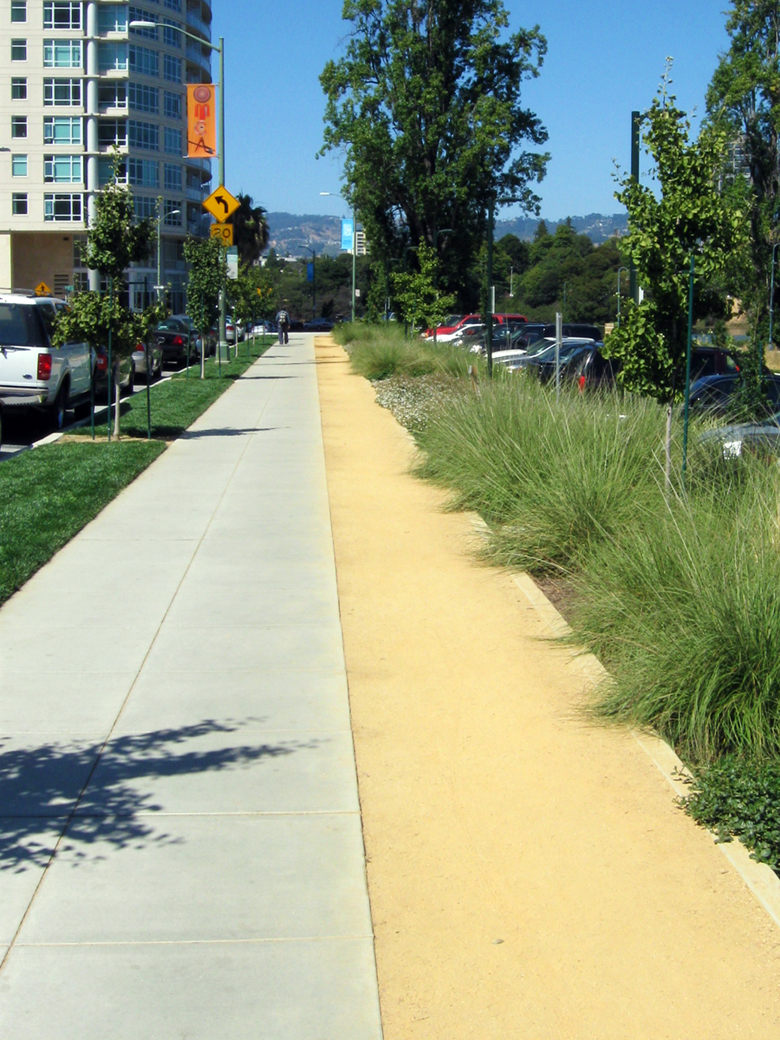
Lake Merritt Permeable Paving

I have a positive outlook this morning: I’m thinking about what’s going to happen to all that rain we’re going to get this winter in California.

Let’s say we left land in its natural state: much of the stormwater would be held by plants, soak into the soil, or seep slowly downhill. Pollutants washed from the atmosphere would be absorbed through contact with the plants and soil.

But we don’t leave land alone. We build things through which water can’t flow. Roofs and pavement prevent rain from reaching the soil. Water runs off impervious surfaces, and pipes transport it rapidly to creeks and to the Bay.

That creates problems. The water enters the system too fast, causing erosion and increasing the possibility of flooding. Pollutants running off roads and parking lots are discharged into local creeks and eventually into the Bay. Rainwater has fewer opportunities to recharge the groundwater table.

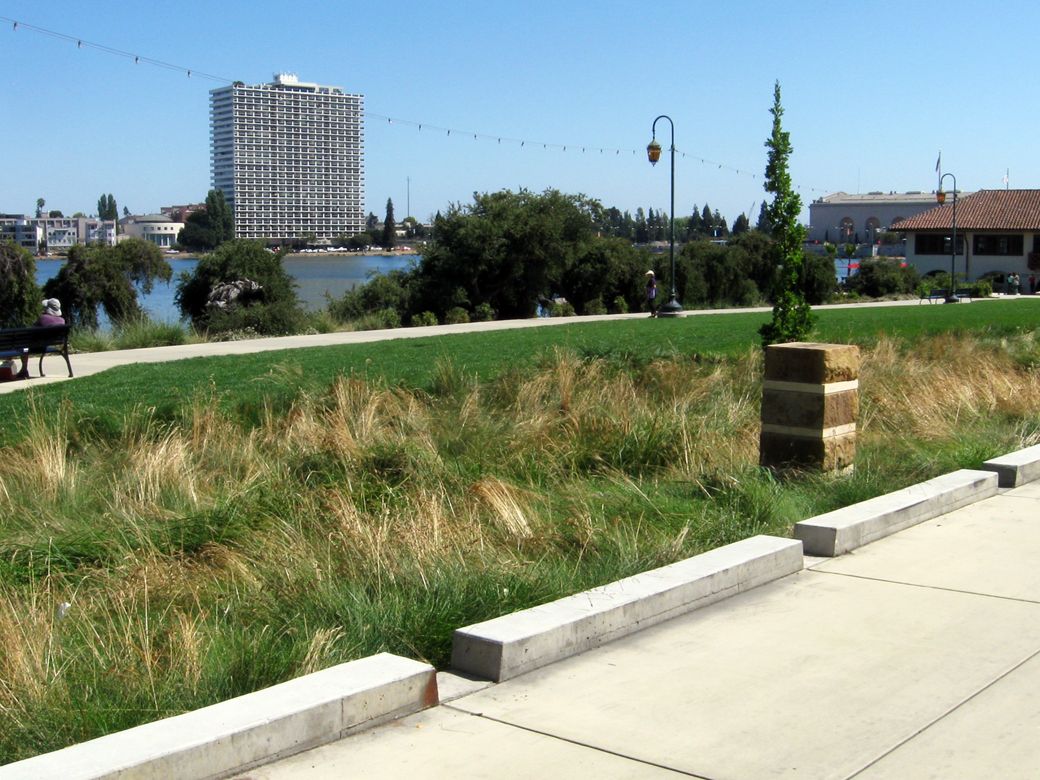
Vegetated swale

The goal of Stormwater Best Management Practices (BMPs) is to make site drainage mimic, as closely as possible, the way a natural landscape drains.

These images show three BMPs used in the Lake Merritt Municipal Boathouse project. The landscape architects for the project were Wallace Roberts & Todd of San Francisco and Adrienne Wong Associates of Oakland.

Green Roof
The green roof over the recycling and trash structure filters pollutants from stormwater, minimizes roof runoff, and reduces heat island effect.

Permeable Paving
The decomposed granite running surface is permeable. Permeable paving allows stormwater to soak into the ground, filtering and storing it.

Vegetated Swale
Openings in the curb allow stormwater to run off the paved surface and into the vegetated swale. The swale slows stormwater while the grasses and soil filter out pollutants before entering the storm drain system.

These stormwater solutions fit beautifully into the landscape. I think that’s because they were part of the designers’ plan from inception. Now, bring on the rain.

What is something you do to save water?

A Truly Local Cocktail

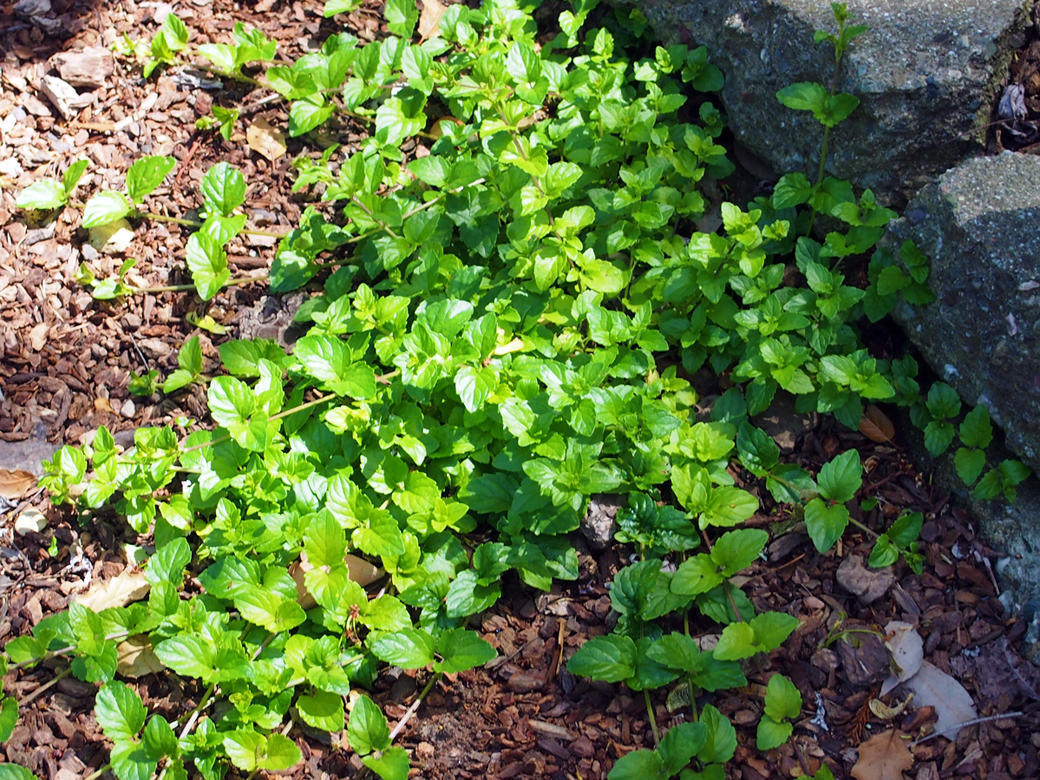
OLYMPUS DIGITAL CAMERASan Francisco was originally named for this plant, Yerba Buena. It means “good herb” in Spanish. The City’s name was changed to San Francisco in 1846. The botanical name for this plant is Satureja douglasii.

As you might imagine, it’s a California native plant. It’s easy to grow, smells delightful, and makes luscious mint juleps.

Yerba Buena Julep Recipe
To mix a truly local cocktail, use a Bay Area-bottled bourbon like B&E (Breaking & Entering) by St. George Spirits in Alameda or, if you’re willing to seriously break with tradition, Old Portrero Rye Whiskey, distilled in San Francisco.

3-4 six-inch long stems of yerba buena leaves
1/2 tablespoon simple syrup
4 ounces whiskey
1 three-inch long stem of yerba buena

Muddle the yerba buena and simple syrup in the bottom of a chilled old-fashioned glass. Fill the glass with ice (crushed is traditional), add the whiskey, and stir until the glass is frosty. Garnish with the yerba buena sprig, extending it above the rim of the glass.

It’s the perfect cocktail for a warm evening, sitting in your garden, listening to the Giants or the A’s game on the radio. Let me know how you like it.

Creating Art and Community at Maxwell Park

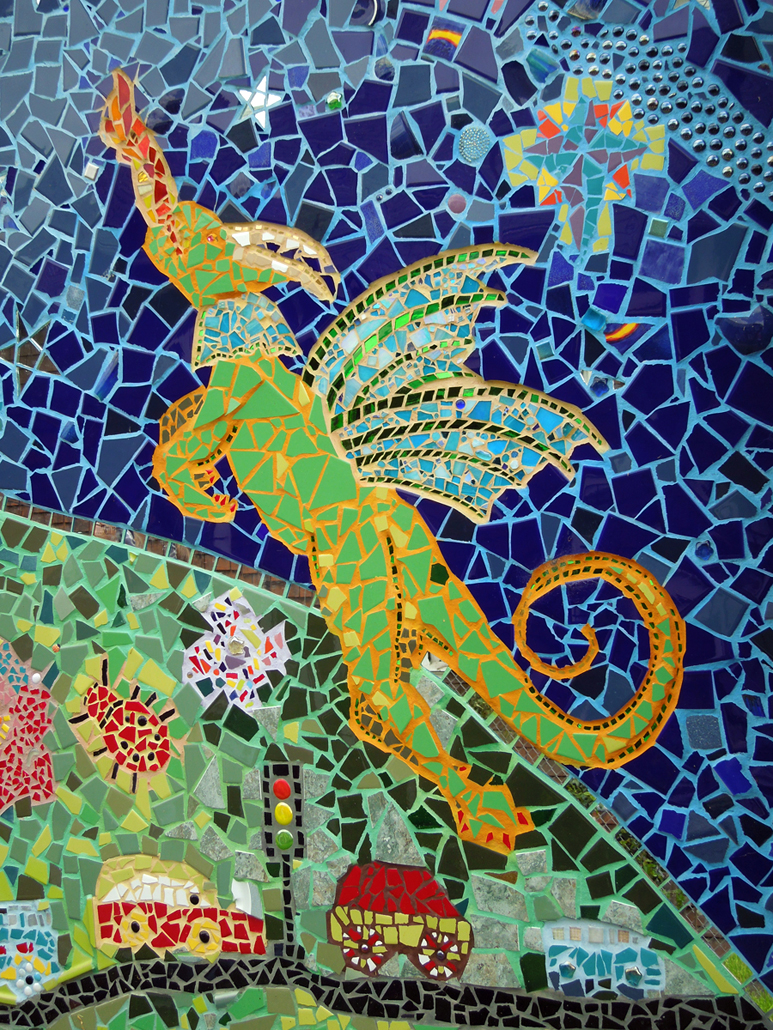
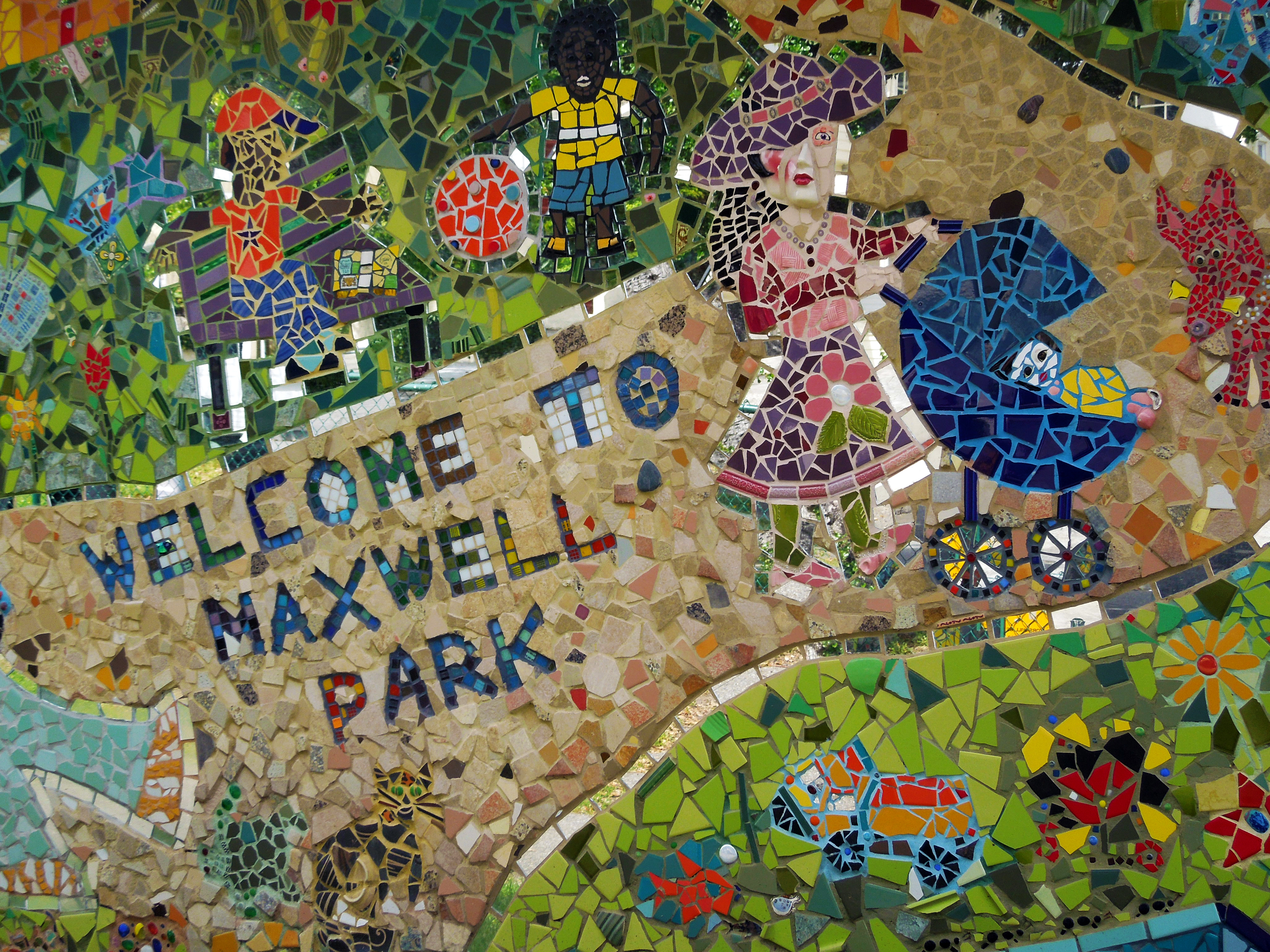
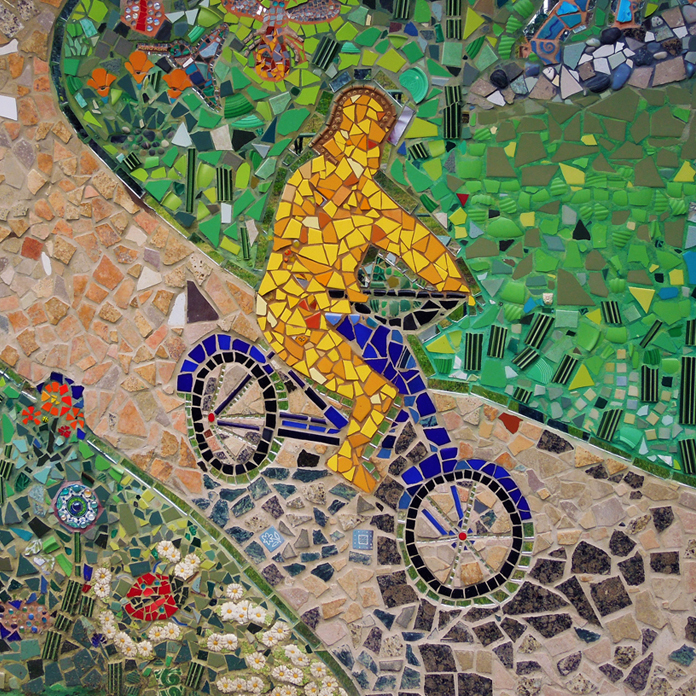
Maxwell Park-DragonThis East Oakland park features mosaics created by the local community.

Nancy Karigaca and Beverly Shalom are co-coordinators for the mosaic tile project:

“My priority has been to work on projects that empower community members, experienced and inexperienced mosaickers, to create beauty and have a positive impact on the neighborhood,” said Shalom. “We try to involve everyone in the community, and ask people who are passing by to adhere some tiles, so that they will have a sense of pride in the work and the park and want to take care of it.”

Quote source: Sumiko Saulson, Oakland Art Scene Examiner

Maxwell Park-Welcome

Maxwell Park-Bicycle

Big Sur Roadhouse

Big Sur Roadhouse Succulents One way we live where we are is to travel local. We spent the weekend with the kids in Big Sur, about 150 miles from most of the five-one-oh area code.

Sunday, we tried a new restaurant: Big Sur Roadhouse. The food was delicious and the design will bring us back. It is the perfect cozy place on a foggy Big Sur evening.

The Roadhouse serves beer and wine only and we discovered a lovely French fermented cider, Clos Normand. The restaurant served it in wine glasses from a champagne bucket: very festive. Big Sur Roadhous-Firepit

Rain Gardens – Why they are important during a drought

Debbie Ballentine's avatarNative Hearts Garden Blog

Pervious paving at native demo garden,  Taylor & Walnut, San Jose Pervious paving at native demo garden, Taylor & Walnut, San Jose

We’re in the middle of a drought crisis… why the heck should I care about rain gardens? It’s a simple answer… since nearly half of the water we use comes from groundwater, the less rain we have the more important it is to protect and preserve that groundwater.

I’ve provided plant lists and data sheets about rain gardens and related subjects that you can download. They are located in the right column, at the very bottom, in the flash_widget. The following documents are available for download:

  1. Plant List, SCVURPPP
  2. Plant List, Master Gardeners
  3. Rain Gardens, BASMAA
  4. Rain Barrels, BASMAA
  5. Pervious Paving, BASMAA
  6. Stormwater Control for Small Projects, BASMAA
  7. Ten Top Tips for Creeks, SCVWD

Rain gardens – and their kin – are good for the environment, great for wildlife and important to you and me!

–~–

View original post

Beach Strawberry

Fragaria chiloiensisThis California native plant, Fragaria chiloiensis, grows quickly in our yard in Oakland. Sometimes it grows too well, spreading into areas intended for less rambunctious native plants. Still, it’s a great groundcover in sun or part shade. It’s more drought tolerant with some shade during part of the day.

The reason why I’m thinking about this plant today, is the following description by Kelly Hardwicke, a senior botanist and pollinator expert at H.T. Harvey & Associates, an ecological consulting firm with whom I’m currently working:

“Fragaria…is one of the most valuable herbaceous caterpillar host genera in North America, providing host opportunities for over 70 native lepidopteran species.”

That means butterflies. Come on over to our yard; we’ve got Fragaria for all.