Longfellow: A Vibrant Neighborhood

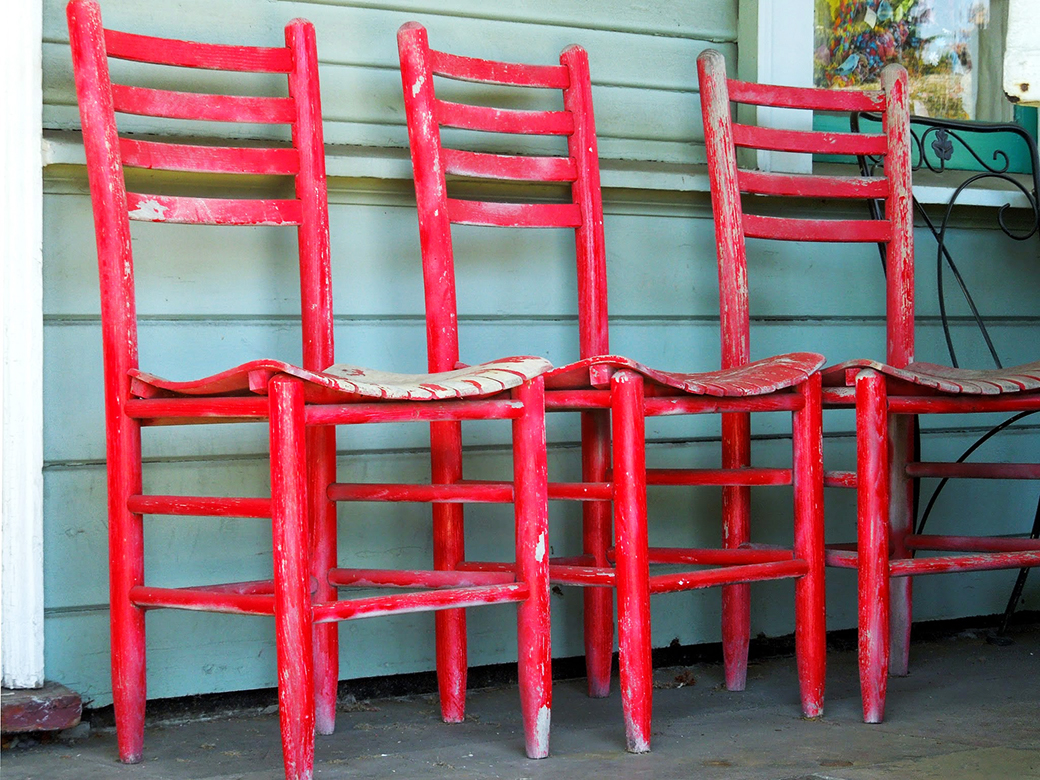
Longfellow-porchI read a thoughtful blog post a few weeks ago from The Girl Next Door is Black, and it inspired me to write about Longfellow.

For the last few years, I’ve worked and walked in Longfellow, an Oakland neighborhood that is mostly African American. A lot of young white families are moving in. Watching the neighborhood change has made me think about gentrification and diversity. It would be a devastating loss to have the original families priced out of this neighborhood but this post is about the positive energy that diversity brings.
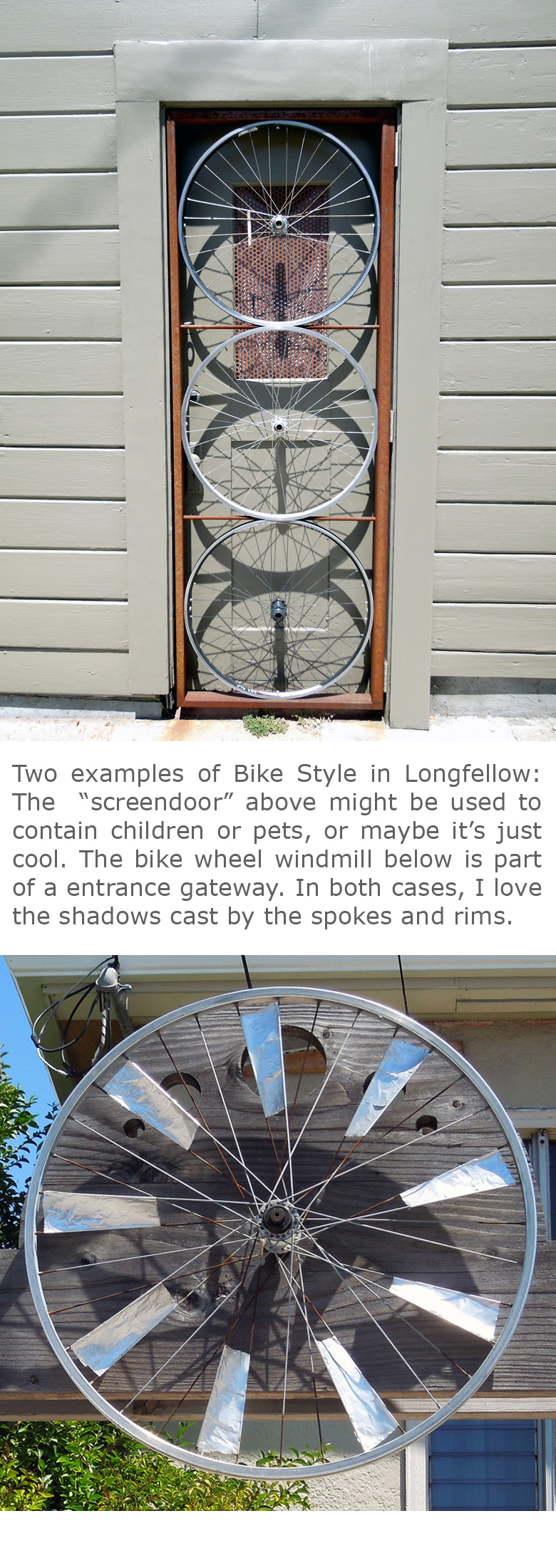
Longfellow Bike StyleI originally thought the neighborhood was vibrant because it’s diverse. After considering that further, it occurred to me that it’s full of energy, in part, because the African American neighbors spend more time outside socializing than people in white neighborhoods. In that case, Longfellow is becoming more diverse but probably not more vibrant.

But my gut tells me the excitement in Longfellow is building. I think a population of all ages is also adding its spark. The older people on the street bring graciousness and civililty. They greet passersby and wait for a reply. The incoming white families are mostly young. They’ve chosen to live in a neighborhood considered to be African American. Young people in Oakland are often more than accepting of differences: they actively seek diversity.

There are other remarkable qualities of the Longfellow neighbors, black and white: they are walking and riding bikes. As a matter of fact, there’s a tendency toward bike-themed design throughout the neighborhood. They are also growing food in their yards. These traits are probably evidence of a community that wants a sustainable lifestyle. The by-product is a neighborhood where people are active and outside.

It turns out, Longfellow is probably vibrant because it’s diverse.

Living Local: Our Own Backyard

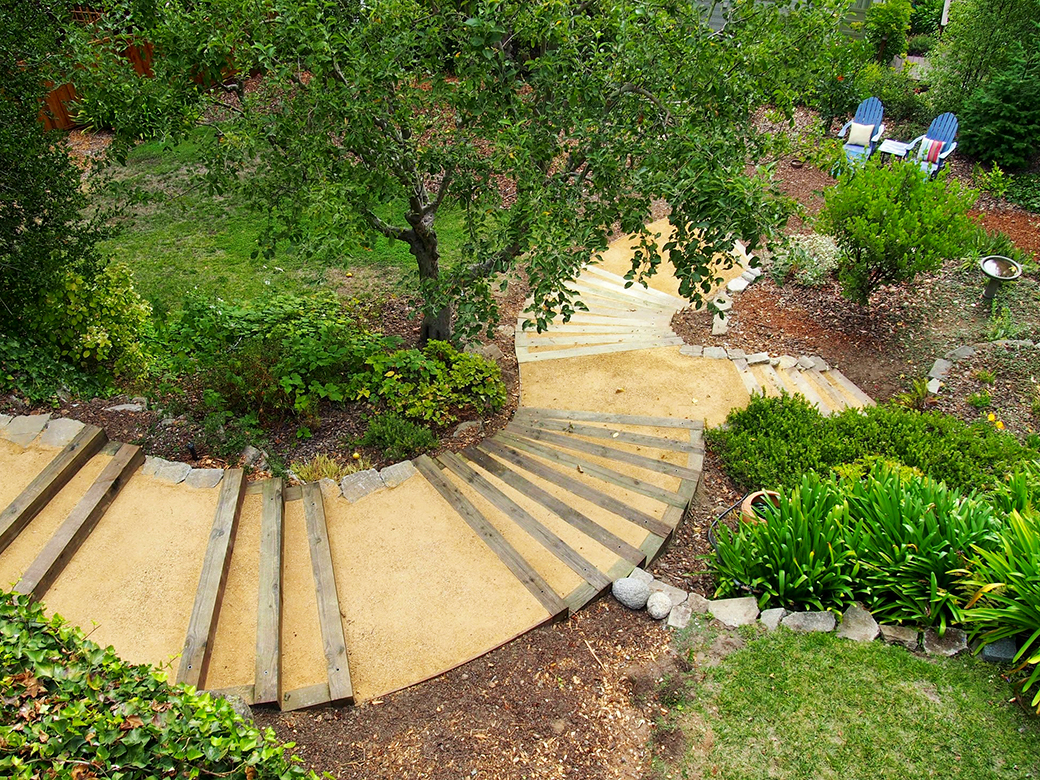
New Steps from Above

There’s no place more local than your own backyard. We’re outdoorsy gals and we spend a lot of time both working and relaxing in our yard. When we bought the house, the steep path down to the garden started with wooden steps, leading to a concrete ramp, followed by haphazardly arranged railroad-tie steps, and then a short bare incline to the level terrace at the foot of the slope. It was kind of a mish-mash jumble that we first thought was charmingly rustic and later, well, not so charming.

We have a lot of dreams for our yard, but like most people, we have limited funds so we have to carefully pick and choose what we take on and when. Since the steps are the gateway to our favorite outdoor room, we decided it would be this year’s backyard project.

Before: The original path to the backyard was a steep and uneven mix of ramps, railroad ties, urbanite, and bare slopes.
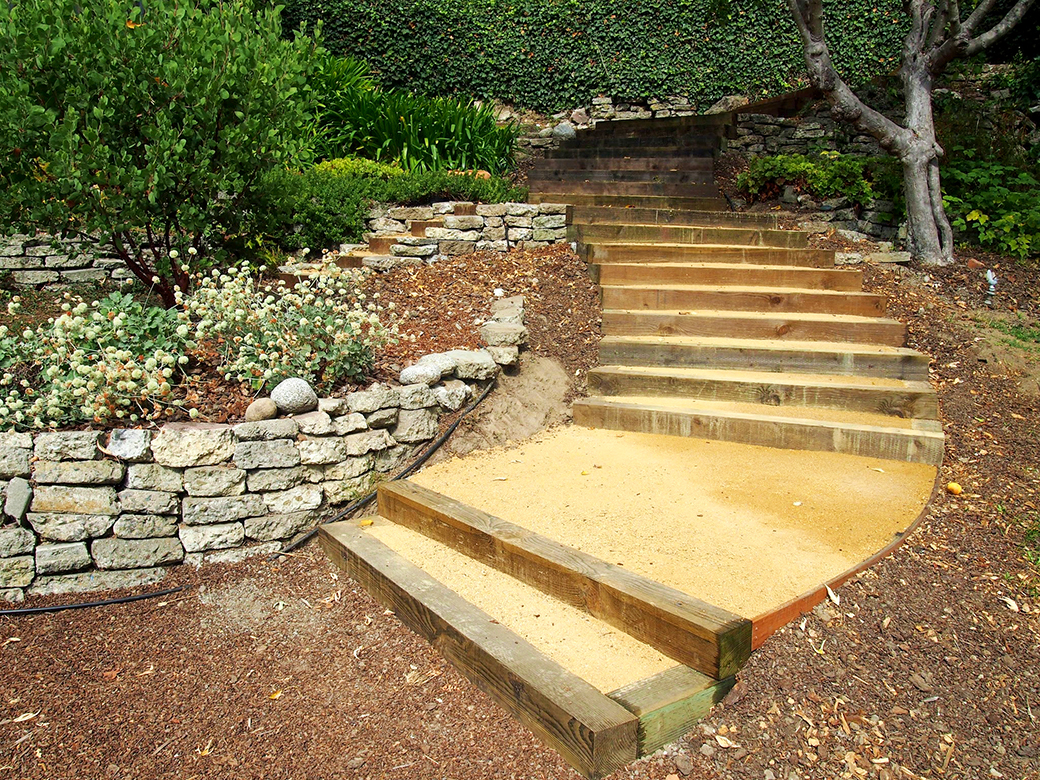
After: The new walkway from our home to the garden is composed of six-foot wide curving steps and level landings. It's astounding how much more of a pleasure it is to walk on a well-designed and built set of steps.
After: The new walkway from our home to the garden is composed of six-foot wide curving steps and level landings. It’s astounding how much more pleasurable it is to walk on a well-designed and built set of steps.

Design/Build
We hired Four Dimensions Landscape Company in Oakland to design and build the steps and we couldn’t be happier with our experience. First, they designed the striking “S” curve on paper, knowing adjustments might be made in the field. The integrated process of design/build makes for a smooth and efficient transition from paper to earth. You wouldn’t want a contractor who doesn’t appreciate design enough to make smart decisions during construction.

When it came time to put the steps in the ground, Michael Thilgen, one of the Company’s owners and a licensed landscape architect, spent hours on-site with a transit and the construction crew. He made sure the steps are comfortable to traverse with landings at the locations where we want future paths to connect. At the same time, he never lost sight of that sinuous line that makes these the steps of our dreams.

Sustainability
The new steps are constructed of landscape timbers, decomposed granite, and existing urbanite (recycled concrete) we had on site. The decomposed granite is permeable for improved storm water infiltration. The original railroad-ties will be reused to make a retaining wall in another part of our yard. Now we spend even more time in the backyard, sprucing it up to be worthy of the new steps.

Have you been working on any projects close to home?

A Truly Local Cocktail

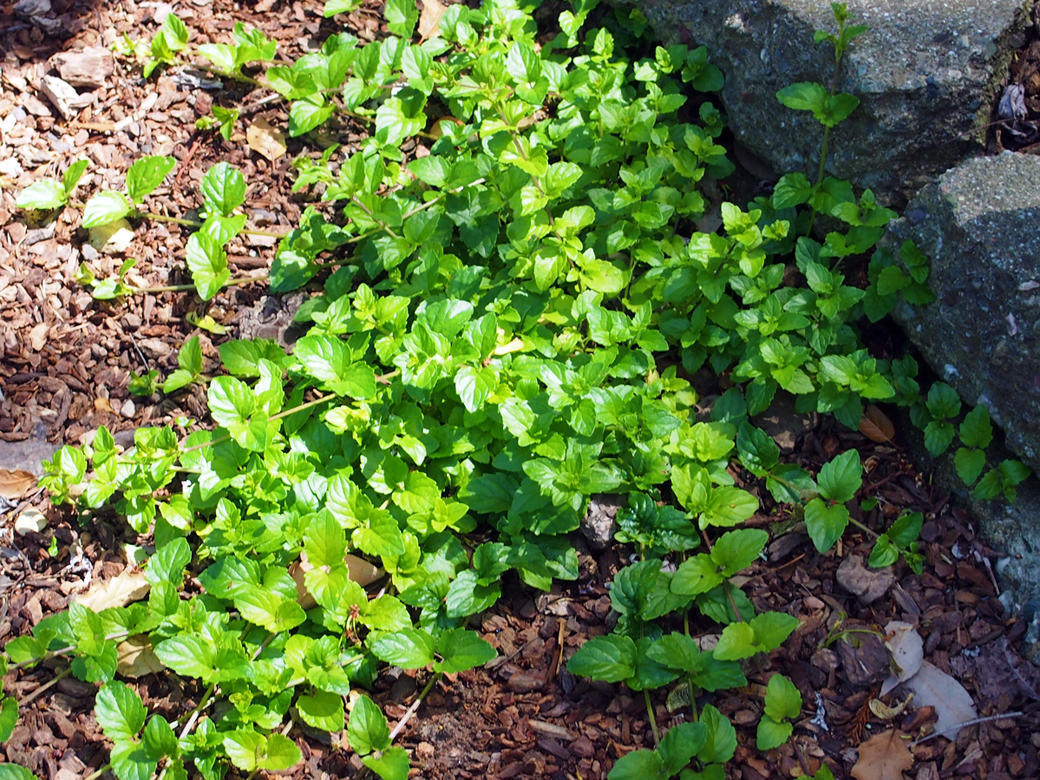
OLYMPUS DIGITAL CAMERASan Francisco was originally named for this plant, Yerba Buena. It means “good herb” in Spanish. The City’s name was changed to San Francisco in 1846. The botanical name for this plant is Satureja douglasii.

As you might imagine, it’s a California native plant. It’s easy to grow, smells delightful, and makes luscious mint juleps.

Yerba Buena Julep Recipe
To mix a truly local cocktail, use a Bay Area-bottled bourbon like B&E (Breaking & Entering) by St. George Spirits in Alameda or, if you’re willing to seriously break with tradition, Old Portrero Rye Whiskey, distilled in San Francisco.

3-4 six-inch long stems of yerba buena leaves
1/2 tablespoon simple syrup
4 ounces whiskey
1 three-inch long stem of yerba buena

Muddle the yerba buena and simple syrup in the bottom of a chilled old-fashioned glass. Fill the glass with ice (crushed is traditional), add the whiskey, and stir until the glass is frosty. Garnish with the yerba buena sprig, extending it above the rim of the glass.

It’s the perfect cocktail for a warm evening, sitting in your garden, listening to the Giants or the A’s game on the radio. Let me know how you like it.