 Density, diversity, and being part of a larger urban context enlivens Oakland and other Bay Area Cities and makes them exciting places to live and visit. Saturday, Jan and I skipped the Grand Lake Farmers Market and chose to walk around the lake, enjoy an exhibit at the museum, and pick up some take-out Asian food for dinner. So what? Even ordinary activities can be extraordinary in a vibrant city.
 It was raining on and off, and I decided I didn’t really need to bring my camera along. Great idea. There’s never anything interesting going on in Oakland. Remind me to always bring a camera, or a phone, or something with which to shoot a bloody photo.
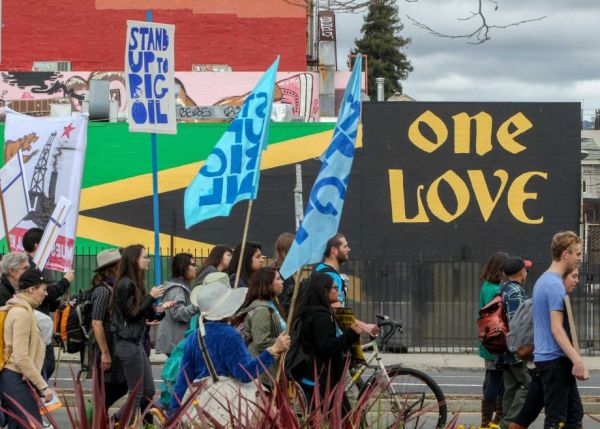
Anti-Fracking Demonstration
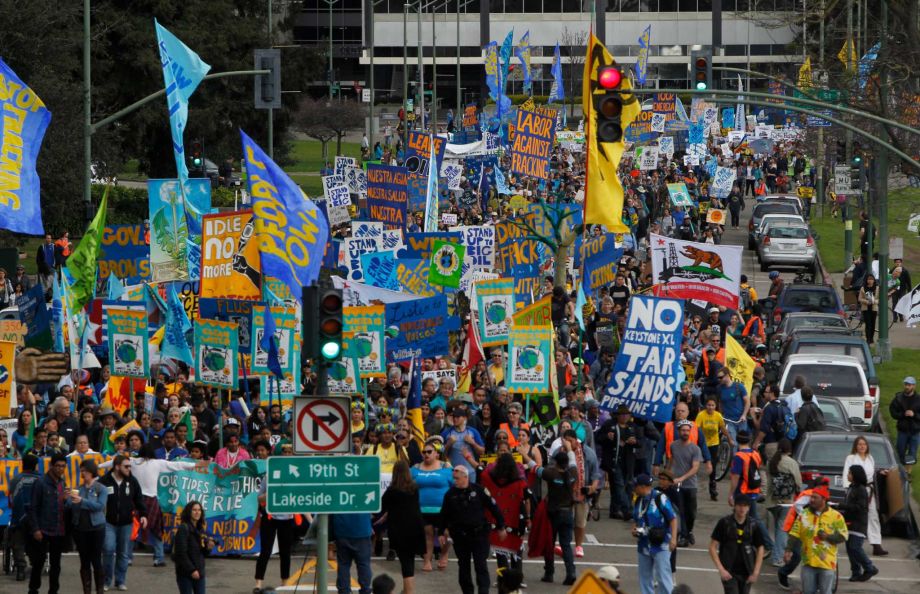
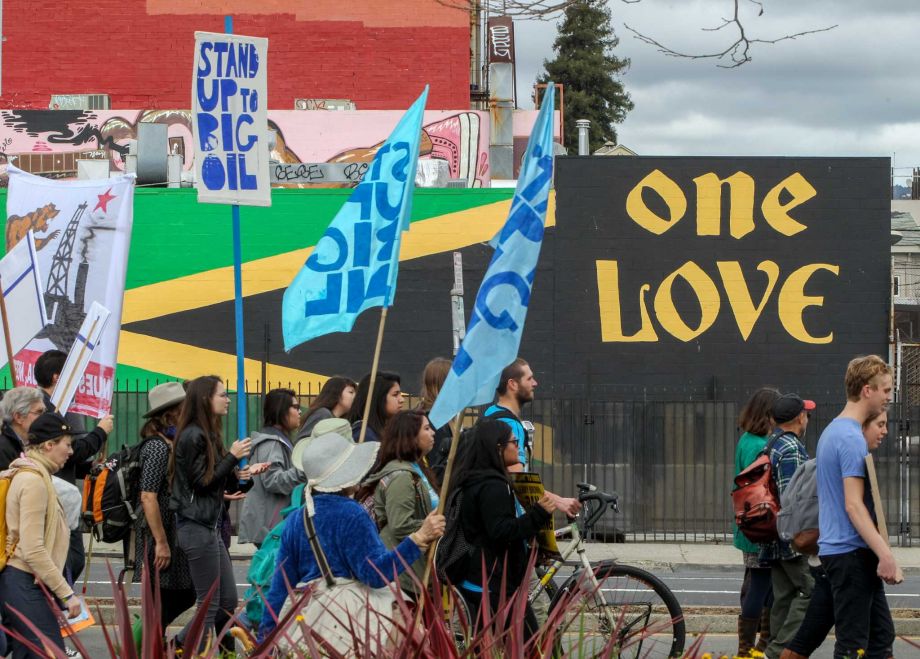
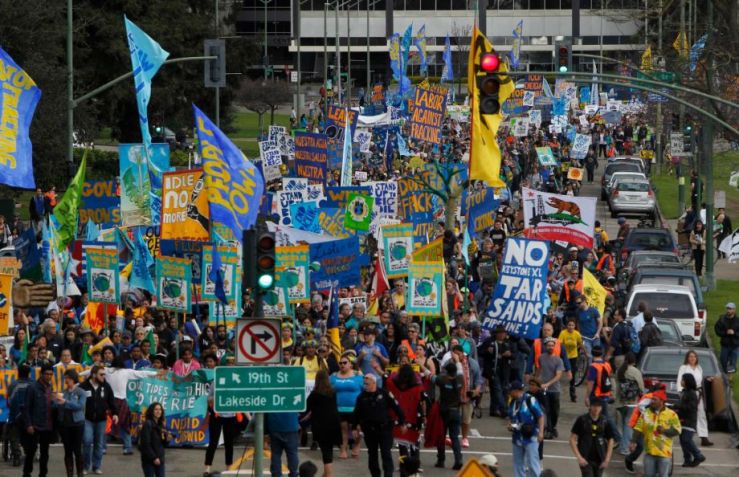
We were about five minutes into the walk when we noticed thousands of demonstrators heading in our direction. Before we could read their banners, Jan remembered that an anti-fracking march was scheduled for Saturday. I know you know what hydraulic fracturing (fracking) is, but I can’t resist describing it: Frackers drill deep into the earth to inject a huge amount of fluid at high enough pressure to fracture subterranean rocks and release oil or natural gas for our consumption. Even without all the facts, does that sound like a good idea? I don’t think so.
 The protest was held in Oakland because Governor Jerry Brown makes his home here and the point of the march was to beseech him to change his policies on fracking. My hypothesis is the demonstration was also held in Oakland because this town is known for being sympathetic to environmental causes and for being able to draw from nearby communities who feel the same. Energized communities have personality.
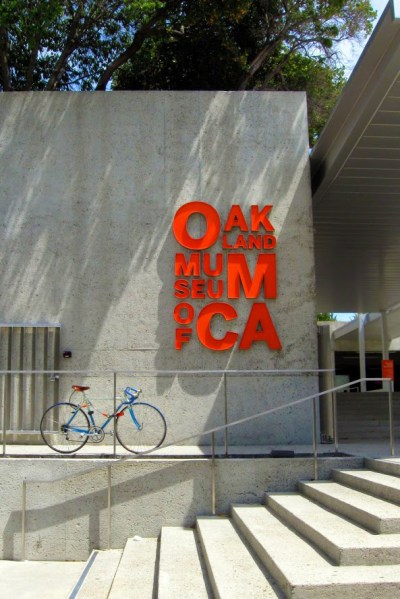
Oakland Museum of California
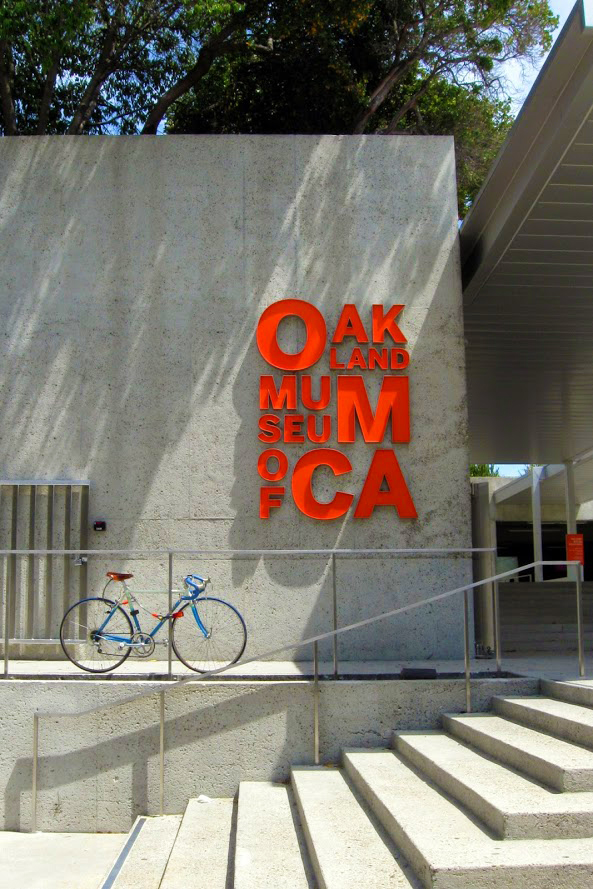
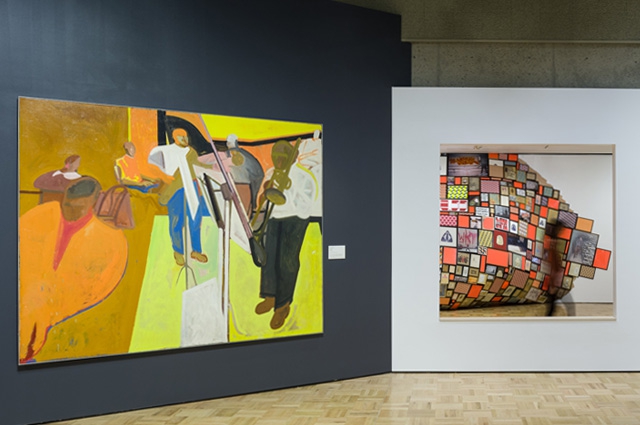
After converging with the crowd at the southern end of the lake, we headed further south to the Oakland Museum of California (OMCA) to check out the exhibit: Fertile Ground: Art and Community in California. Now, I’m one of those oafs who doesn’t like spending more than an hour or so at a time in a museum – but I really like that first hour. That’s one of the reasons a museum membership works for me. We support our local museum and get to stop in whenever we want.
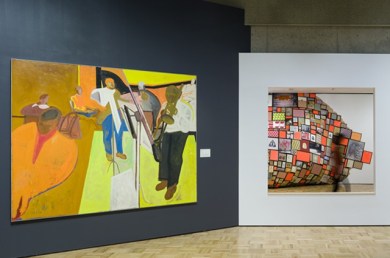 Fertile Ground features the California collections of both SFMOMA (San Francisco Museum of Modern Art) and OMCA. The exhibit guides us through four creative communities active in Northern California from the 1930s to the present:
- The San Francisco New Deal Muralists lead by Diego Rivera (1930s)
- Postwar at the California School of Fine Arts (1940s-50s)
- The New Art Department at UC Davis (1960s-1970s)
- The Mission Scene (1990s-Today)
It was a stunning and educational hour. The art is rich with diversity and the high-quality venue makes sense in a an urban location that draws users from around the Bay.
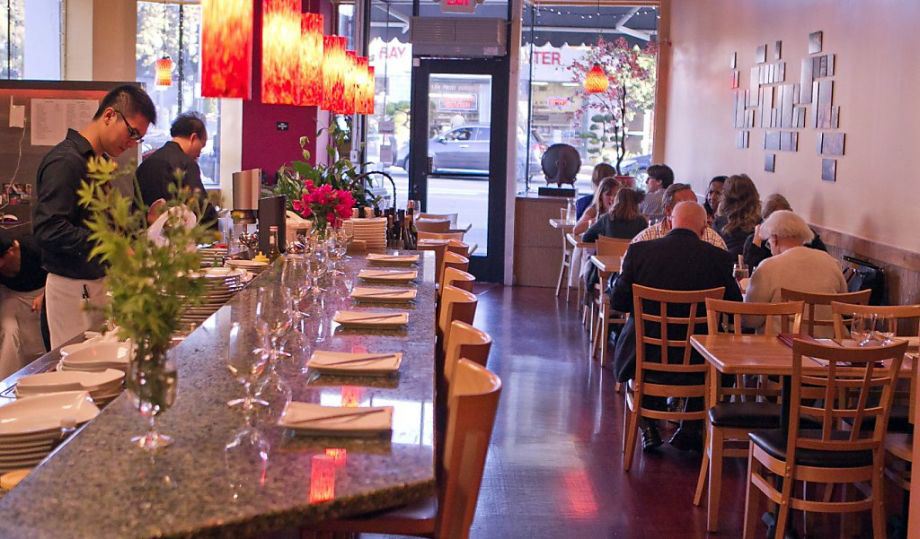
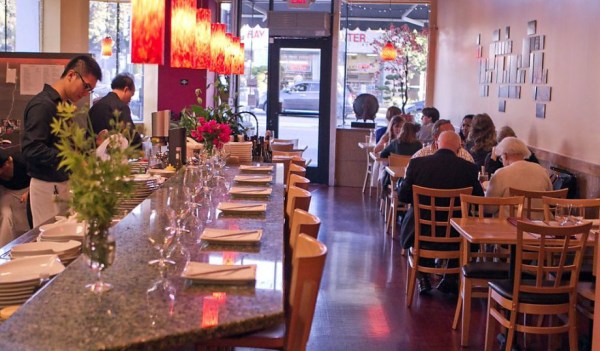 Lin Jia Asian Kitchen
After leaving the museum, we completed our lake loop and ended up on Lakeshore Avenue at Lin Jia Asian Kitchen. You might think it would make sense to call in our order before we arrive at the restaurant, (even though you know I didn’t bring my phone with me – if I did, I could have taken some photos) but that would deprive us of the opportunity to watch the chefs prepare our meal. We like to sit at the bar overlooking the kitchen, order a couple of Tsingtaos when we order the food, and watch the woks in action. We appreciate the high-quality, organic, and sustainable ingredients as well as the excellent preparation. In his review, Michael Bauer describes the experience as, “telling the story of one family’s move from Asia to America.” We’re sure glad they’re here. We’re sure glad we’re here.
As an urban designer, I want to make better places, but some places are lively without help from designers. They evolve into vibrant places with the help of their culturally rich communities. Any thoughts on what makes a great place to live?
Sources:
All of the Anti-Fracking Demonstration photos: http://www.sfgate.com/bayarea/article/Anti-fracking-demonstrators-march-through-Oakland-6068760.php
The Fertile Ground Exhibit photo and background info: http://www.museumca.org/exhibit/fertile-ground-art-and-community-california
The Lin Jia photo and review: http://www.sfgate.com/restaurants/diningout/article/Lin-Jia-Asian-Kitchen-family-s-compelling-journey-2327034.php
37.801239
-122.258299
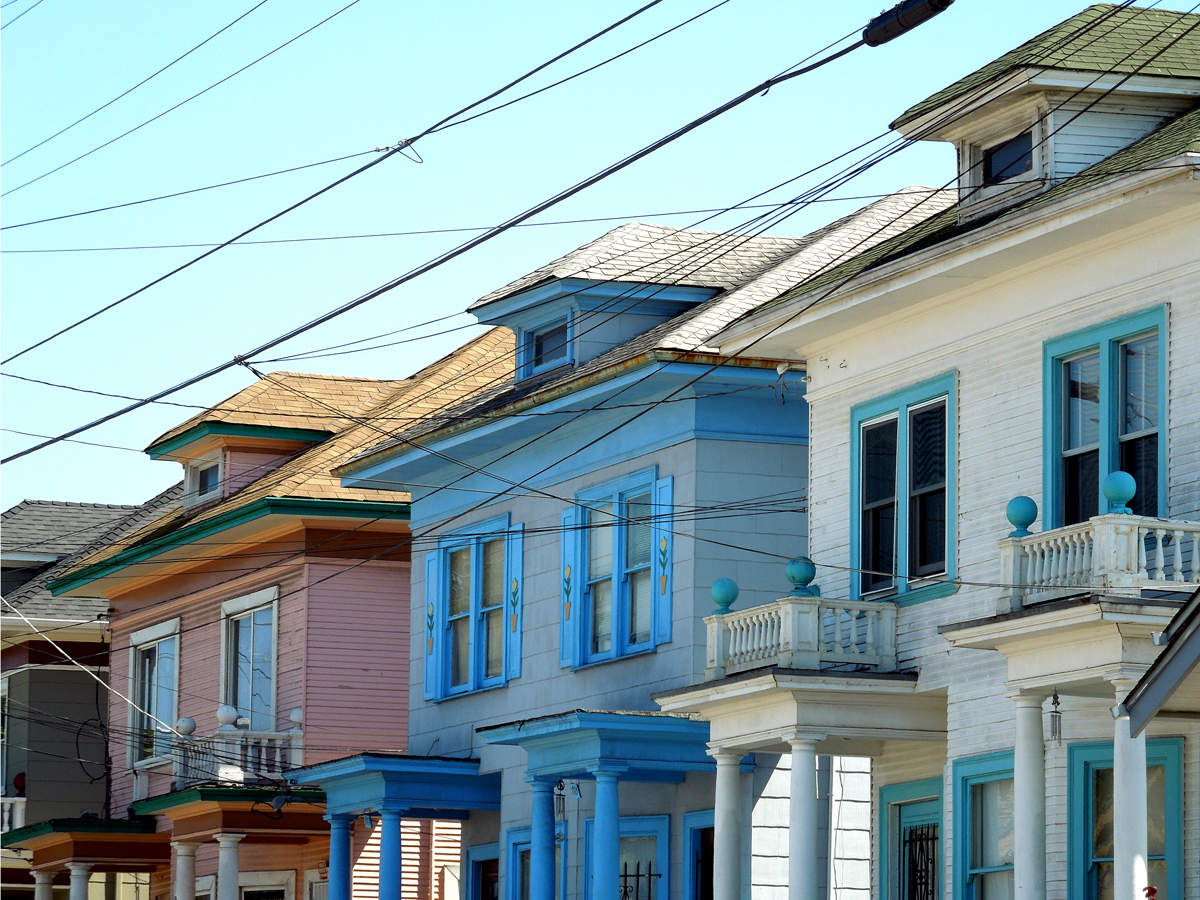
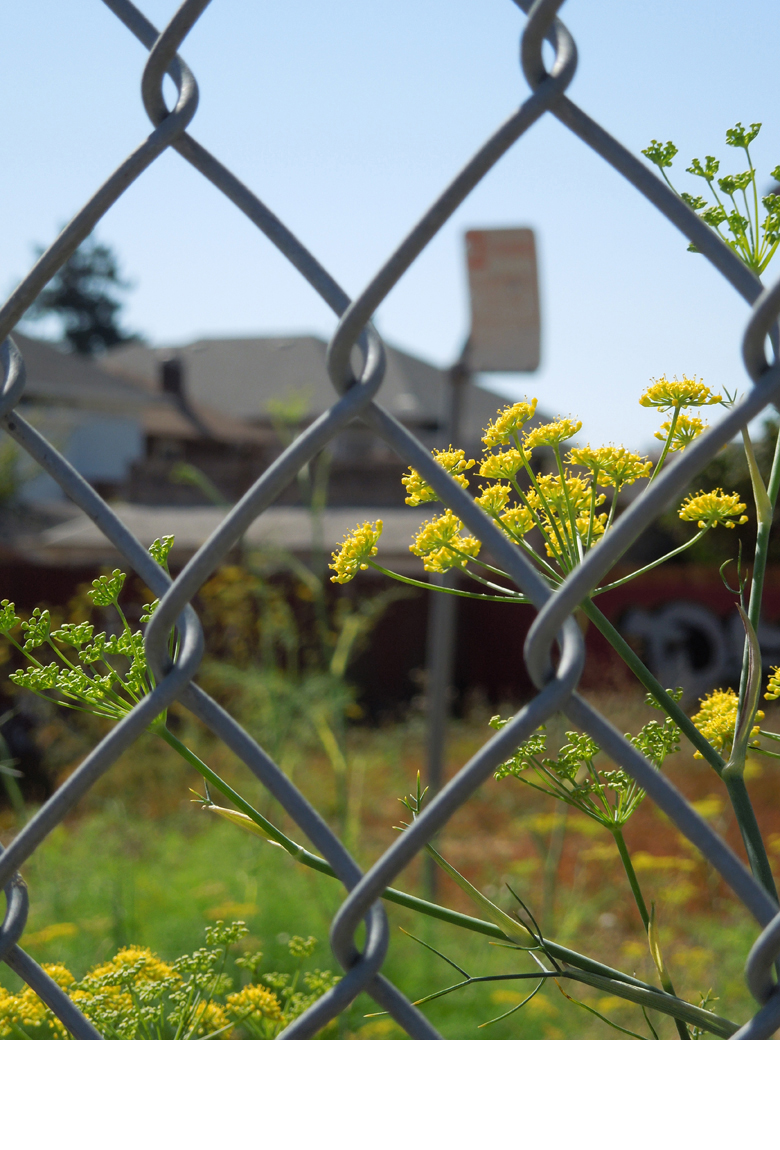
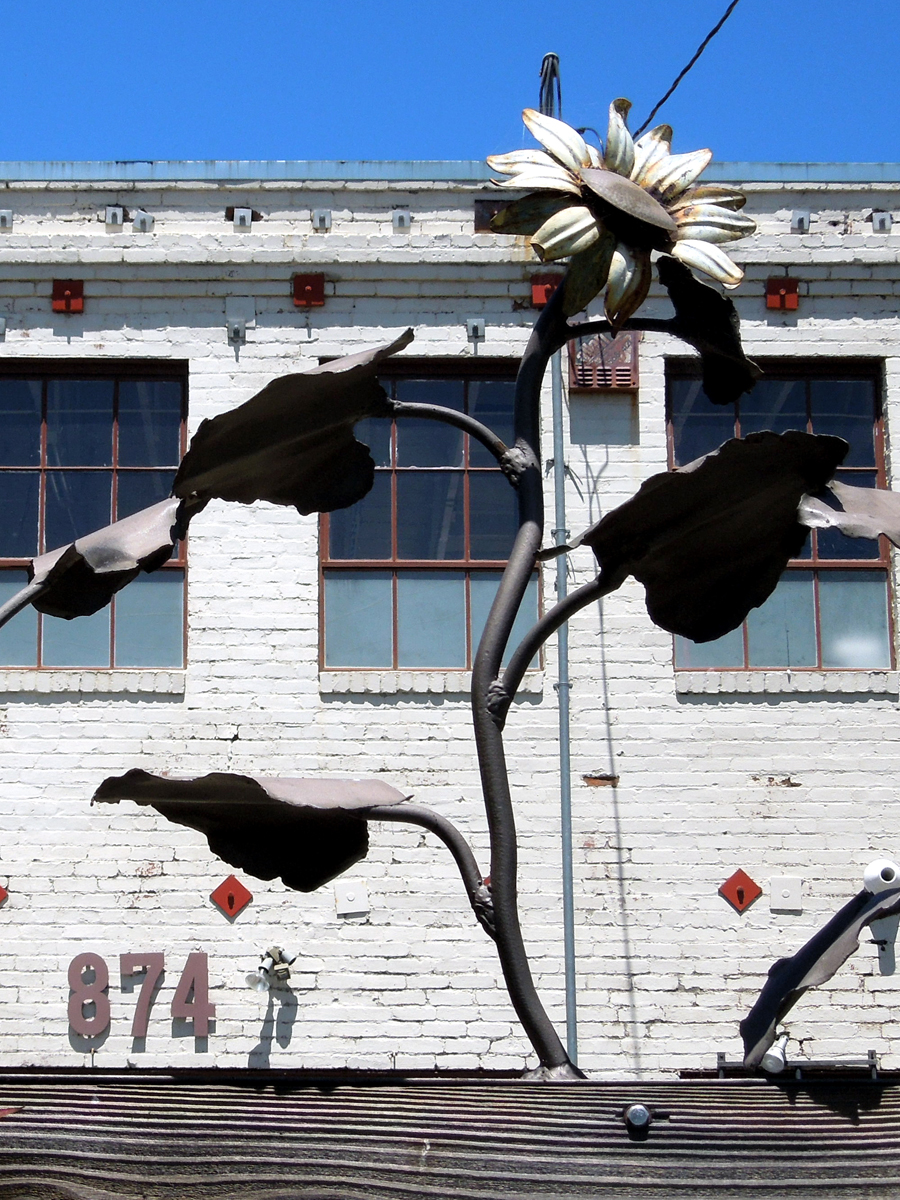 Today, I want to show you the Longfellow I’ve known. Longfellow is a predominantly African-american neighborhood, tucked into a corner created by two freeways. Its economic demographic ranges from poor to working class.