Uptown Oakland keeps getting better.

Uptown Oakland-Latham SquareNamed a Great Neighborhood by the American Planning Association, Oakland’s Uptown continues to soar. Last Saturday, I took a walk with the California Planning Foundation to find out why. The conversation started with a description of Jerry Brown’s 10K plan, developed when he was mayor of Oakland (1999-2007). His vision was to bring 10,000 new residents to downtown and Jack London Square and renew the historic Arts and Entertainment district in Uptown. As we walked through the neighborhood, we learned about how Oakland made it happen, and saw for ourselves how successfully the plan is playing out.

Uptown Oakland-Fox TheaterYou’ve probably heard about Art Murmur, a giant street party that takes place in Uptown on the First Friday of every month. You’ve likely been to the excellent music venues, restaurants, and night clubs that have been proliferating for the past several years. You’ve noticed the new transit-oriented housing developments, the new Art Park, and even some successful retail businesses like Oaklandish. Here are a few things you may not have known:

OSA
One of our Governor’s ideas was to create two charter schools and bring one of them to Uptown. Before a space was ready, Oakland School for the Arts operated out of a tent, in a parking lot between 18th and 19th Streets adjacent to San Pablo Avenue. Today, it shares a home with the historic Fox Theater. The school is a success story in its own right but it has also enlivened the Uptown neighborhood by bringing youth to the streets, venues, and parks during weekdays.
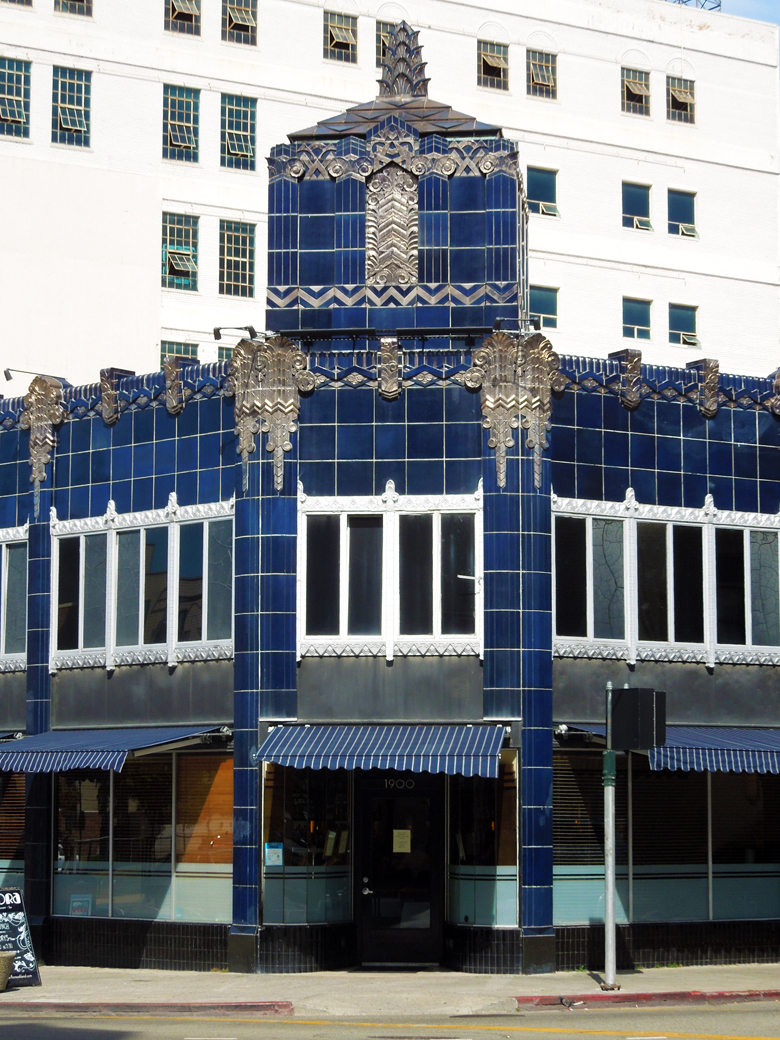
Oakland Floral Depot Building  & Flora Restaurant
The Oakland Floral Depot building houses the restaurant, Flora.


Historic Preservation

When the Loma Prieta earthquake hit Oakland in 1989, there was little financial incentive to demolish damaged buildings and start over. This turned out to be a boon for the beautiful, historic buildings that have been restored. Lack of interest in Uptown properties gave the Oakland Heritage Alliance and the City a chance to figure out ways to save the original buildings or facades. Many of the buildings are designed in the Art Deco style, and faced with glazed terra-cotta.

The City also provides matching grants to businesses in designated areas to renovate their exteriors. Free architectural assistance and 50 percent matching grants of between $10,000 and $30,000 are available to property and business owners for eligible projects.

The Capwell Building
This is a story of anticipated success. After the earthquake damaged the Beaux-Arts style department store, the retrofit included covering the original windows and terra-cotta cladding with concrete. The building that housed Sears since 1996, was purchased by Lane Partners who began renovation last November. The new design promises to bring back the windows and reopen the interior BART entrance. The ground floor will feature restaurants and foodie retail while the 2nd, 3rd and 4th floors are reserved for tech tenants.

Uptown Bike StationBike Station
A Bike Station has opened up near the 19th Street BART entrance. It has free, attended parking for 130 bikes from 7 am to 9 pm on weekdays. They offer bike repair and tune-ups as well as basic bike accessories. If you have too much fun Uptown to ride your bike home, you can leave it overnight for a $5 fee.

17th Street Gateway
The 17th Street entrance to the 19th Street BART station features new artwork inspired by the Oakland Hills, San Francisco Bay, flashy auto paint, and the blue tile of the station. The sculpture, Shifting Topographies, by Dan Corson, is painted with color-shifting paint that changes hue depending on the angle of the sun. At one end of the station, emergency ventilation shafts are disguised with topographic patterns on blue mirrored glass. Shapes of light are projected on the sculpture at night assuring that this a work of art that never stands still.

Never standing still is a good description of the whole Uptown neighborhood: It just keeps getting better.

Click on a photo to start the slideshow.

Shipping Container Village at The Yard

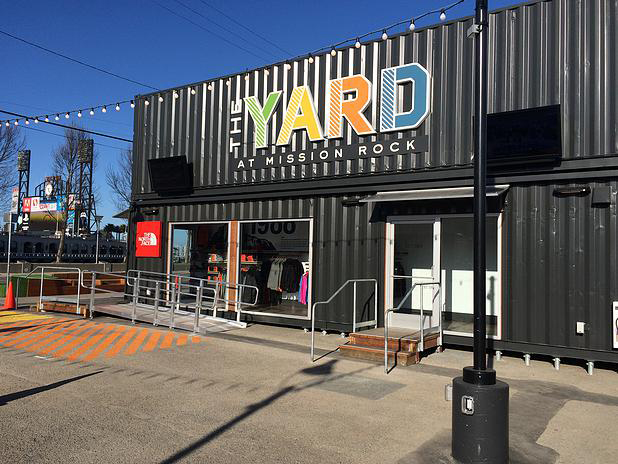
The YardThe Giants are opening a new party pop-up today, across McCovey Cove from AT&T Park. It’s called The Yard. I asked my friend, the designer and manufacturer of the destination’s shipping container buildings, why he wasn’t mentioned in John King’s article in the SF Chronicle. In his South African accent, Jerry commented, “White collars versus blue.”

SF MadeI met Jerry Jameson three years ago when I started working in the building he shares with my employer. He was an architect with a dream of becoming a manufacturer. Jerry doesn’t necessarily take the path of least resistance.

While working on a project for a Silicon Valley firm, I had the pleasure of working directly with Jerry and his business partner, Martha Trela, CEO of their company, UrbanBloc. Jerry designed two shipping container buildings for the outdoor space, a cafe and a restroom. The client decided not to go forward with the project but I was able to get a better idea about what goes into making a building from a shipping container: how to anchor it, make it universally accessible, connect it to the sanitary sewer, and a thousand other issues I wouldn’t normally have considered.

Bike ShopUrbanBloc opened a manufacturing plant here, in the East Bay, and I didn’t see Jerry for a couple of months while he and his team built the modular units for The Yard. I’d have loved seeing the trucks carrying the buildings across the Bay Bridge. The schedule was so tight, they built a sleeping room in the plant where they could grab 3-4 hours of sleep while working around the clock. They lived like this for nine weeks. Jerry said it was the hardest thing he’s ever done.

It’s a remarkable thing. There’s no good reason for UrbanBloc to slide under San Francisco’s design radar but now there’s another good reason to go to a Giants game.

Photo Sources:
http://www.urbanbloc.net
http://insidescoopsf.sfgate.com/blog/2015/03/18/what-to-eat-and-drink-at-the-yard-at-mission-rock-opening-this-week
http://www.sfchronicle.com/bayarea/place/article/Urban-chic-shipping-pods-catch-on-in-Giants-6140692.php

I’d love to hear what you think.

Eighteen Gates

I have a fascination with gates. They’re doors but when you pass through them, you’re not indoors. What could be better? This week, I give you Gates of the East Bay. All of these photos were taken in Oakland, Berkeley or Emeryville. They’re intended to inspire your own design or cause you to pause and appreciate how much thought some people put into the way they welcome us into their outdoors. Click on an image to start a slideshow. Which is your favorite? I’d love to hear from you.

Placemaking

Parking Day in Flint, Michigan
Parking Day in Flint, Michigan. Photo from http://www.aiaflint.com/
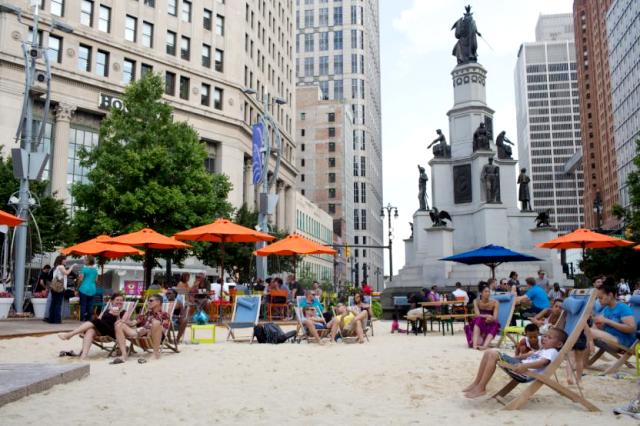
In downtown Detroit, an underutilized lawn was transformed into a beach at Campus Martius Park. Photo from pps.org

I’ve been posting about all things local here in the East Bay. What about you and the place where you live? What do you love about your neighborhood? What would make it even better?

On Friday, I attended the SF Placemaking Summit at AIASF (American Institute of Architects, San Francisco Chapter).The overall idea of placemaking is to create better public spaces: not just better looking, but open space that’s more useable by everybody in the community. Some of the principles are:

  • The community is the expert.
  • Public space should be an authentic reflection of the community.
  • Do little, easy things now and you can improve it if it’s working.
  • Public spaces are for everyone.
  • Each place should have several things to do.
  • Great public spaces are places to connect.

How is that different from good urban design? In my opinion, it isn’t. That may be an effect, in part, of the placemaking movement’s influence on urban design and the inspiration of William H. Whyte. In the 1970s, Whyte set up the Streetlife Project,a pioneering study of how people use spaces. Over the past 30 years, urban designers have learned to incorporate the principles of placemaking in our work.

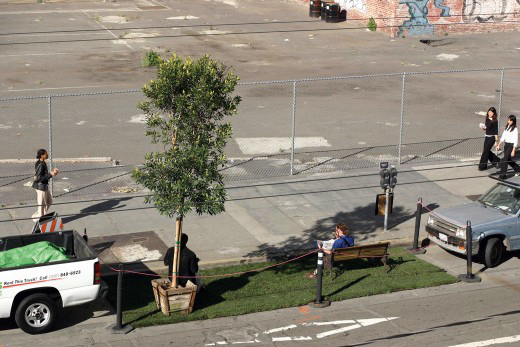
The original PARK(ing) Day park created by Rebar in 2005. Photo from Rebar

An important placemaking concept is a bottom-up approach, and parklets are an example inspired by PARK(ing) Day. Downtown San Francisco is densely populated and built-out with limited room for new public open space, but there’s plenty of space dedicated to the automobile. Rebar, a local art and design studio, started PARK(ing) Day in San Francisco in 2005 by converting a single metered parking space into a temporary public park.The concept was so popular that now PARK(ing) Day is celebrated on the third Friday in September all over the world. Drawing on the success of PARK(ing) Day, the City of SF’s Planning Department adopted a policy for parklets that would last an entire summer or longer: Pavement to Parks. This has been the model for global parking space conversion to useable open space.

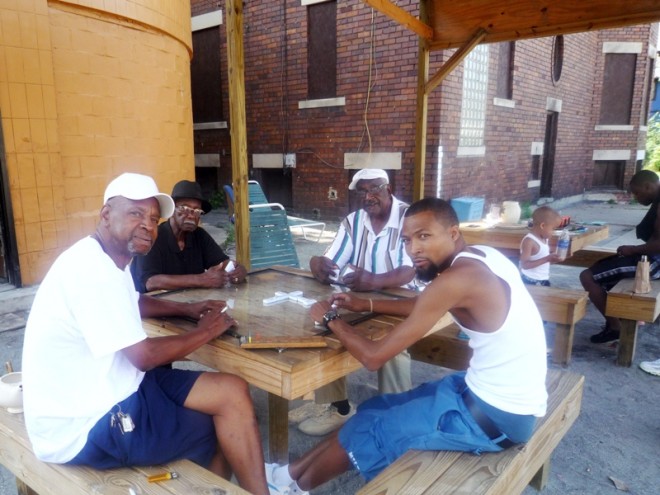
Central Detroit residents have transformed an abandoned gas station into a gathering place at Peaches & Greens, complete with new furniture and a pavilion structure to protect domino players from the elements. / Photo: Steve Davies / Peaches & Greens
Central Detroit residents transformed an abandoned gas station into a gathering place at Peaches & Greens. Photo: Steve Davies/Peaches & Greens

The SF Placemaking Summit was thought-provoking and inspirational. We asked a lot of questions that I’ll explore here in the coming weeks. For example, a lot of the placemaking happening in San Francisco is designed for hipsters. What kind of placemaking is for children or seniors? Are public spaces being created in all neighborhoods?

Parklets are just one way you might be able to create public space in your community. What are some others? Have you been noticing more outdoor places to gather in your town? Let’s start a conversation.

Sources: http://www.pps.org/

Puttin’ On the Ritz

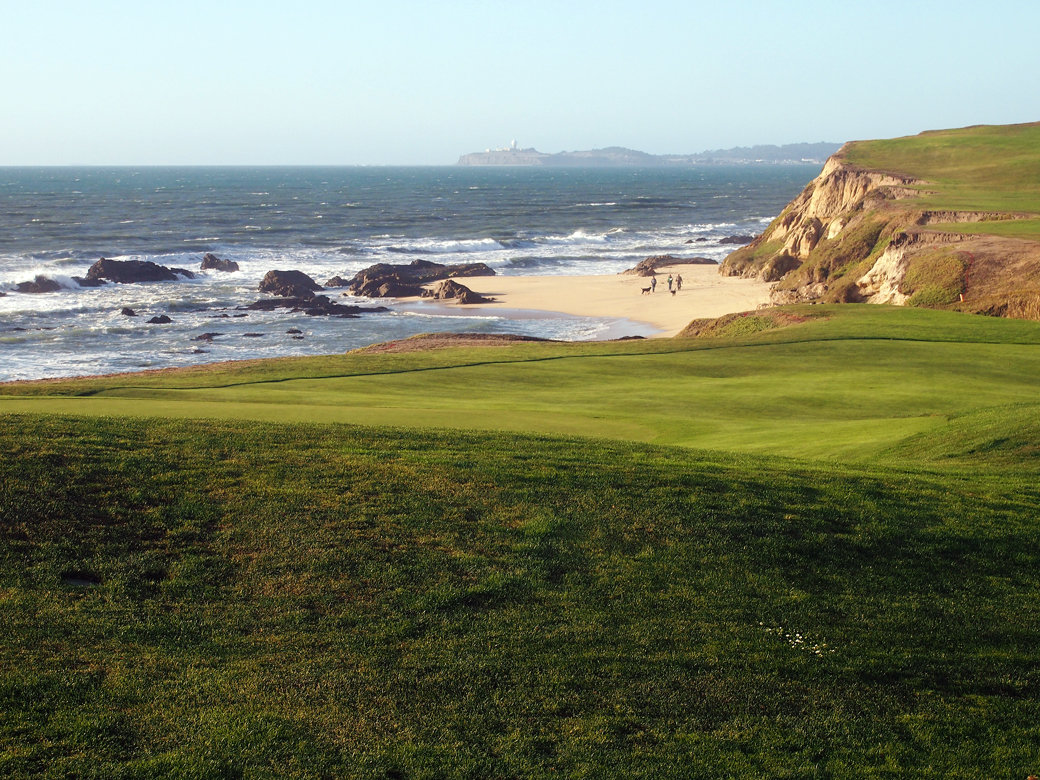
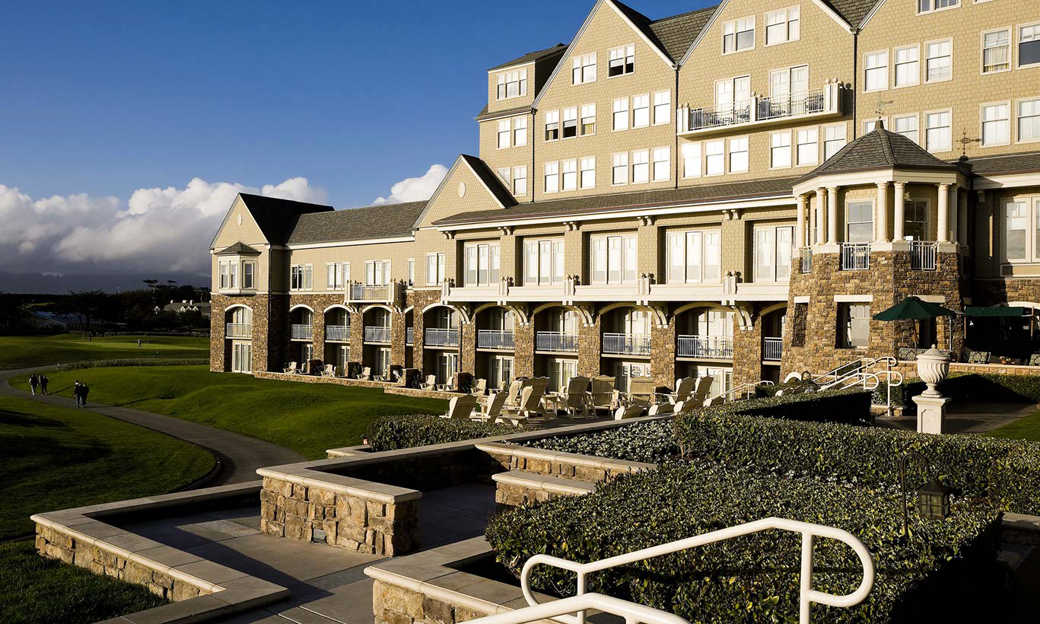
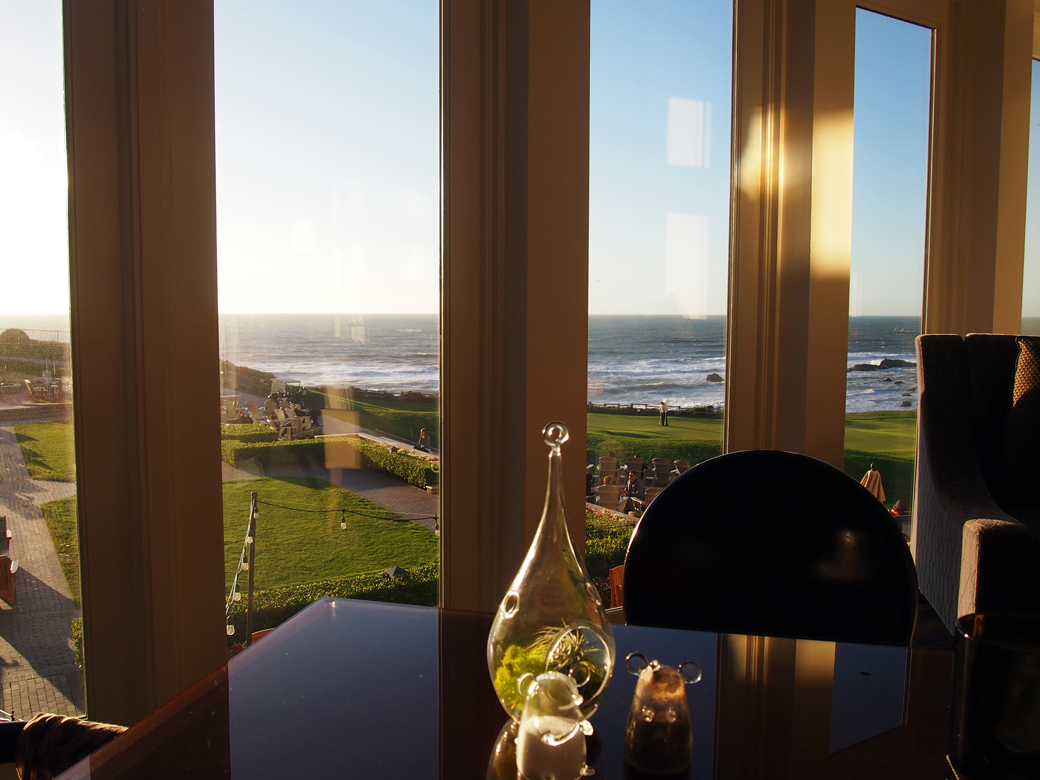
View from Ritz Carlton Half Moon Bay

After a spectacular day on the coast, we decided to stop at the Ritz Carlton in Half Moon Bay to enjoy the sunset and a cocktail. Upon arrival, we paid $10 for valet parking, the only option, and headed directly for the ocean terrace by the fire pits. We had Manhattans that cost an astounding $17.50. Each. And they were worth it – not because they were particularly special but because of the view. Let’s talk about the view.

The squashes at the resort entrance were one seasonal touch that fit with the locale
Photo by the Athens Group

The Ritz Carlton is everything I don’t like and yet, I liked it. It’s a bit of Scotland on the California coast…because we need California to be Scotland? No. So, the resort features Scottish architecture? No. The hotel is an imposing, shingle style, turreted affair that’s supposed to “evoke the magnificence of 19th century seaside lodges”. Northeastern seaside lodges. The Hamptons come to mind. Okay, it’s a magnificent northeastern style seaside lodge set within a pair of Scottish golf courses with staff walking around in plaid knickers. The Ritz Carlton is not an example of regional design.

Why did I like it? I’ve spent a lot of time on the California coast and the beautiful view from the cliffs overlooking the ocean is never diminished. It can be foggy (and it probably will be), it can be windy, it can smell like the brussels sprouts growing on the bluffs, the beaches can be littered with brown seaweed covered in sand flies, and it is still the most breathtaking place I’ve ever been. The California coast is like a beautiful girl, hair tangled, barefoot in sandy jeans and a faded sweatshirt. The view from the Ritz Carlton ocean terrace on a clear day was like seeing her in a green velvet gown and high heels. It’s not the way I want the coast to be but I can’t help feeling glad I saw her that way.

Ritz Carlton HMB Ocean TerraceRitz Carlton HMB NavioAfter shaking off the sticker shock of the cocktails, we sallied forth to Navio, the restaurant at the resort, with a plan NOT to eat barely acceptable food at very expensive prices. The dining room is lovely and we were given a table at the window. We ordered conservatively, (two women can get away with significantly less food than a traditional couple) and ate a perfectly acceptable dinner for under $100. The service was good. The food was good. Nothing was memorable but the view. After we got back to Oaktown, I checked out Michael Bauer’s 2013 review and can say I think Navio has improved since his meal, but I won’t deny that the restaurant is not a good value.
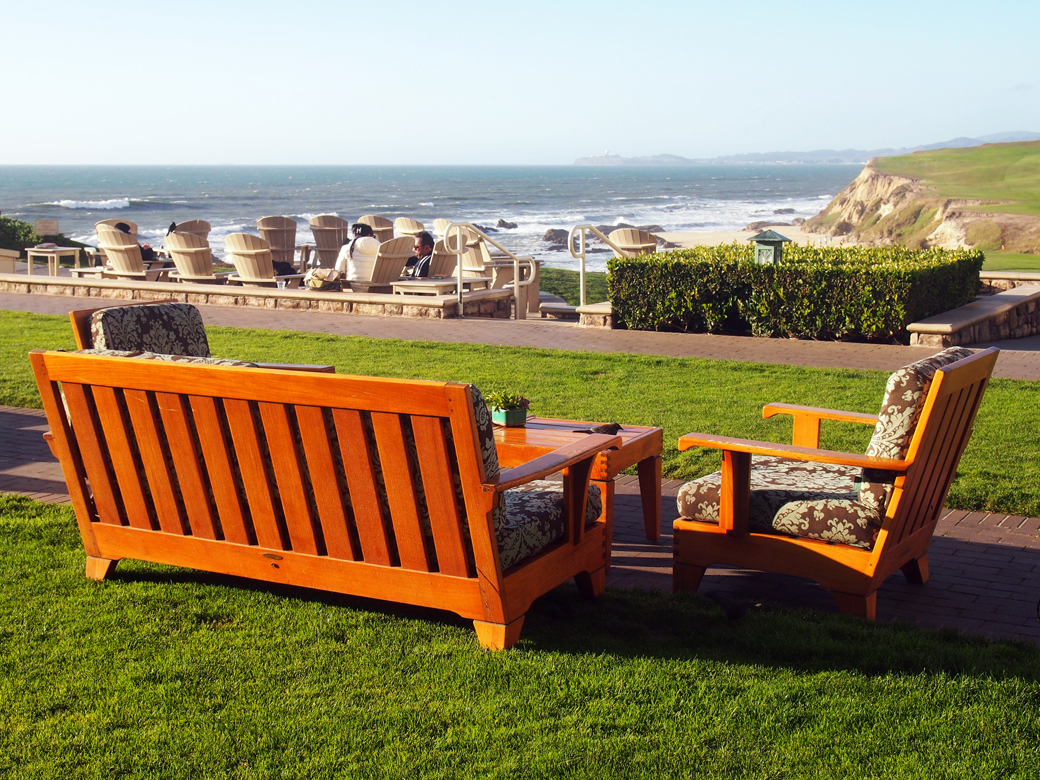
The Ritz Carlton made me feel sorry for people who think the coastal experience is something they can buy. Without a deeper relationship with the shoreline, the Ritz Carlton is nothing but a fancy, out of place resort. Next time, we might still stop in for a cocktail at the Ritz, but afterwards we’ll head up Highway 1 to our favorite Half Moon Bay taqueria for dinner.