Why Build a Parklet?

40th St Parklet, Oakland-from streetThey’re called parklets but they’re often more like outdoor café dining areas. These sidewalk extensions are parklets because of their roots. In 2005, the clever folks at ReBar had a plan to take back some of the space reserved for vehicles and turn parking spaces into little parks, or parklets. They can be used for any public use: galleries, bike parking, space to relax, but they are frequently used as café seating.

To take over a couple of parking spaces, most cities require a permit, an annual fee, neighbors’ buy-in, and a decent design. Parklets are privately funded and maintained but they’re public open space and accessible to everyone. You don’t have to buy a cup of coffee to hang out. Parklets are temporary – they exist as long as the host maintains the permit and the city thinks it’s a benefit to the community. As such, parklets are a form of tactical urbanism or urban prototyping. I’ll discuss that movement in a future post.

The remarkable thing about parklets is they are a cost-effective form of placemaking. Everyone wins:

  • The host usually enjoys economic rewards.
  • The city is able to activate streets at little cost.
  • The public benefits from vibrant outdoor spaces.

What more could you ask for? Are parklets popping up in your city? The ones shown here are in my home town: Oakland, California.

Whistling Past the Graveyard

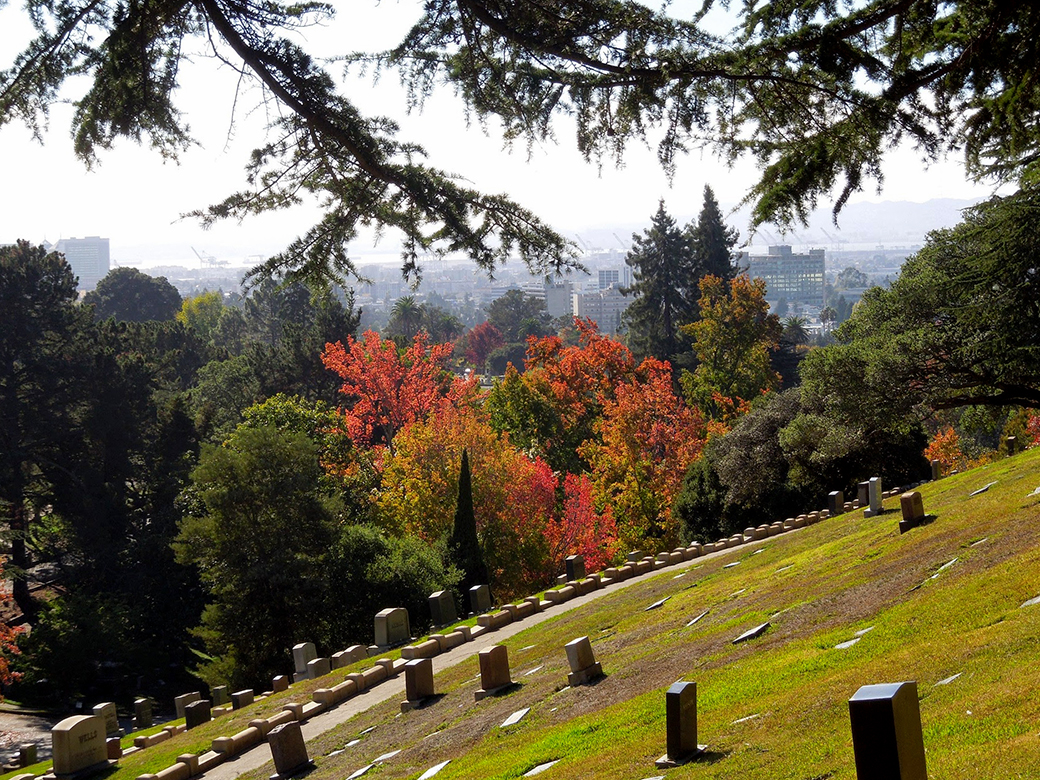
141101 Mtn View Cemetery-fall color-web

People in Oakland have great places to walk. There’s the East Bay Regional Parks, Lake Merritt, the Bay Trail, Arrowhead Marsh, Joaquin Miller Park, and a bunch of stairway walks through neighborhoods. Still, one of my favorites is Mountain View Cemetery.

After two graveyards impeded Oakland’s early growth, a group of Oaklanders decided to create a cemetery far enough from the center of town, that it would never be in the way. The non-profit Mountain View Cemetery Association was formed and the Board of Trustees began searching for a site. They bought 220 acres of hillside land from Rev. I. H. Brayton who used the proceeds ($13,000) to continue Oakland’s College of California, predecessor to UC Bekeley.

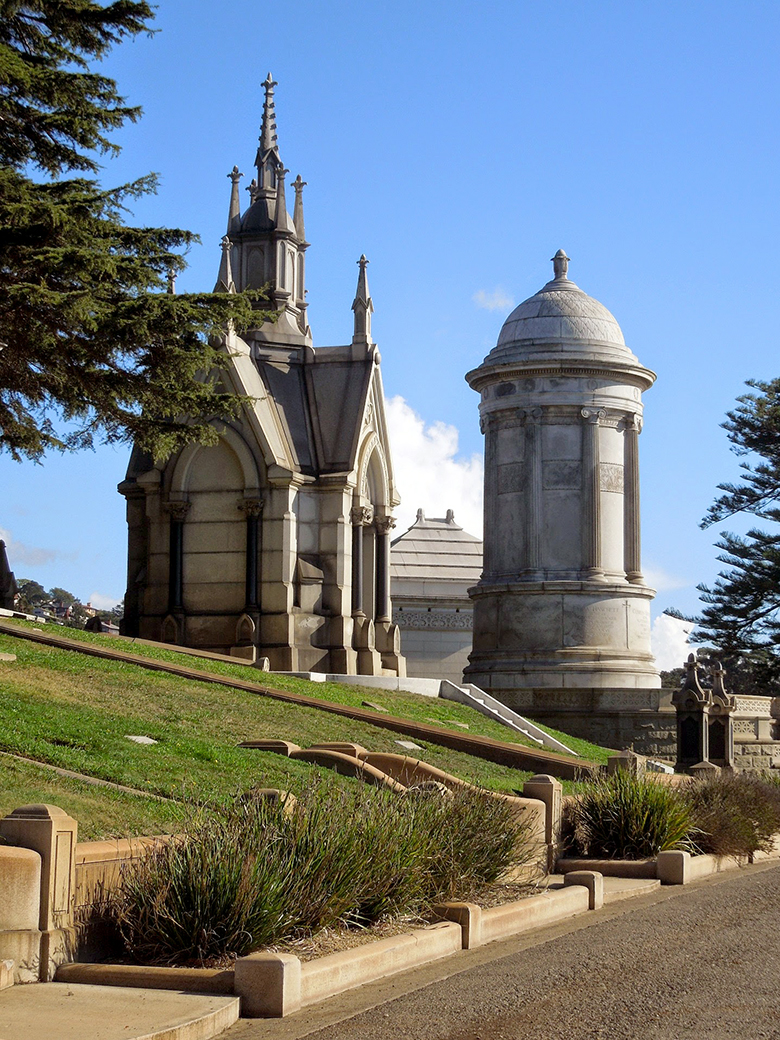
Millionaire's Row
Millionaire’s Row with a view of a Gothic Revival aedicula for Frederick Delger and the vault of Charles Crocker, founder of the Central Pacific Railroad

Frederick Law Olmsted
The cemetery’s designer is the Father of Landscape Architecture, Frederick Law Olmsted. Among the many distinguished places he designed are New York City’s Central Park and the Stanford University Campus. When the original UC Berkeley campus moved from Oakland, he designed the layout. His concept for the Mountain View Cemetery was to create a place that celebrated the works of man while elevating the beauty and peace of nature.

Famous Designers
Many of California’s rich and famous chose Mountain View as their final resting place and created remarkable mausoleums and monuments to celebrate their lives. Architects are rarely rich but Julia Morgan and Bernard Maybeck are famous, and both are interned at Mountain View Cemetery. Morgan is best known for designing the main building at Hearst Castle. She studied under Maybeck at UC Berkeley and designed the Greek Theater on that campus. Maybeck designed many Arts & Crafts buldings in the Bay Area, including the Palace of Fine Arts in San Francisco and the Faculty Club on the UC Berkeley Campus.

I guess it’s no surprise that the beautiful and elegant Mountain View Cemetery shares a relationship with the University in Berkeley. They were designed and built in the East Bay at a time when Californians wanted to demonstrate their civility and good taste to the world. They were fortunate that Frederick Law Olmsted was here to help them out. Both sites have sweeping views, grand boulevards, stunning landmarks, and plenty of hills to keep a seasoned walker in shape.

Sources:
http://www.mountainviewcemetery.org
http://www.oaklandhistory.com/files/hmvc1.html
Beth Bagwell; Oakland: The Story of a City; 2012 Oakland Heritage Alliance

Puttin’ On the Ritz

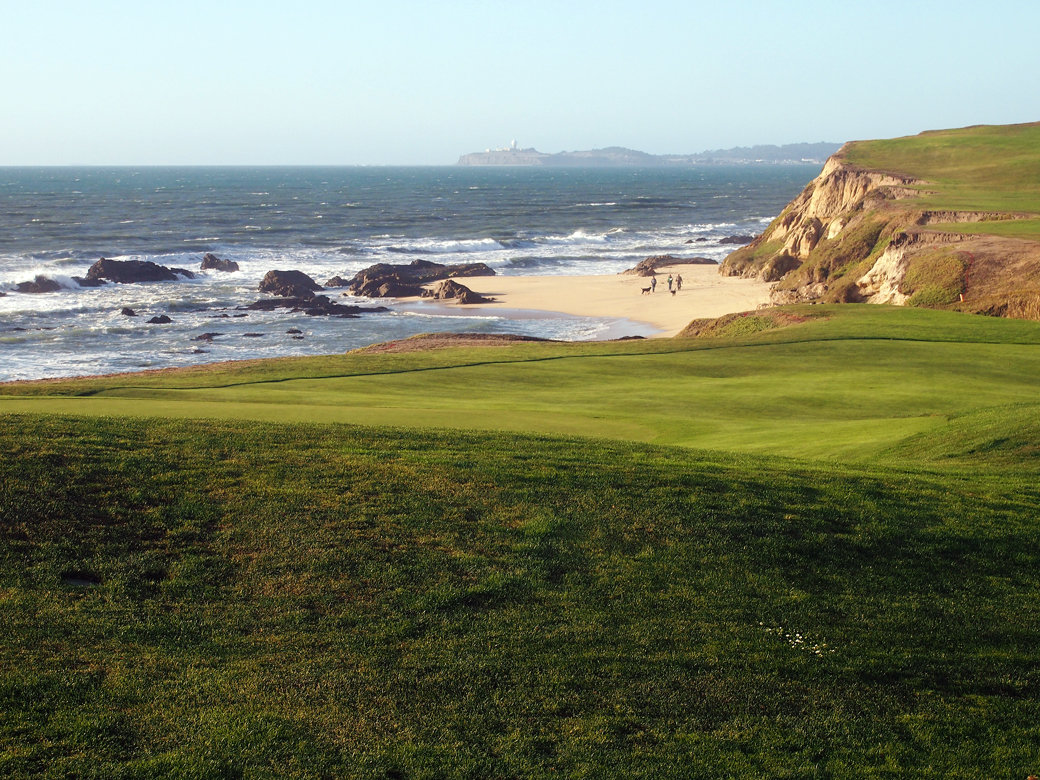
View from Ritz Carlton Half Moon Bay

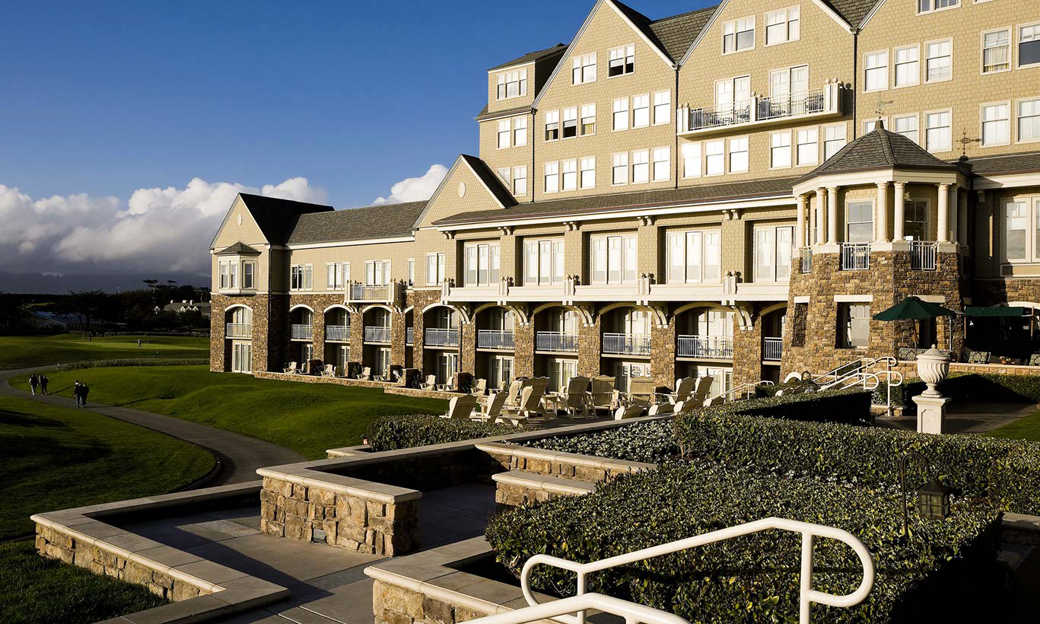
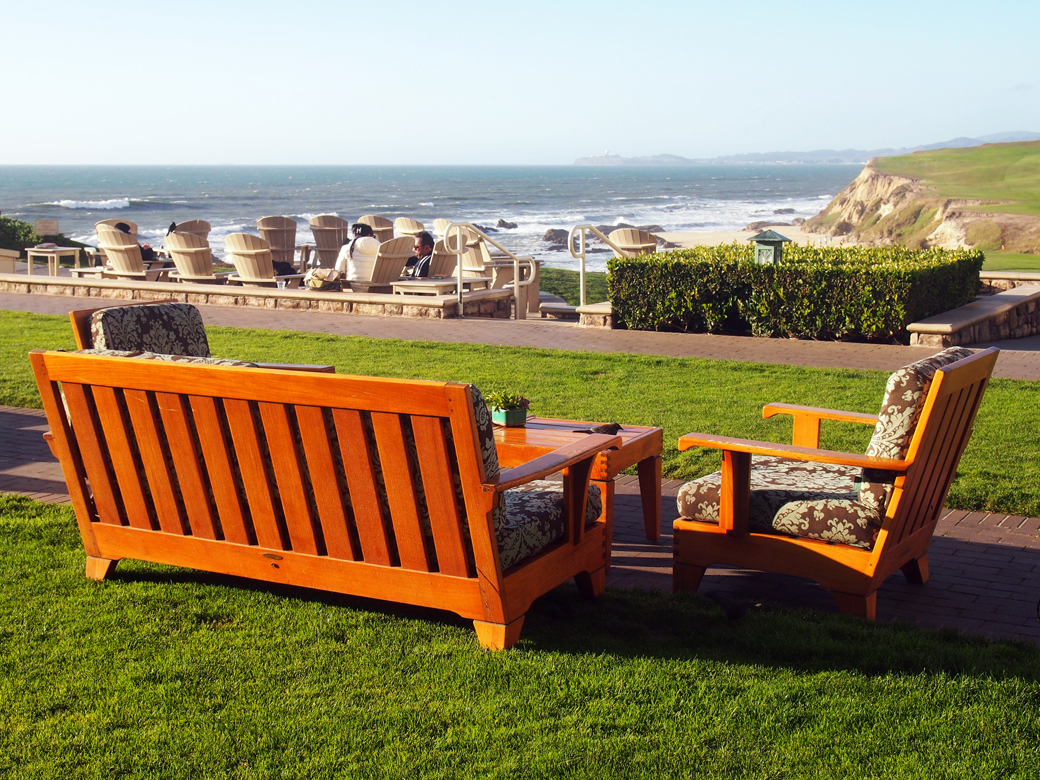
After a spectacular day on the coast, we decided to stop at the Ritz Carlton in Half Moon Bay to enjoy the sunset and a cocktail. Upon arrival, we paid $10 for valet parking, the only option, and headed directly for the ocean terrace by the fire pits. We had Manhattans that cost an astounding $17.50. Each. And they were worth it – not because they were particularly special but because of the view. Let’s talk about the view.

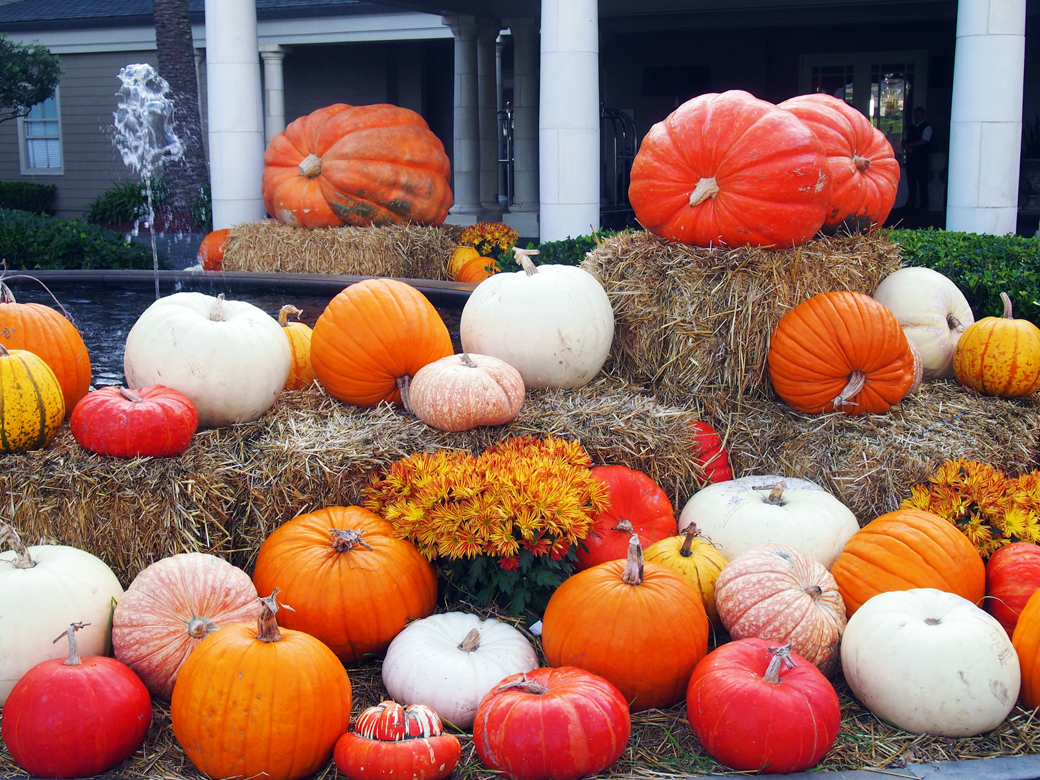
The squashes at the resort entrance were one seasonal touch that fit with the locale
Photo by the Athens Group

The Ritz Carlton is everything I don’t like and yet, I liked it. It’s a bit of Scotland on the California coast…because we need California to be Scotland? No. So, the resort features Scottish architecture? No. The hotel is an imposing, shingle style, turreted affair that’s supposed to “evoke the magnificence of 19th century seaside lodges”. Northeastern seaside lodges. The Hamptons come to mind. Okay, it’s a magnificent northeastern style seaside lodge set within a pair of Scottish golf courses with staff walking around in plaid knickers. The Ritz Carlton is not an example of regional design.

Why did I like it? I’ve spent a lot of time on the California coast and the beautiful view from the cliffs overlooking the ocean is never diminished. It can be foggy (and it probably will be), it can be windy, it can smell like the brussels sprouts growing on the bluffs, the beaches can be littered with brown seaweed covered in sand flies, and it is still the most breathtaking place I’ve ever been. The California coast is like a beautiful girl, hair tangled, barefoot in sandy jeans and a faded sweatshirt. The view from the Ritz Carlton ocean terrace on a clear day was like seeing her in a green velvet gown and high heels. It’s not the way I want the coast to be but I can’t help feeling glad I saw her that way.

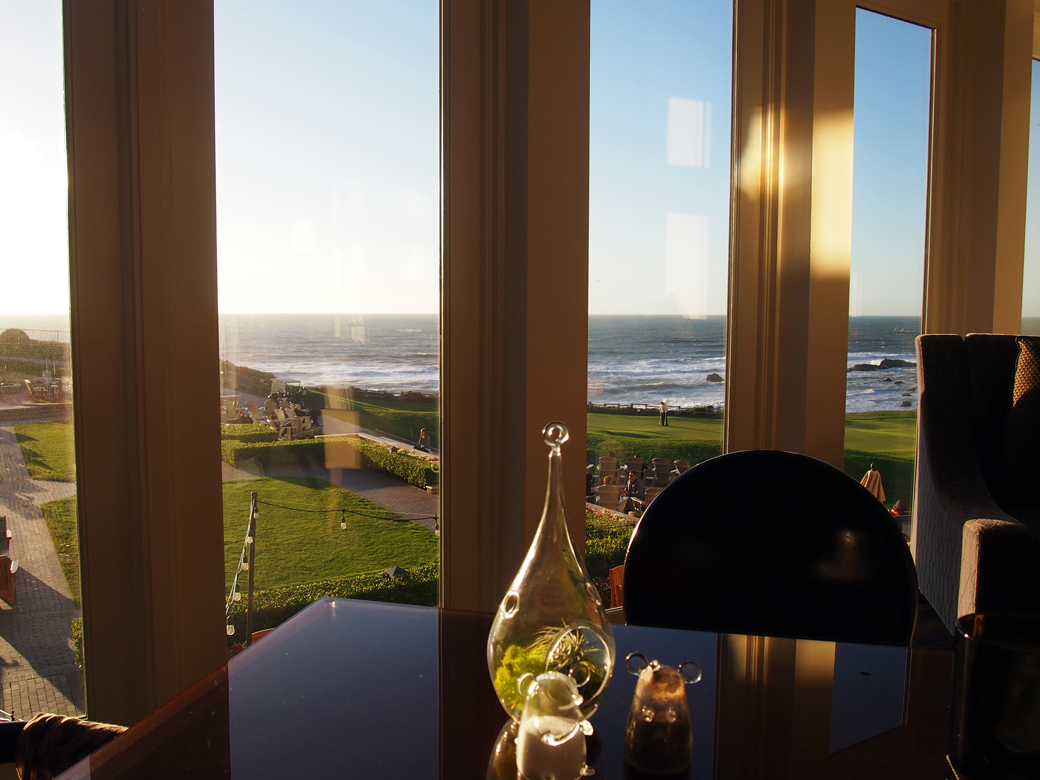
Ritz Carlton HMB Ocean TerraceRitz Carlton HMB NavioAfter shaking off the sticker shock of the cocktails, we sallied forth to Navio, the restaurant at the resort, with a plan NOT to eat barely acceptable food at very expensive prices. The dining room is lovely and we were given a table at the window. We ordered conservatively, (two women can get away with significantly less food than a traditional couple) and ate a perfectly acceptable dinner for under $100. The service was good. The food was good. Nothing was memorable but the view. After we got back to Oaktown, I checked out Michael Bauer’s 2013 review and can say I think Navio has improved since his meal, but I won’t deny that the restaurant is not a good value.

The Ritz Carlton made me feel sorry for people who think the coastal experience is something they can buy. Without a deeper relationship with the shoreline, the Ritz Carlton is nothing but a fancy, out of place resort. Next time, we might still stop in for a cocktail at the Ritz, but afterwards we’ll head up Highway 1 to our favorite Half Moon Bay taqueria for dinner.

Creativity Shines in Oakland’s Golden Gate Neighborhood

Golden Gate-Radio Flyer-web

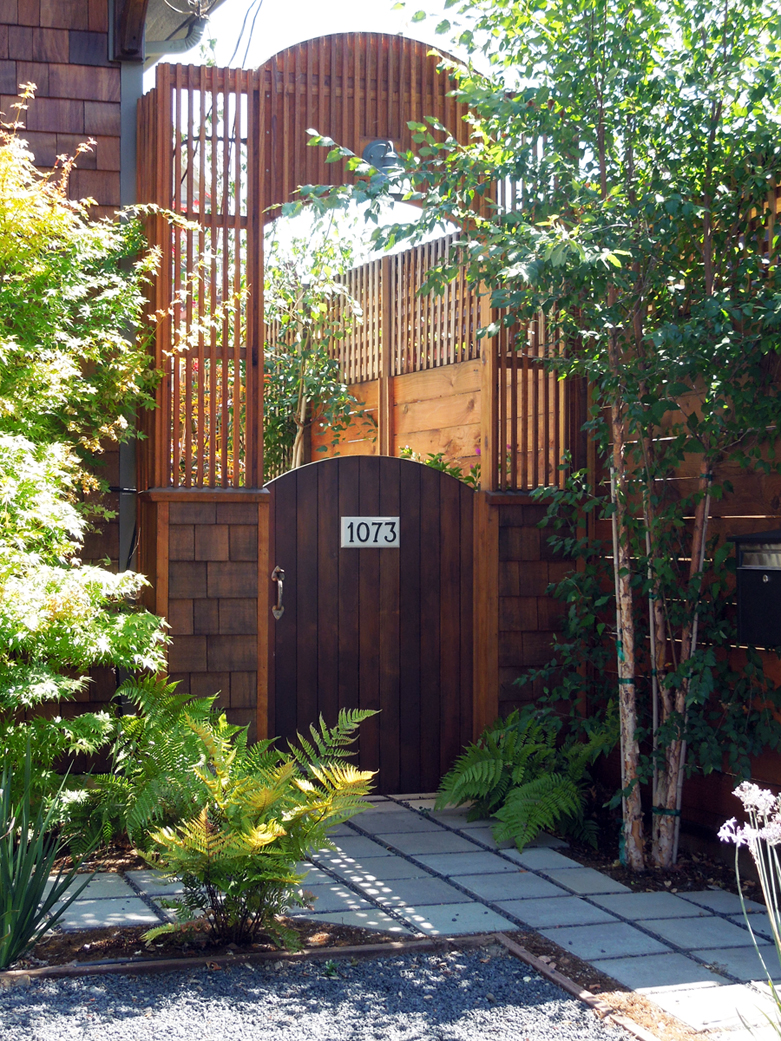
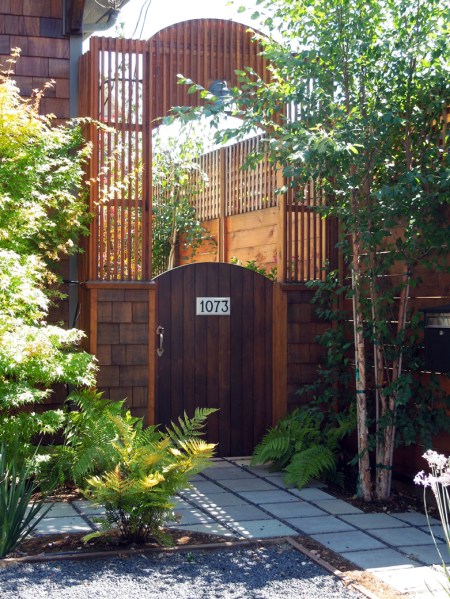
140701 Golden Gate-1073-web

When the first homes were built, the Golden Gate neighborhood was a town named Klinknerville. The name was changed to Golden Gate before it was annexed by the City of Oakland in 1897. It’s in the northwest corner of the City, east of Emeryville and south of Berkeley. Real Estate agents like to call that general area NOBE, but you and I know better. If not, I recommend this post; Please Don’t Call it NOBE, by Sarah Han.

What I love about Golden Gate and several other Oakland neighborhoods is their creative flair. I think it’s because they have diverse populations: diverse ages, standards of living and ethnicities. Residents are willing to make unconventional design choices, which spark creativity up and down the streets.

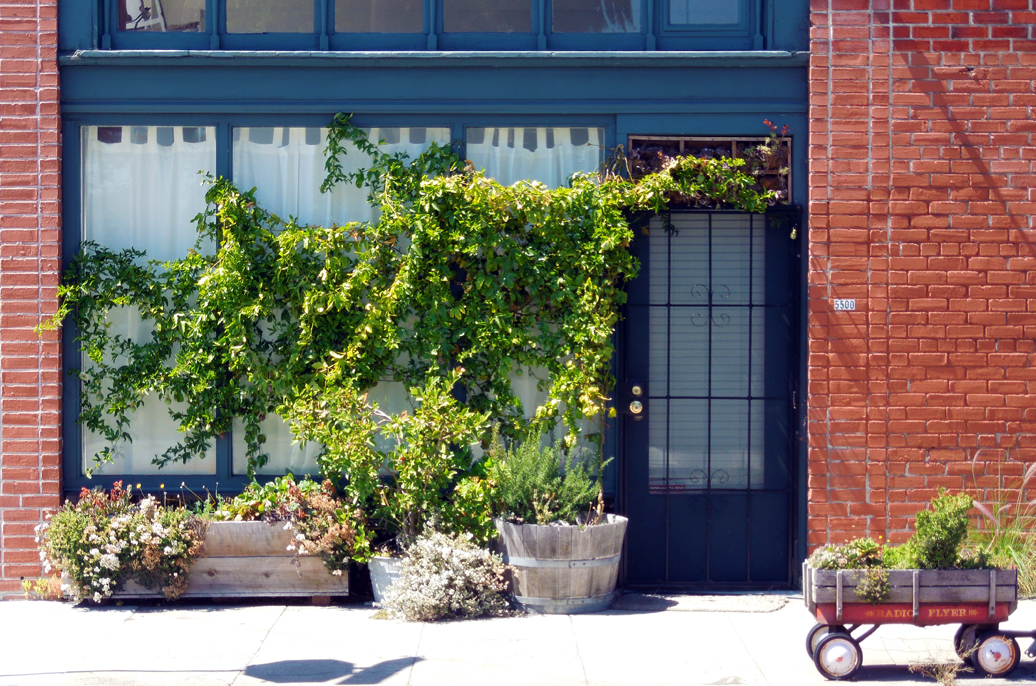
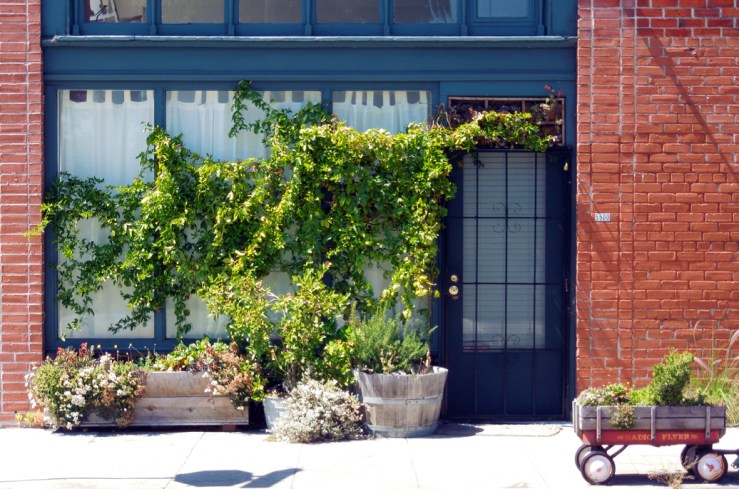
Of the many inspiring entrance treatments I’ve seen in Golden Gate, I’ve selected three to feature here. It’s likely the entrance in the top photo was originally designed as a storefront. The building is on the main commercial street, San Pablo Avenue, but this entry is on the side street. I love slate blue with brick, the vine that softens the flat entrance and, of course, the radio flyer planter.
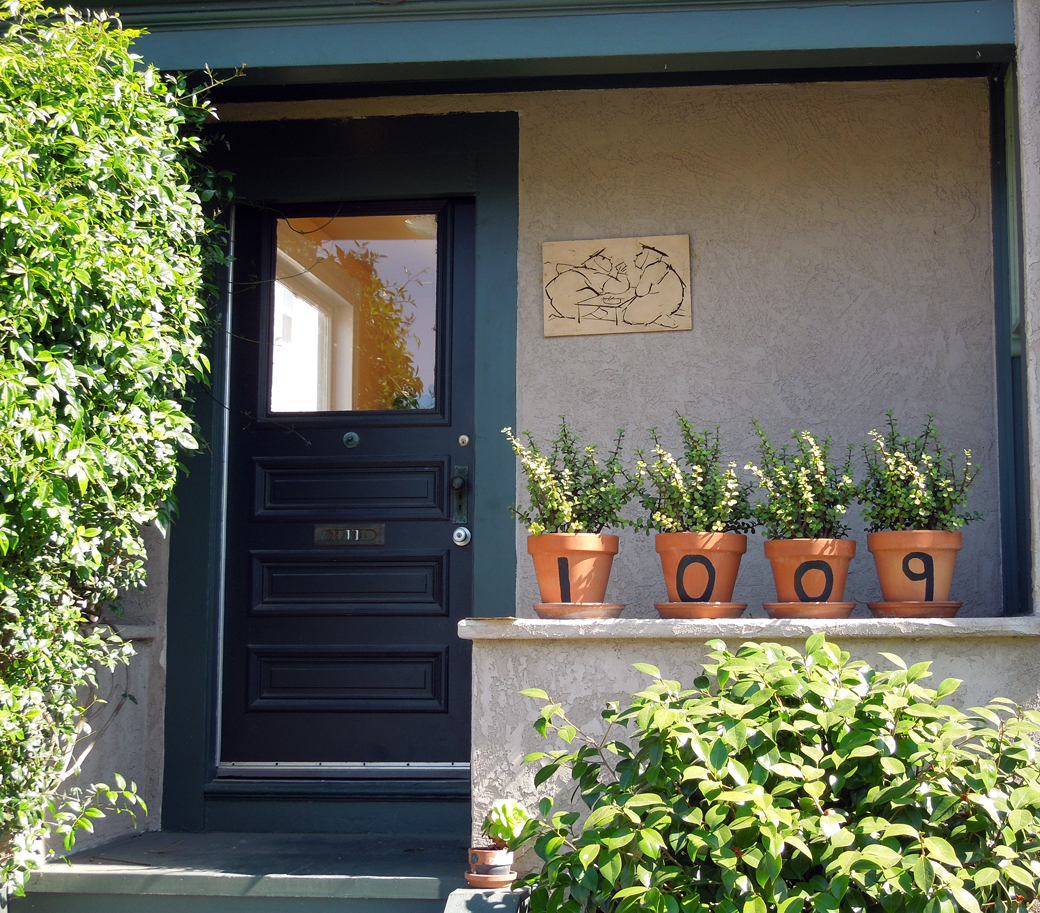
140701 Golden Gate-1009-webI’m going to make up a story for the gateway in the photo on the left. The shingled fence with gate was built first. Then the designer decided they wanted a very tall fence at the property line (let’s not make judgments about their relationship with the next-door neighbors) and designed an attractive slatted fence extension. Finally, the designer wanted the two parts to be better integrated and created this arched and slatted overhead structure. However it happened, I like it. Take note of the elegant paving and the stunning River Birch near the gateway.

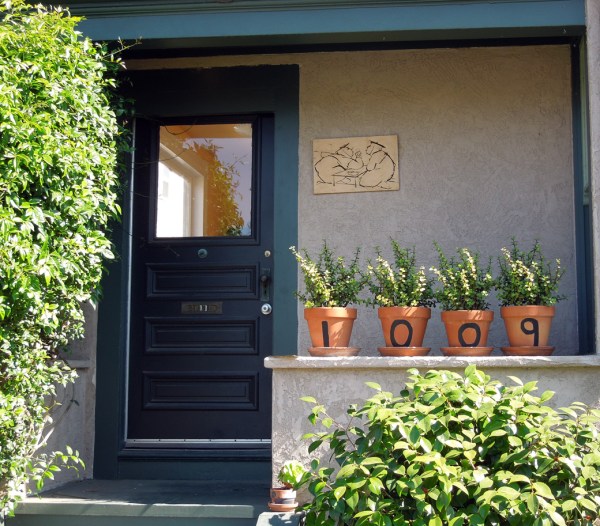
It would be easier to imitate the simple treatment of number 1009. The address is hand-painted on terracotta pots filled with leafy succulents. The idea is clever but wouldn’t work nearly as well without the smart color choices and the striking Zen tile on the wall near the door (from which they probably removed the original address). When planting in small pots like these, use very drought tolerant plants or you’ll need to water every day. These are filled with Portulacaria afra, Elephant food.

Historic Information Source: Wikipedia, Golden Gate, Oakland, California

Note added November 12, 2014: Since writing this post, I’ve learned there are (at least) two different ideas about the extents of the Golden Gate neighborhood. According to Oakland Wiki, the area I considered to be Golden Gate, is actually three neighborhoods: Golden Gate, Gaskill, and Paradise Park. By that map, the entrances I’ve featured in this post are in the Gaskill neighborhood. Either way, they are still shining.

Creating Art and Community at Maxwell Park

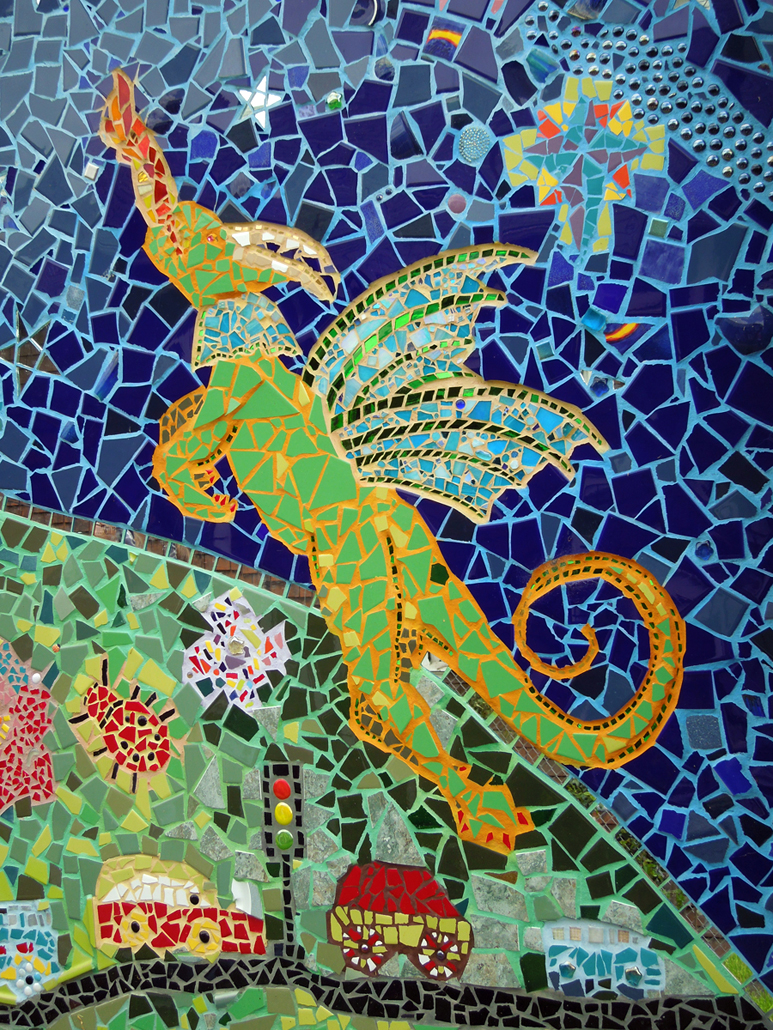
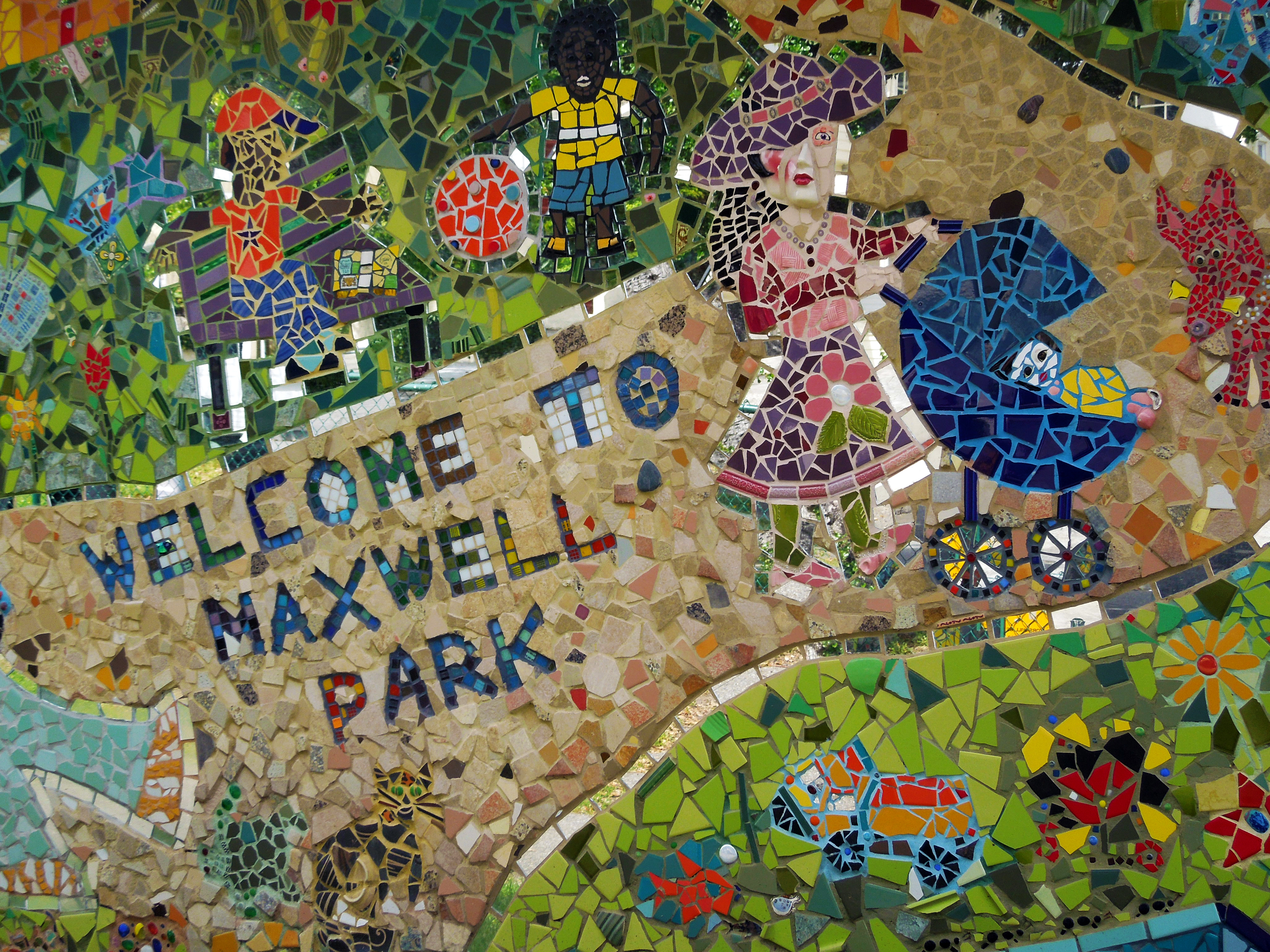
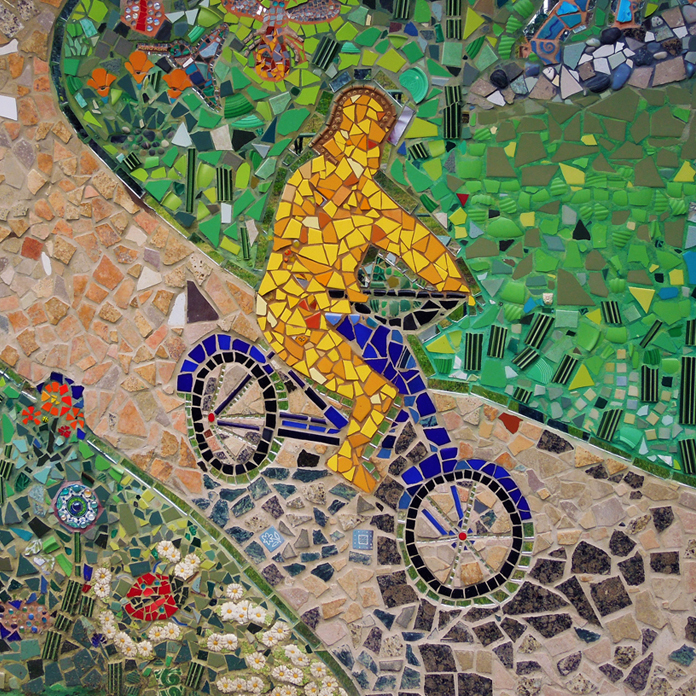
Maxwell Park-DragonThis East Oakland park features mosaics created by the local community.

Nancy Karigaca and Beverly Shalom are co-coordinators for the mosaic tile project:

“My priority has been to work on projects that empower community members, experienced and inexperienced mosaickers, to create beauty and have a positive impact on the neighborhood,” said Shalom. “We try to involve everyone in the community, and ask people who are passing by to adhere some tiles, so that they will have a sense of pride in the work and the park and want to take care of it.”

Quote source: Sumiko Saulson, Oakland Art Scene Examiner

Maxwell Park-Welcome

Maxwell Park-Bicycle

Big Sur Roadhouse

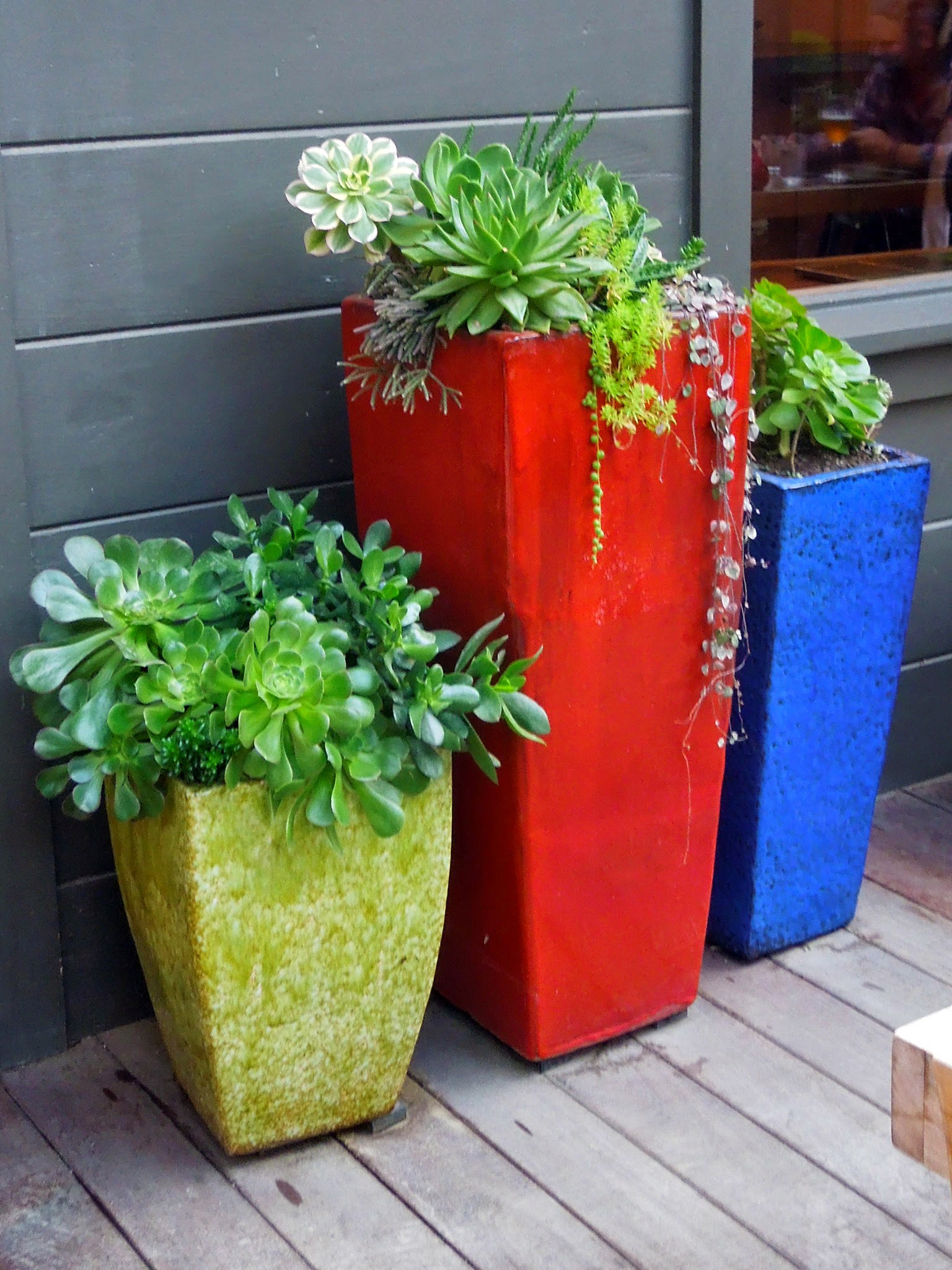
Big Sur Roadhouse Succulents One way we live where we are is to travel local. We spent the weekend with the kids in Big Sur, about 150 miles from most of the five-one-oh area code.

Sunday, we tried a new restaurant: Big Sur Roadhouse. The food was delicious and the design will bring us back. It is the perfect cozy place on a foggy Big Sur evening.

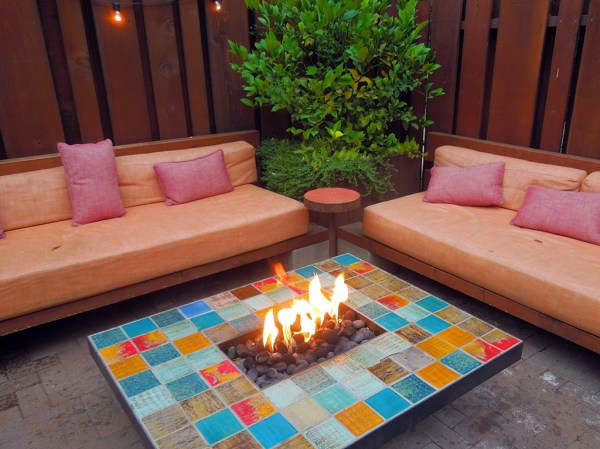
The Roadhouse serves beer and wine only and we discovered a lovely French fermented cider, Clos Normand. The restaurant served it in wine glasses from a champagne bucket: very festive. Big Sur Roadhous-Firepit