Living Local: Our Own Backyard

New Steps from Above

There’s no place more local than your own backyard. We’re outdoorsy gals and we spend a lot of time both working and relaxing in our yard. When we bought the house, the steep path down to the garden started with wooden steps, leading to a concrete ramp, followed by haphazardly arranged railroad-tie steps, and then a short bare incline to the level terrace at the foot of the slope. It was kind of a mish-mash jumble that we first thought was charmingly rustic and later, well, not so charming.

We have a lot of dreams for our yard, but like most people, we have limited funds so we have to carefully pick and choose what we take on and when. Since the steps are the gateway to our favorite outdoor room, we decided it would be this year’s backyard project.

Before: The original path to the backyard was a steep and uneven mix of ramps, railroad ties, urbanite, and bare slopes.
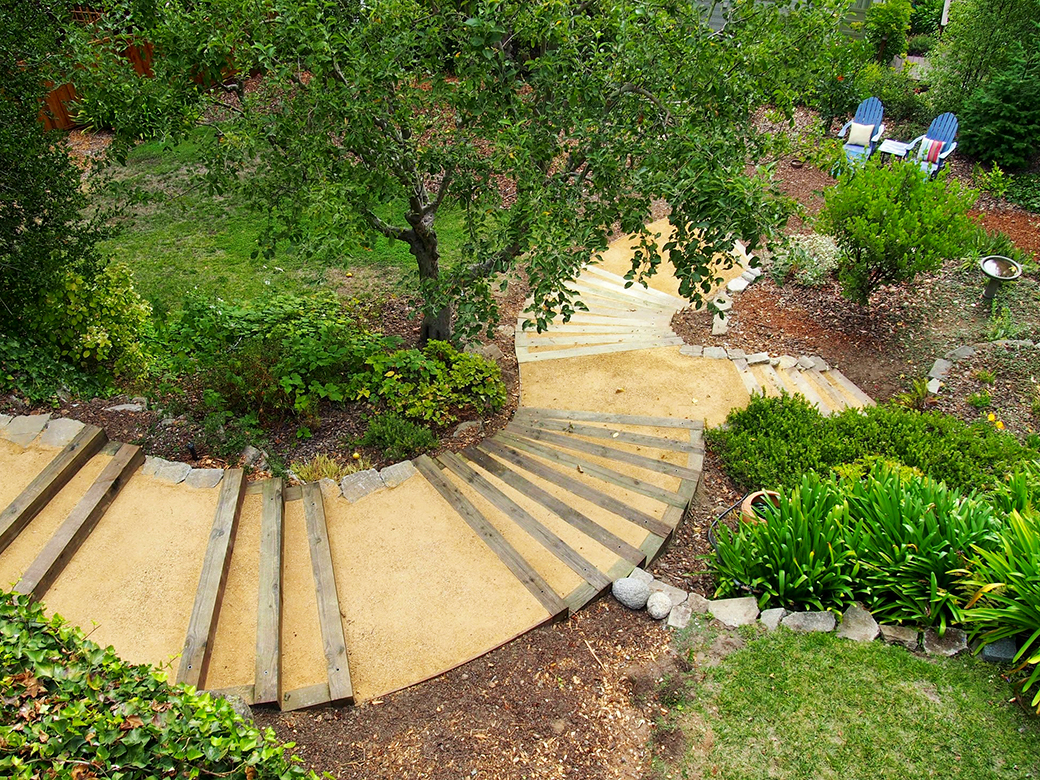
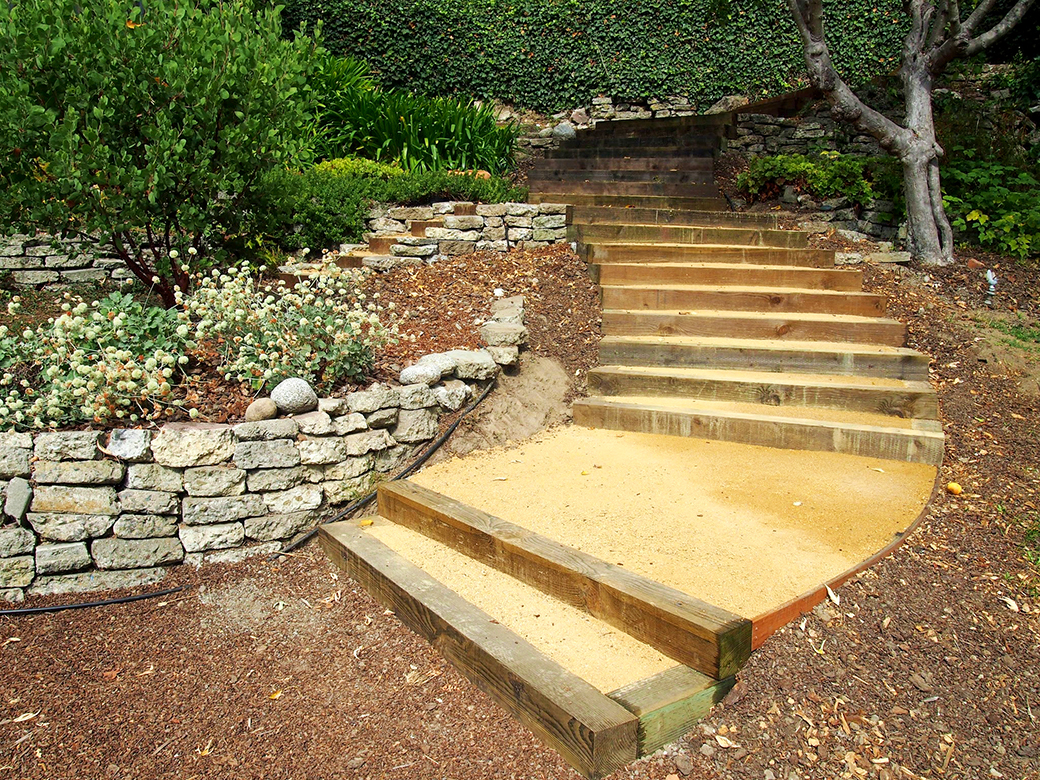
After: The new walkway from our home to the garden is composed of six-foot wide curving steps and level landings. It's astounding how much more of a pleasure it is to walk on a well-designed and built set of steps.
After: The new walkway from our home to the garden is composed of six-foot wide curving steps and level landings. It’s astounding how much more pleasurable it is to walk on a well-designed and built set of steps.

Design/Build
We hired Four Dimensions Landscape Company in Oakland to design and build the steps and we couldn’t be happier with our experience. First, they designed the striking “S” curve on paper, knowing adjustments might be made in the field. The integrated process of design/build makes for a smooth and efficient transition from paper to earth. You wouldn’t want a contractor who doesn’t appreciate design enough to make smart decisions during construction.

When it came time to put the steps in the ground, Michael Thilgen, one of the Company’s owners and a licensed landscape architect, spent hours on-site with a transit and the construction crew. He made sure the steps are comfortable to traverse with landings at the locations where we want future paths to connect. At the same time, he never lost sight of that sinuous line that makes these the steps of our dreams.

Sustainability
The new steps are constructed of landscape timbers, decomposed granite, and existing urbanite (recycled concrete) we had on site. The decomposed granite is permeable for improved storm water infiltration. The original railroad-ties will be reused to make a retaining wall in another part of our yard. Now we spend even more time in the backyard, sprucing it up to be worthy of the new steps.

Have you been working on any projects close to home?
Puttin’ On the Ritz

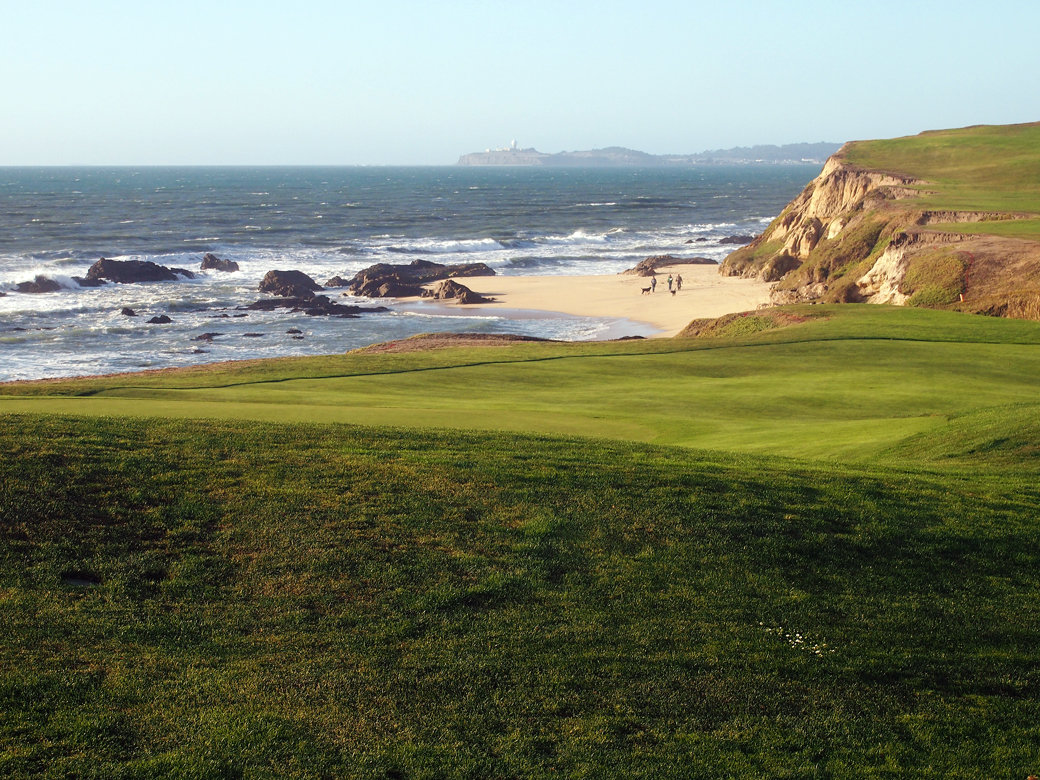
View from Ritz Carlton Half Moon Bay

After a spectacular day on the coast, we decided to stop at the Ritz Carlton in Half Moon Bay to enjoy the sunset and a cocktail. Upon arrival, we paid $10 for valet parking, the only option, and headed directly for the ocean terrace by the fire pits. We had Manhattans that cost an astounding $17.50. Each. And they were worth it – not because they were particularly special but because of the view. Let’s talk about the view.

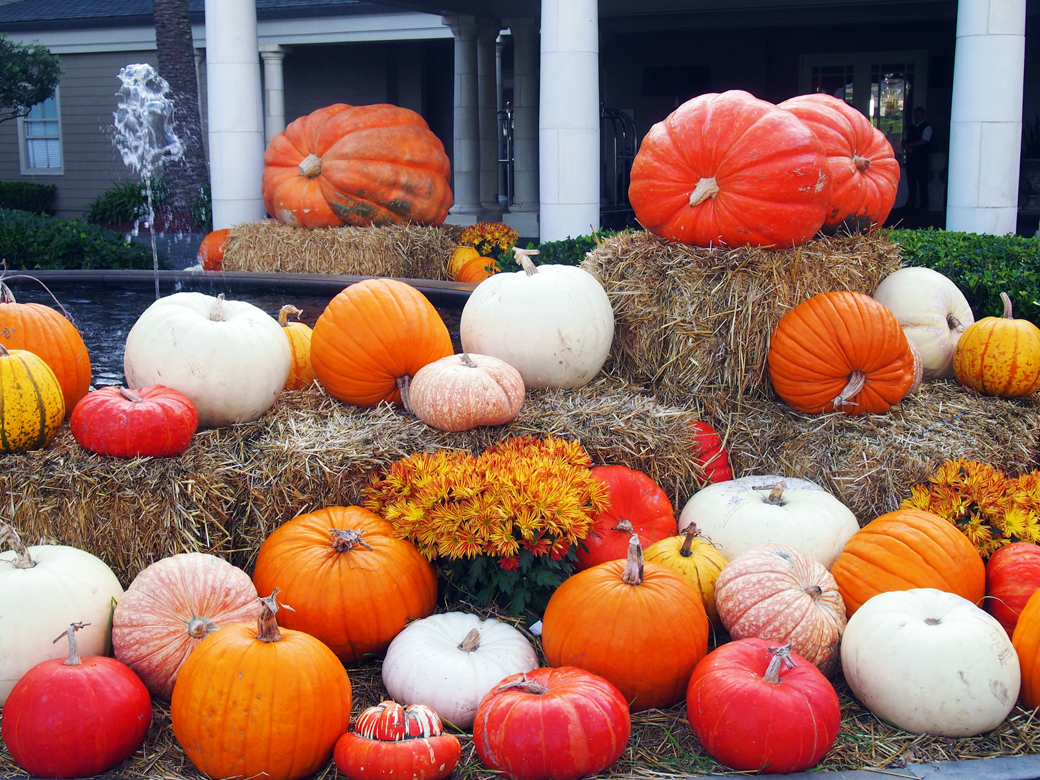
The squashes at the resort entrance were one seasonal touch that fit with the locale
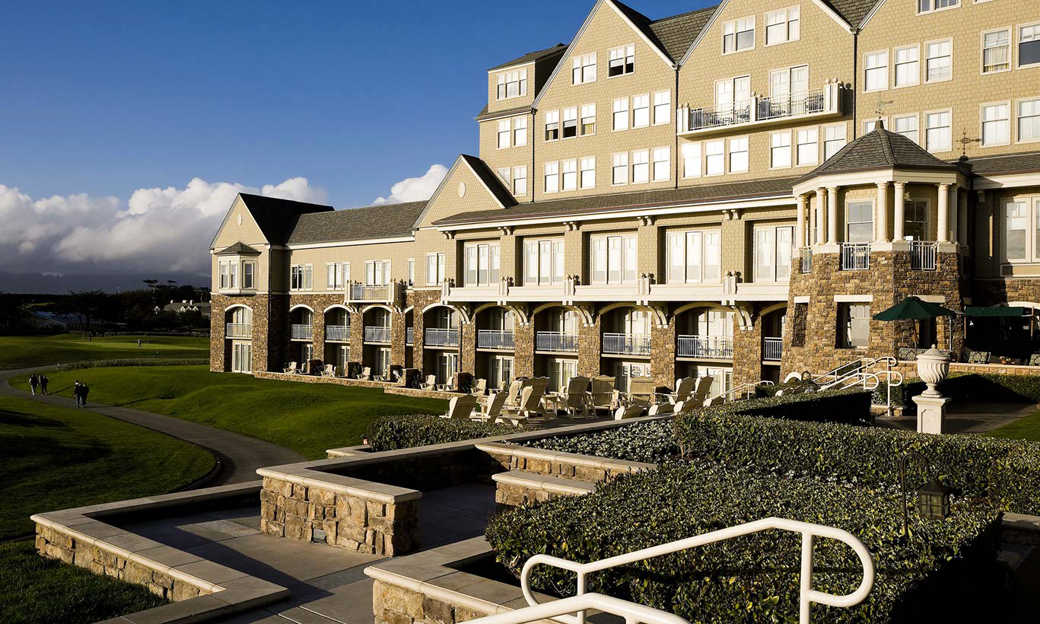
Photo by the Athens Group

The Ritz Carlton is everything I don’t like and yet, I liked it. It’s a bit of Scotland on the California coast…because we need California to be Scotland? No. So, the resort features Scottish architecture? No. The hotel is an imposing, shingle style, turreted affair that’s supposed to “evoke the magnificence of 19th century seaside lodges”. Northeastern seaside lodges. The Hamptons come to mind. Okay, it’s a magnificent northeastern style seaside lodge set within a pair of Scottish golf courses with staff walking around in plaid knickers. The Ritz Carlton is not an example of regional design.

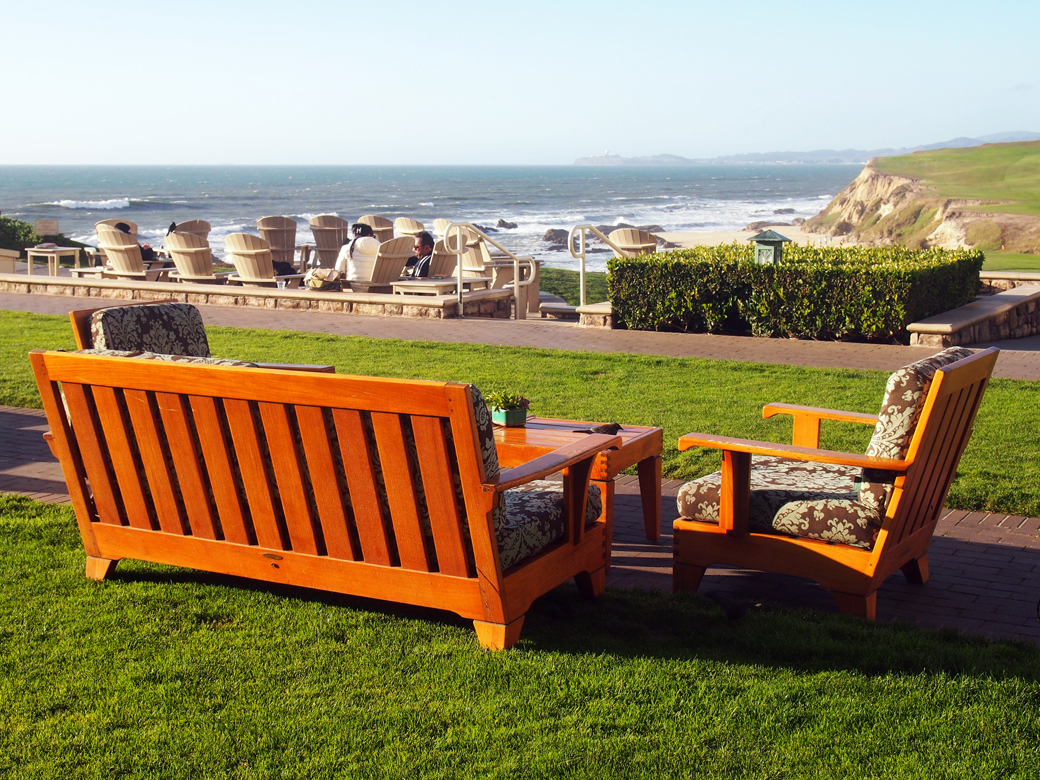
Why did I like it? I’ve spent a lot of time on the California coast and the beautiful view from the cliffs overlooking the ocean is never diminished. It can be foggy (and it probably will be), it can be windy, it can smell like the brussels sprouts growing on the bluffs, the beaches can be littered with brown seaweed covered in sand flies, and it is still the most breathtaking place I’ve ever been. The California coast is like a beautiful girl, hair tangled, barefoot in sandy jeans and a faded sweatshirt. The view from the Ritz Carlton ocean terrace on a clear day was like seeing her in a green velvet gown and high heels. It’s not the way I want the coast to be but I can’t help feeling glad I saw her that way.

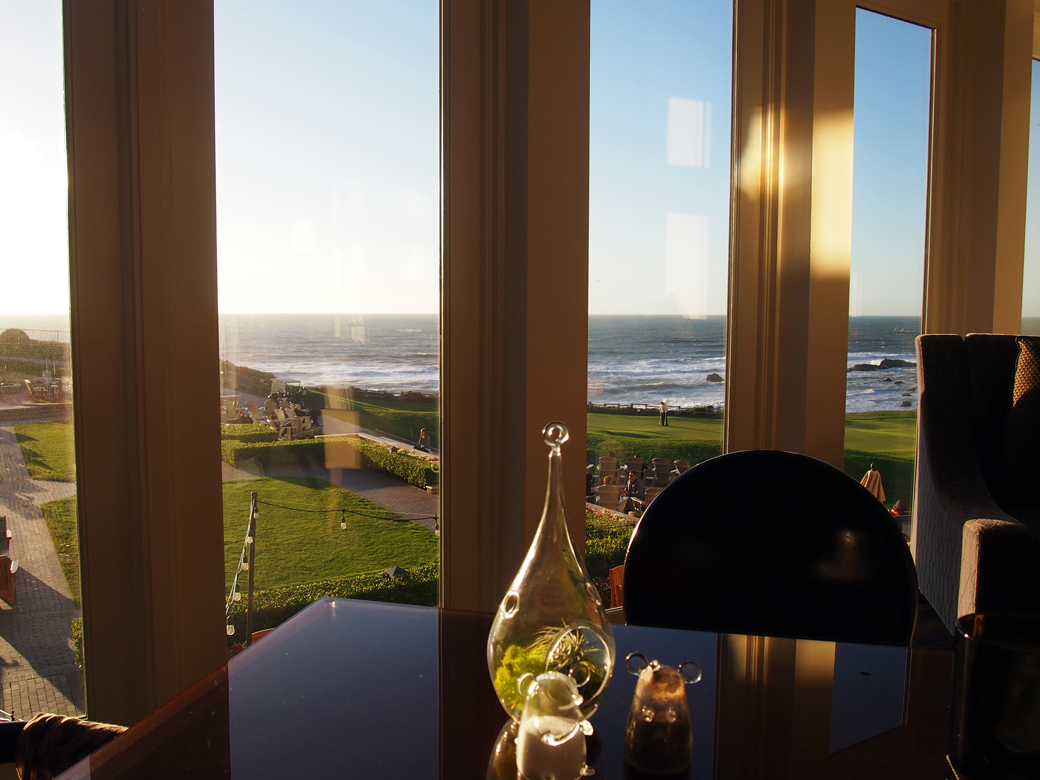
Ritz Carlton HMB Ocean TerraceRitz Carlton HMB NavioAfter shaking off the sticker shock of the cocktails, we sallied forth to Navio, the restaurant at the resort, with a plan NOT to eat barely acceptable food at very expensive prices. The dining room is lovely and we were given a table at the window. We ordered conservatively, (two women can get away with significantly less food than a traditional couple) and ate a perfectly acceptable dinner for under $100. The service was good. The food was good. Nothing was memorable but the view. After we got back to Oaktown, I checked out Michael Bauer’s 2013 review and can say I think Navio has improved since his meal, but I won’t deny that the restaurant is not a good value.

The Ritz Carlton made me feel sorry for people who think the coastal experience is something they can buy. Without a deeper relationship with the shoreline, the Ritz Carlton is nothing but a fancy, out of place resort. Next time, we might still stop in for a cocktail at the Ritz, but afterwards we’ll head up Highway 1 to our favorite Half Moon Bay taqueria for dinner.

Devil’s Slide, Mavericks & Coastal Geology

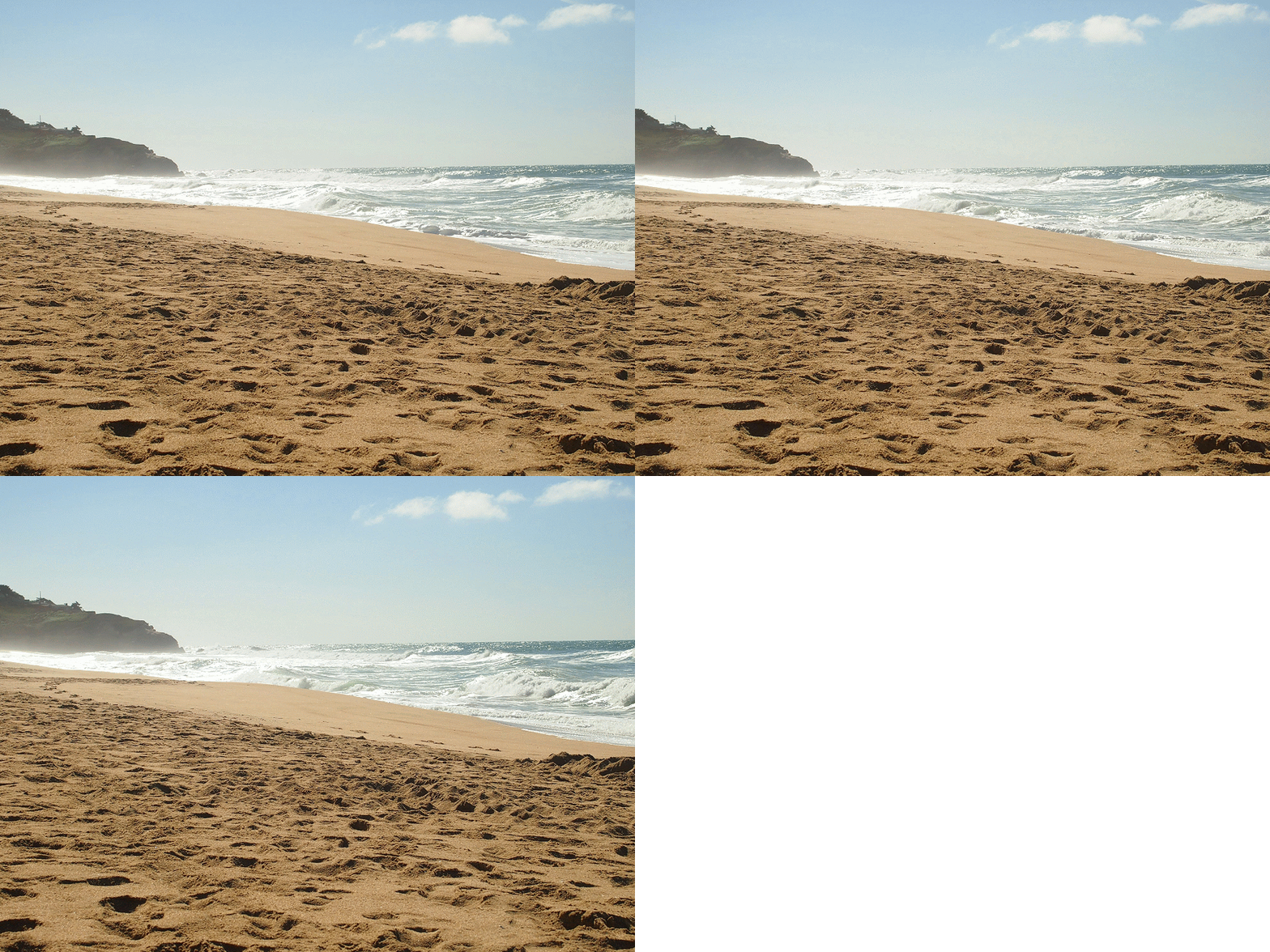
Surf and sand at Montara State Beach

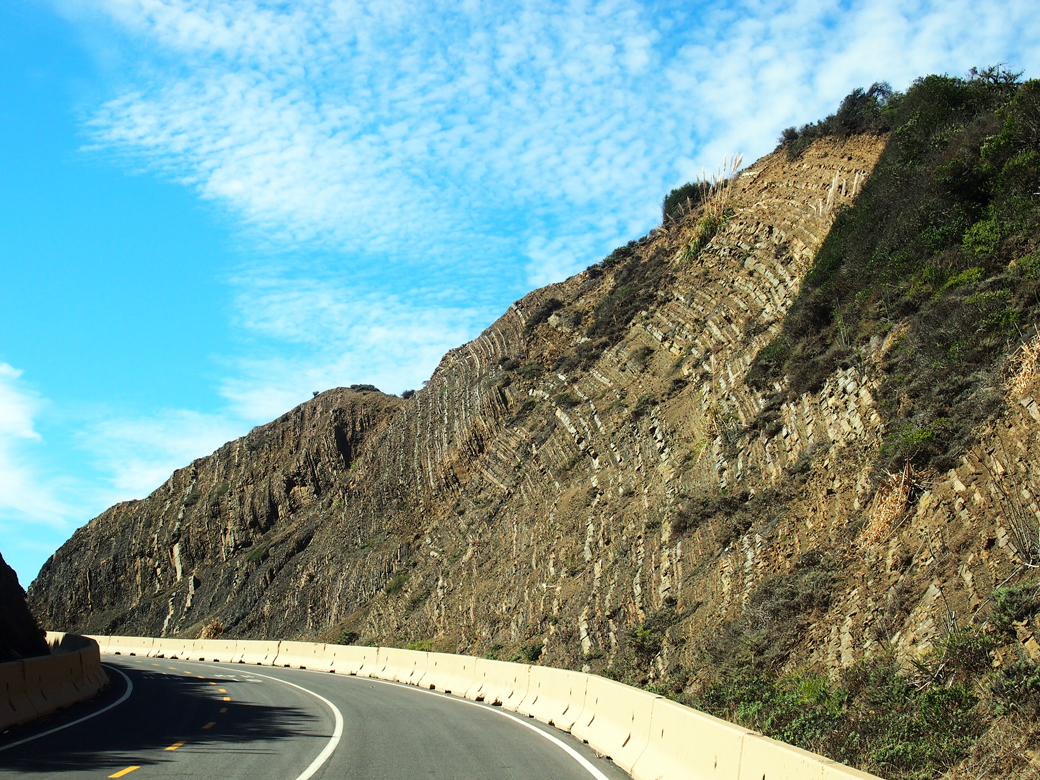
Devil's Slide - Sedimentary layers of shale and sandstone
From Devil’s Slide Trail, we can see sedimentary layers of shale and sandstone thrust up from the ocean floor.

We love going places! In an attempt to reduce our carbon footprint, we spend a lot of our free time traveling local. That doesn’t mean we never fly, but it’s remarkable how much you can learn by visiting places close to home.

Devil’s Slide Trail
This new open space was the first stop on our fall day trip to the coast. Over the years, we’ve been aware of the hellish landslides at this location, sometimes closing Highway 1 for months at a time. On this journey, we learned the area’s geology is the devil causing the slides.

At the north end of the trail are rough sedimentary layers of shale and sandstone that were once part of the ocean floor. At the south end, the cliffs are granitic rock of Montara Mountain. At Devil’s Slide, landslides occur where sedimentary layers were thrust over the granitic rock.

As a result of the landslides, Highway 1 was diverted through the Tom Lantos Tunnels in 2013 and the old highway was converted to this multi-use trail. The views from Devil’s Slide Trail are spectacular but the 1.3-mile walk leads only from parking lot to parking lot. It is a part of the California Coastal Trail and we’re looking forward to the day when it extends from Oregon to Mexico.

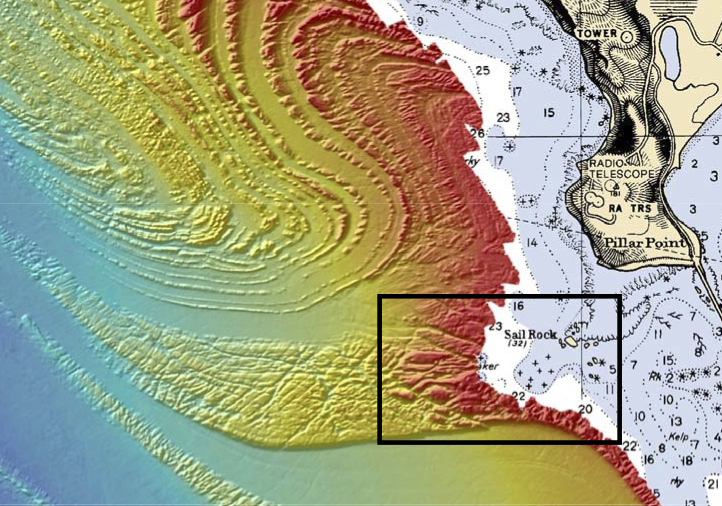
This Seafloor Map released by the US National Oceanic and Atmospheric Administration shows the geology behind Mavericks.
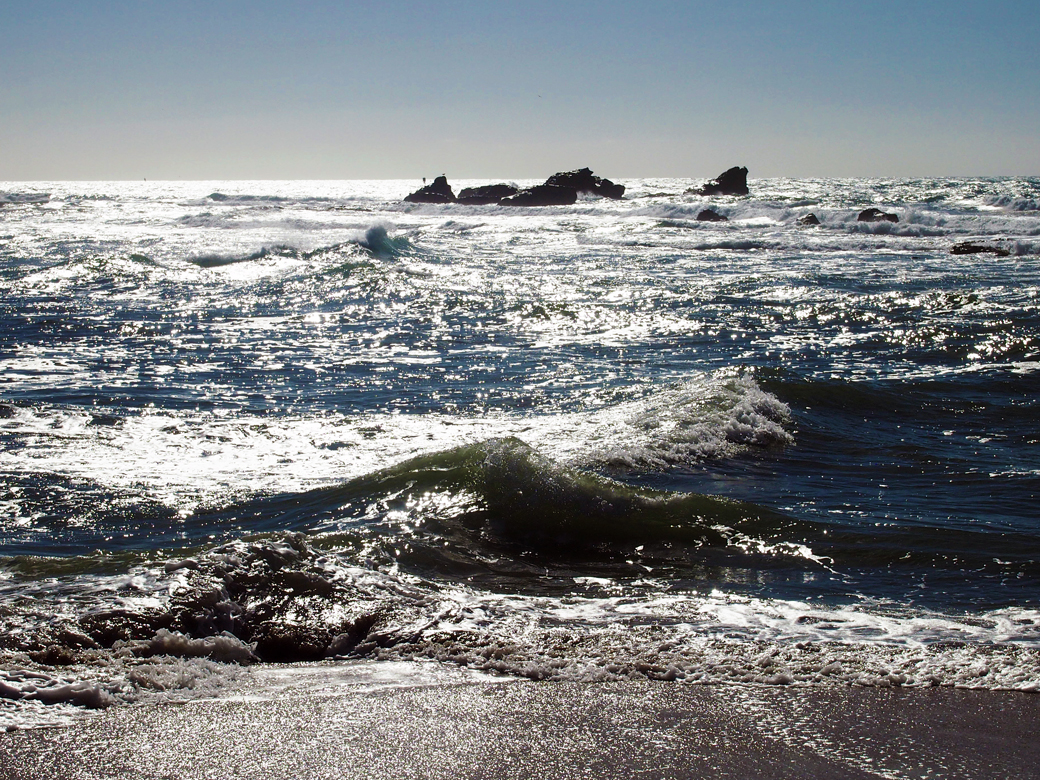
Sail Rock from the beach at Pillar Point
Sail Rock as seen from Mavericks Beach at Pillar Point. Mavericks break is about 2 miles from shore, beyond the visible reef.

Mavericks
Geology plays an important role in another coastal site we visited: Pillar Point, site of the famous M
avericks break. Gradual ramping of the sea-floor, plus deeper water on both sides of the ramp are the key ingredients for the magnificent and sometimes malevolent waves.

Here’s my understanding of how this works: As a wave approaches the shore, its base slows as it runs along the rising seafloor while the top of the wave maintains its original speed. This causes the wave to stand up and pitch forward. The long, gradual slope at Mavericks creates an exceptionally tall wave. The wave continues at full speed at the deeper waters on each side of the ramp, allowing the wave to draw additional energy, and creating a wave convergence at the center of the ramp. After winter storms, waves at Mavericks can top out at over 80 feet. 

The mild fall weather during our day trip produced little surf but it was a beautiful and adventure-filled day. We walked along Cowell Ranch Beach before stopping at the Ritz Carlton Half Moon Bay for dinner. I’ll tell you what we thought about that, next week.

Sources:
Devil’s Slide Brochure from San Mateo County Parks
Mavericks, California from Wikipedia
Map Reveals Secret of Awesome Mavericks Waves by Phil McKenna from New Scientist

What is one of your favorite local places to go?

Happy Haunting

Halloween Welcome

On Halloween, we like to set a spoooooky scene for our neighbors without making the wee little trick-or-treaters run off screaming in terror. Jack-o-lanterns are always a big hit, and the more the better. It takes some work ripping out their guts and carving them, but it’s totally worth it once they are all lit up and putting on a glow-fest. We use real candles that last all night, which also makes for that fabulous only-on-Halloween warm pumpkin-breath scent in the air.

ScarecrowWe add some extra mystery to the scene by hanging scary curtains we make out of cheesecloth (from the housewares section of our local hardware store). We tack it to the top of the window frames and cut it into vertical strips. Finally we snip, tear and make holes in each strip, rubbing the cheesecloth to fray the edges. Fun, and theraputic, too!  A candelabra at each window sets the scene.

The final touches include music: Bach’s Toccata and Fugue in D minor and, for Frankenstein’s sake, let’s not forget the cocktails. It is a holiday, after all. Our Halloween favorite, we modify from Absinthe Brasserie and Bar in San Francisco.

Jack-o-LanternsDaedalus

2 ounces Irish whiskey
Juice of half an orange
1/2 ounce ginger syrup
Dash of orange bitters
Orange Twist

Shake the liquid ingredients vigorously with ice. Strain into a chilled cocktail glass. Run the orange peel around the rim, twist it over the drink, and drop it in. Slurp discriminately. There is candy to pass out, but you don’t want to be passed out with it.

Creativity Shines in Oakland’s Golden Gate Neighborhood

Golden Gate-Radio Flyer-web

140701 Golden Gate-1073-web

When the first homes were built, the Golden Gate neighborhood was a town named Klinknerville. The name was changed to Golden Gate before it was annexed by the City of Oakland in 1897. It’s in the northwest corner of the City, east of Emeryville and south of Berkeley. Real Estate agents like to call that general area NOBE, but you and I know better. If not, I recommend this post; Please Don’t Call it NOBE, by Sarah Han.

What I love about Golden Gate and several other Oakland neighborhoods is their creative flair. I think it’s because they have diverse populations: diverse ages, standards of living and ethnicities. Residents are willing to make unconventional design choices, which spark creativity up and down the streets.

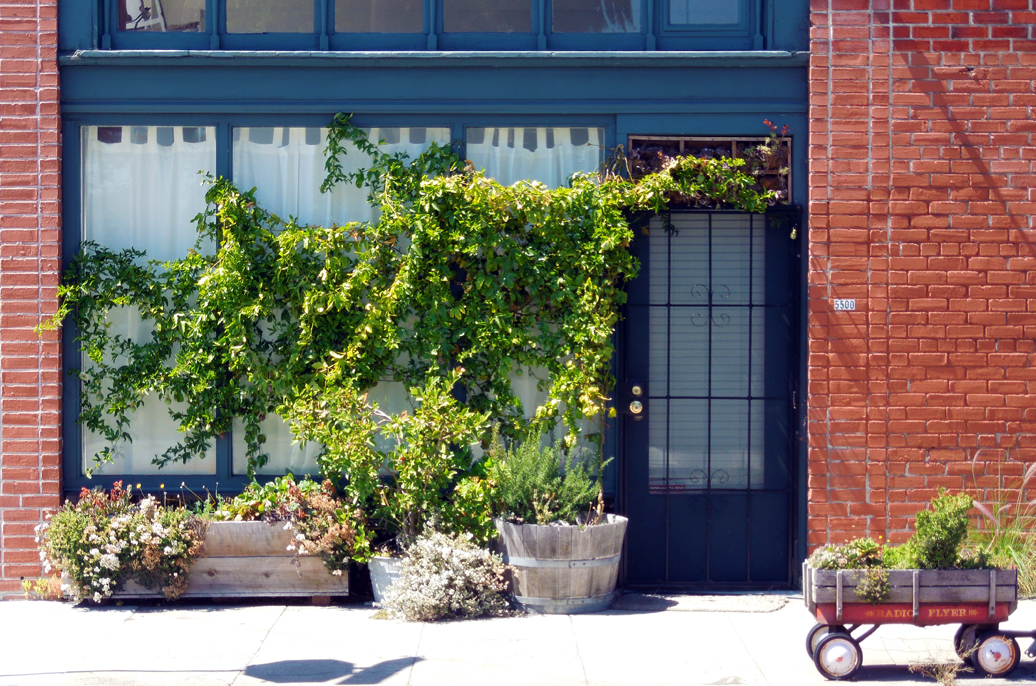
Of the many inspiring entrance treatments I’ve seen in Golden Gate, I’ve selected three to feature here. It’s likely the entrance in the top photo was originally designed as a storefront. The building is on the main commercial street, San Pablo Avenue, but this entry is on the side street. I love slate blue with brick, the vine that softens the flat entrance and, of course, the radio flyer planter.

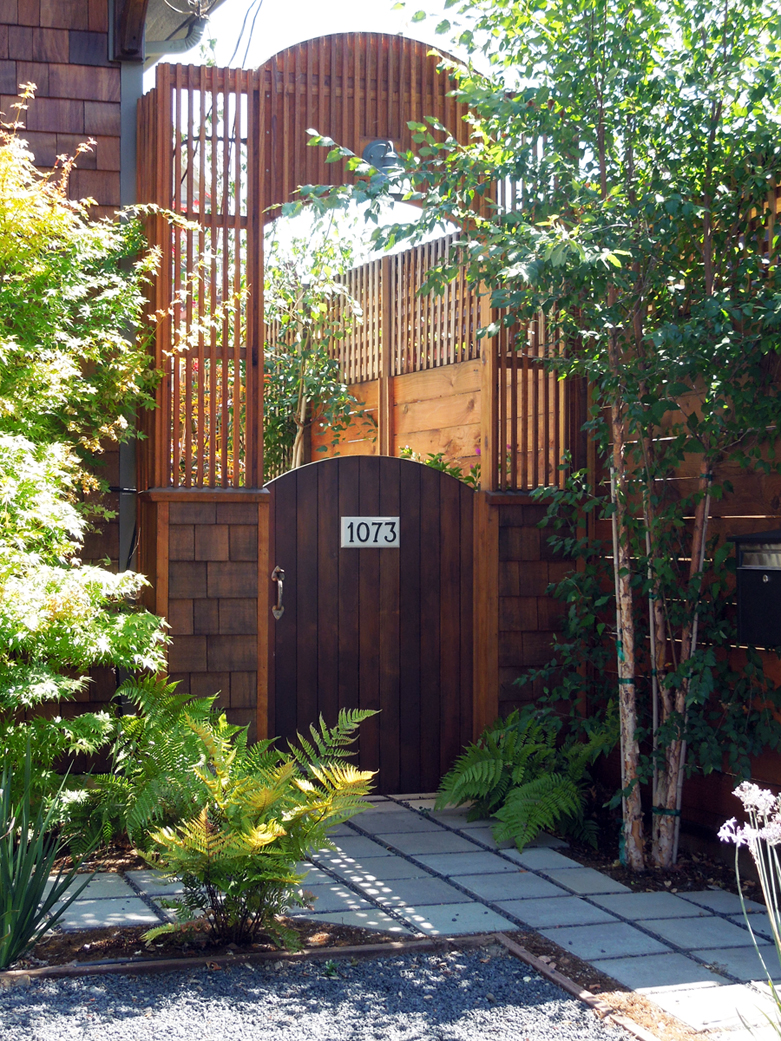
140701 Golden Gate-1009-webI’m going to make up a story for the gateway in the photo on the left. The shingled fence with gate was built first. Then the designer decided they wanted a very tall fence at the property line (let’s not make judgments about their relationship with the next-door neighbors) and designed an attractive slatted fence extension. Finally, the designer wanted the two parts to be better integrated and created this arched and slatted overhead structure. However it happened, I like it. Take note of the elegant paving and the stunning River Birch near the gateway.

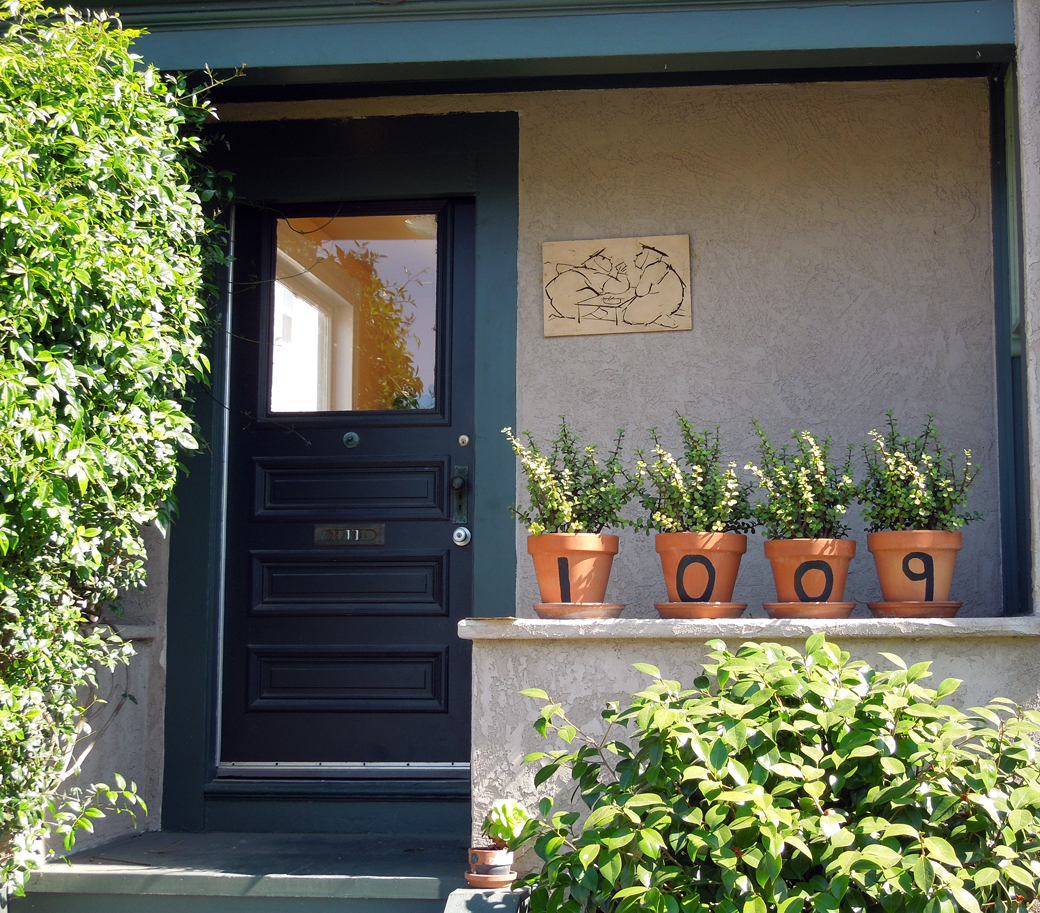
It would be easier to imitate the simple treatment of number 1009. The address is hand-painted on terracotta pots filled with leafy succulents. The idea is clever but wouldn’t work nearly as well without the smart color choices and the striking Zen tile on the wall near the door (from which they probably removed the original address). When planting in small pots like these, use very drought tolerant plants or you’ll need to water every day. These are filled with Portulacaria afra, Elephant food.

Historic Information Source: Wikipedia, Golden Gate, Oakland, California

Note added November 12, 2014: Since writing this post, I’ve learned there are (at least) two different ideas about the extents of the Golden Gate neighborhood. According to Oakland Wiki, the area I considered to be Golden Gate, is actually three neighborhoods: Golden Gate, Gaskill, and Paradise Park. By that map, the entrances I’ve featured in this post are in the Gaskill neighborhood. Either way, they are still shining.

What if it really does rain?

Lake Merritt Green Roof

Lake Merritt Permeable Paving

I have a positive outlook this morning: I’m thinking about what’s going to happen to all that rain we’re going to get this winter in California.

Let’s say we left land in its natural state: much of the stormwater would be held by plants, soak into the soil, or seep slowly downhill. Pollutants washed from the atmosphere would be absorbed through contact with the plants and soil.

But we don’t leave land alone. We build things through which water can’t flow. Roofs and pavement prevent rain from reaching the soil. Water runs off impervious surfaces, and pipes transport it rapidly to creeks and to the Bay.

That creates problems. The water enters the system too fast, causing erosion and increasing the possibility of flooding. Pollutants running off roads and parking lots are discharged into local creeks and eventually into the Bay. Rainwater has fewer opportunities to recharge the groundwater table.

Vegetated swale

The goal of Stormwater Best Management Practices (BMPs) is to make site drainage mimic, as closely as possible, the way a natural landscape drains.

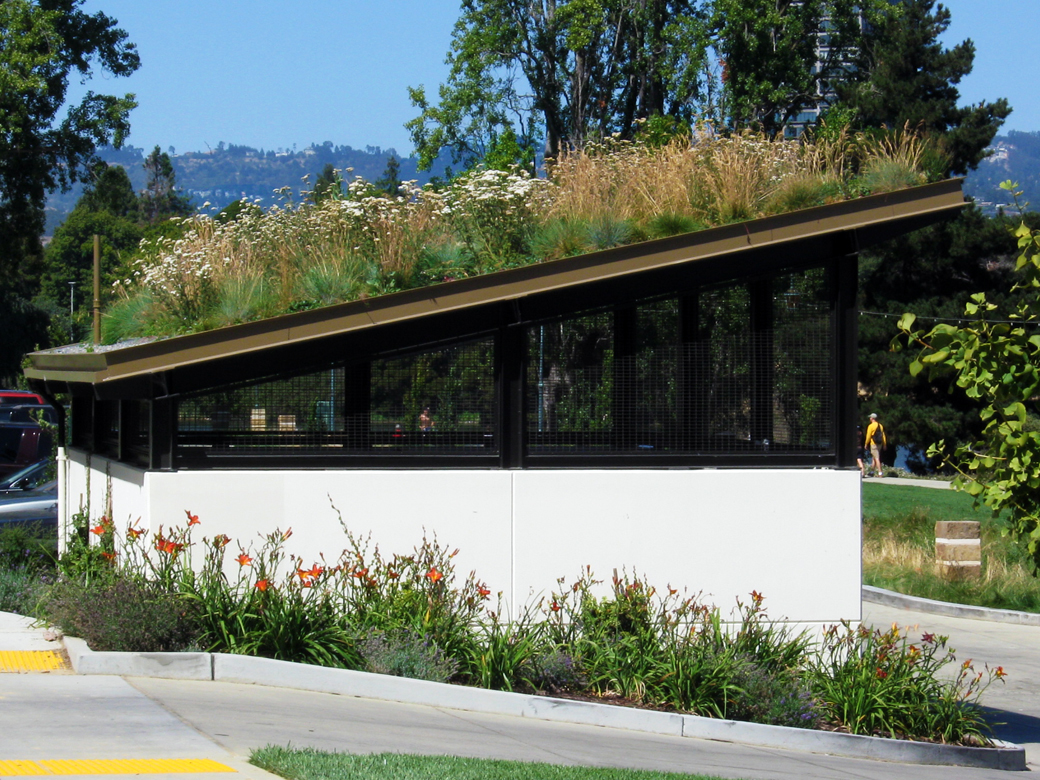
These images show three BMPs used in the Lake Merritt Municipal Boathouse project. The landscape architects for the project were Wallace Roberts & Todd of San Francisco and Adrienne Wong Associates of Oakland.

Green Roof
The green roof over the recycling and trash structure filters pollutants from stormwater, minimizes roof runoff, and reduces heat island effect.

Permeable Paving
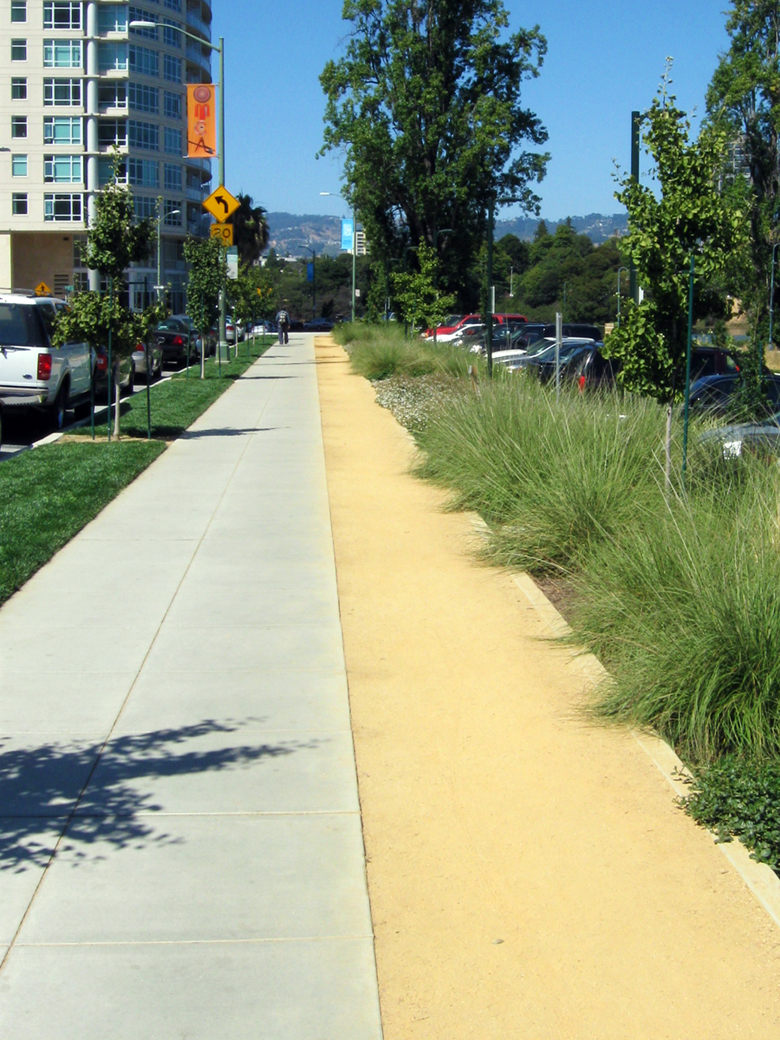
The decomposed granite running surface is permeable. Permeable paving allows stormwater to soak into the ground, filtering and storing it.

Vegetated Swale
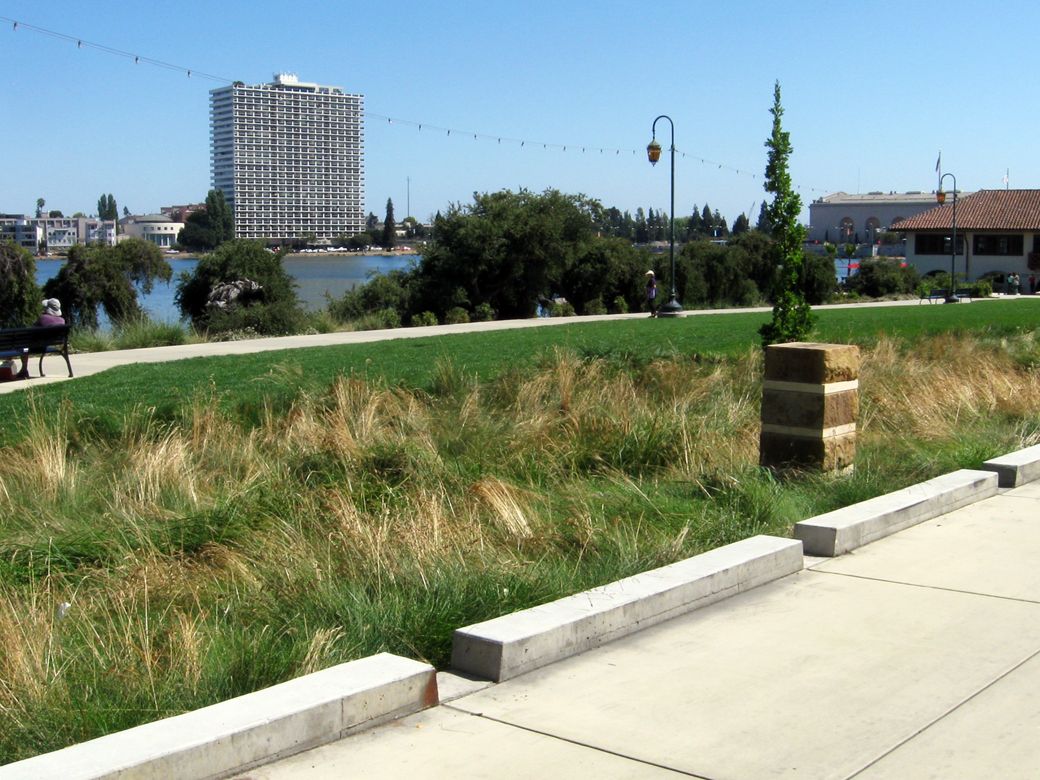
Openings in the curb allow stormwater to run off the paved surface and into the vegetated swale. The swale slows stormwater while the grasses and soil filter out pollutants before entering the storm drain system.

These stormwater solutions fit beautifully into the landscape. I think that’s because they were part of the designers’ plan from inception. Now, bring on the rain.

What is something you do to save water?

A Truly Local Cocktail

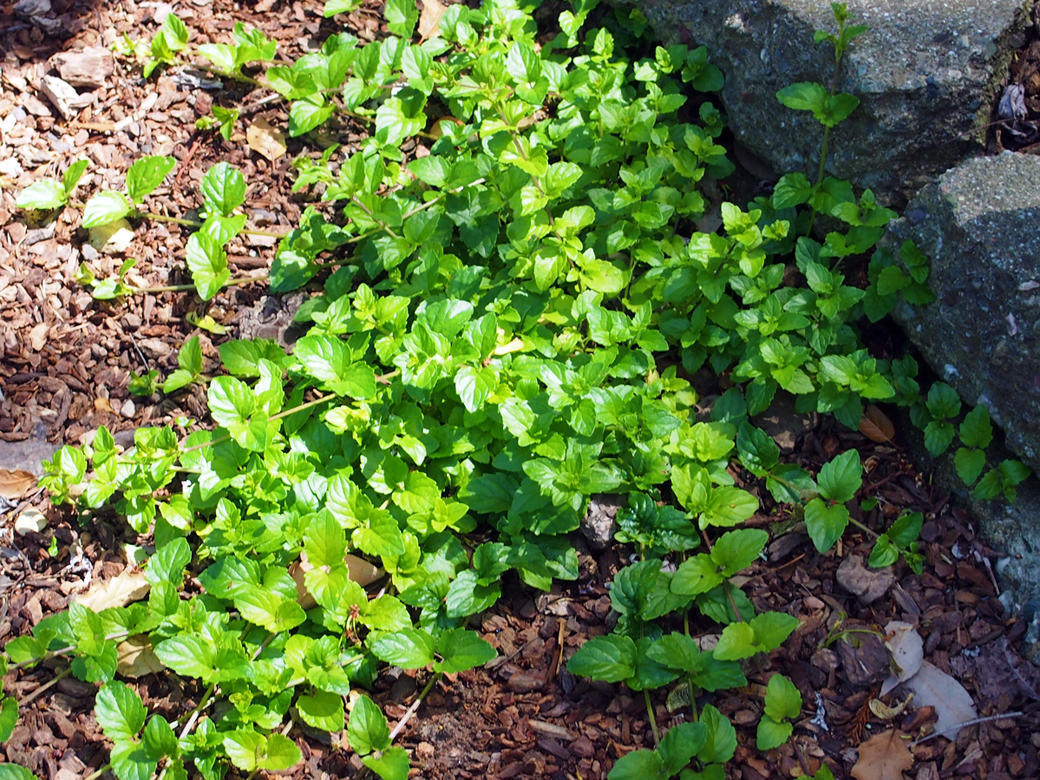
OLYMPUS DIGITAL CAMERASan Francisco was originally named for this plant, Yerba Buena. It means “good herb” in Spanish. The City’s name was changed to San Francisco in 1846. The botanical name for this plant is Satureja douglasii.

As you might imagine, it’s a California native plant. It’s easy to grow, smells delightful, and makes luscious mint juleps.

Yerba Buena Julep Recipe
To mix a truly local cocktail, use a Bay Area-bottled bourbon like B&E (Breaking & Entering) by St. George Spirits in Alameda or, if you’re willing to seriously break with tradition, Old Portrero Rye Whiskey, distilled in San Francisco.

3-4 six-inch long stems of yerba buena leaves
1/2 tablespoon simple syrup
4 ounces whiskey
1 three-inch long stem of yerba buena

Muddle the yerba buena and simple syrup in the bottom of a chilled old-fashioned glass. Fill the glass with ice (crushed is traditional), add the whiskey, and stir until the glass is frosty. Garnish with the yerba buena sprig, extending it above the rim of the glass.

It’s the perfect cocktail for a warm evening, sitting in your garden, listening to the Giants or the A’s game on the radio. Let me know how you like it.

Creating Art and Community at Maxwell Park

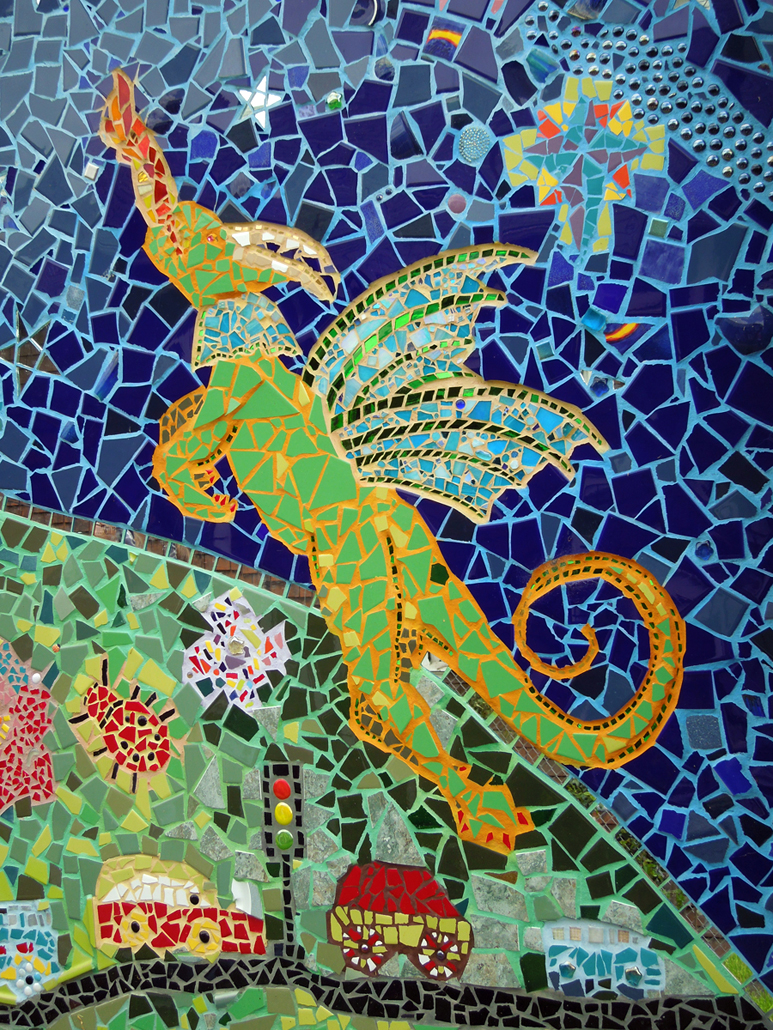
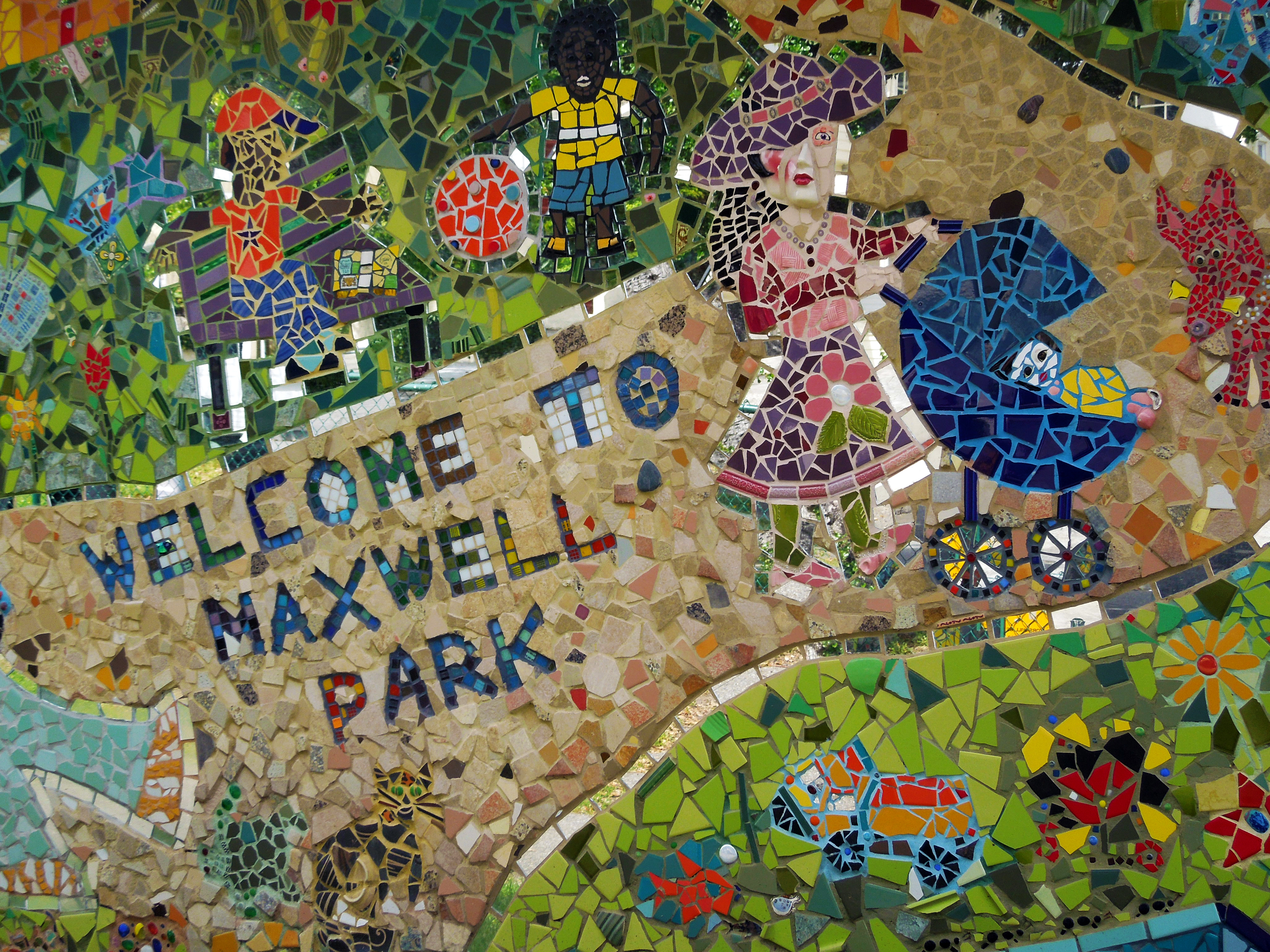
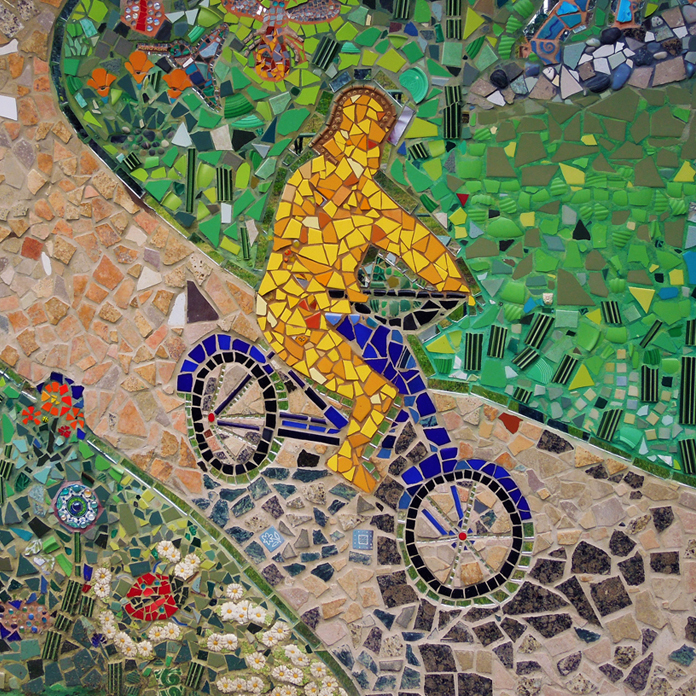
Maxwell Park-DragonThis East Oakland park features mosaics created by the local community.

Nancy Karigaca and Beverly Shalom are co-coordinators for the mosaic tile project:

“My priority has been to work on projects that empower community members, experienced and inexperienced mosaickers, to create beauty and have a positive impact on the neighborhood,” said Shalom. “We try to involve everyone in the community, and ask people who are passing by to adhere some tiles, so that they will have a sense of pride in the work and the park and want to take care of it.”

Quote source: Sumiko Saulson, Oakland Art Scene Examiner

Maxwell Park-Welcome

Maxwell Park-Bicycle